


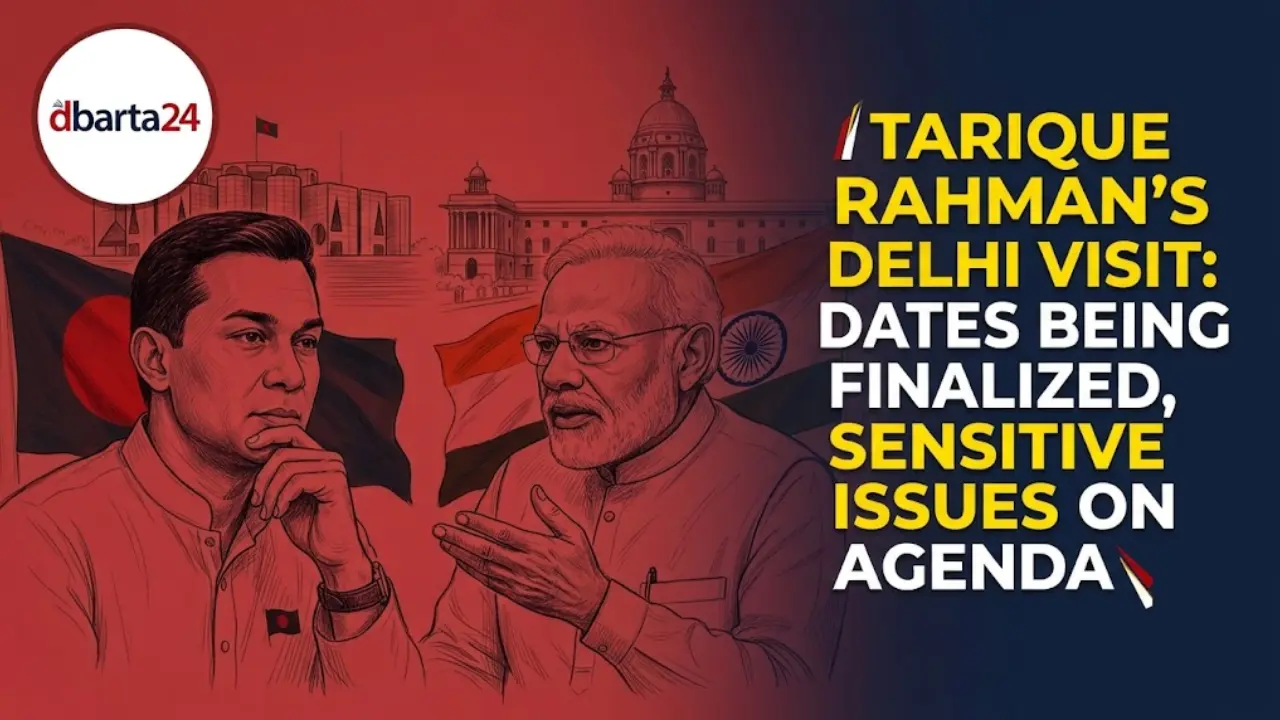
Diplomatic Correspondent; Dbarta24 — High-level diplomatic discussions between Dhaka and New Delhi are currently underway to finalize the schedule for Prime Minister Tarique Rahman’s upcoming state visit to India later this month.
Following a formal invitation from Indian Prime Minister Narendra Modi, both nations are working toward aligning their calendars for the high-profile bilateral summit.
Diplomatic sources in Dhaka revealed that New Delhi initially proposed a two-day visit scheduled for August 20 and 21.
However, Bangladesh is considering adjusting the dates slightly to August 22 and 23 to accommodate domestic events, including the upcoming presidential election and subsequent swearing-in ceremony.
Officials from both governments are evaluating dates within the third and fourth weeks of August.
Creating a Supportive Environment
While neither government has issued an official announcement regarding the final dates, preliminary administrative preparations are actively underway.
Diplomats emphasize that Bangladesh is focusing on establishing a “conducive environment” to advance bilateral ties, with an emphasis on resolving sensitive outstanding issues.
Conversely, India has signaled a willingness to engage in open discussions across all areas of mutual cooperation.
Further emphasizing the momentum behind the visit, Indian High Commissioner to Bangladesh, Dinesh Trivedi, returned to Dhaka on Friday following a four-day visit to New Delhi.
During his trip, High Commissioner Trivedi briefed Prime Minister Narendra Modi on key messages from Dhaka and received fresh directives regarding the trajectory of India-Bangladesh relations.
Key Issues on the Diplomatic Agenda
The upcoming summit is expected to address several critical political and strategic priorities:
-
Extradition and Political Activities: Diplomatic insiders indicate that the extradition of ousted Prime Minister Sheikh Hasina will be a top agenda item. Dhaka is also expected to seek firm assurances from New Delhi to curb political statements and activities conducted by the ousted leader from Indian soil.
-
Water Sharing and Treaty Renewals: With the historic 1996 Ganges Water Sharing Treaty set to expire in December, negotiations for its renewal will take center stage, along with discussions on shared river basin management.
-
Trade, Mobility, and Security: Priority topics also include simplifying visa procedures to facilitate people-to-people movement, expanding trade and investment, boosting energy cooperation, improving border management, and reinforcing regional security arrangements.
The upcoming visit marks a crucial step in defining the future of South Asian diplomacy.
As preliminary preparations continue behind closed doors, both nations aim to ensure the summit yields tangible progress on trade, connectivity, and long-standing bilateral disputes.