


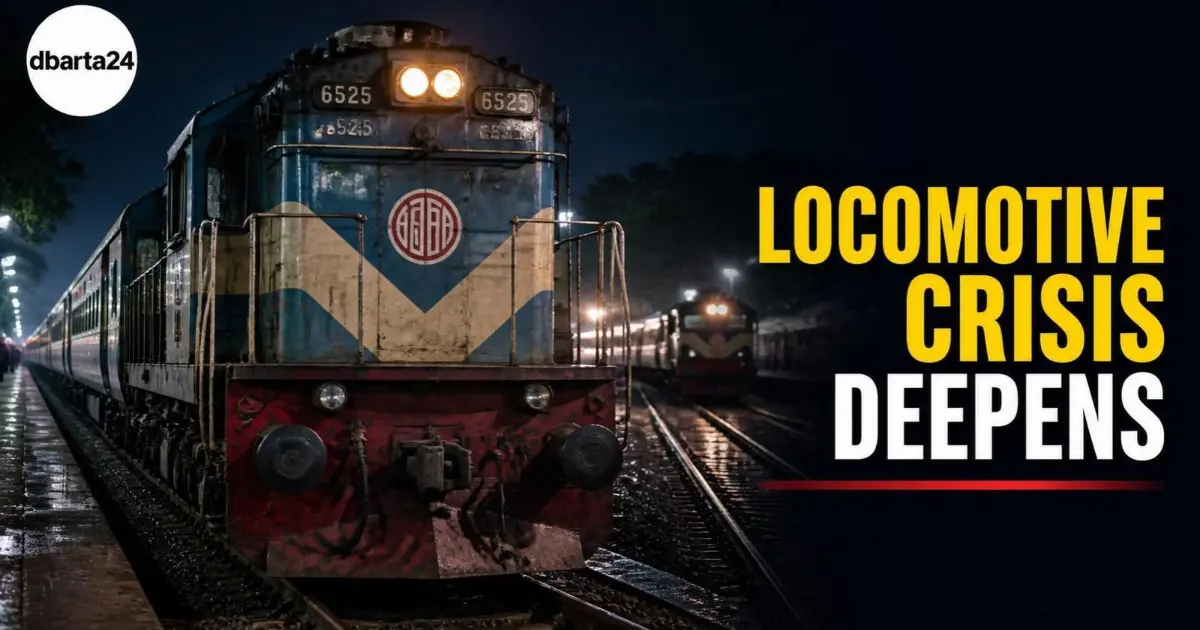
Khairul Alam; Dbarta24 – Bangladesh Railway cancelled 1,958 metre-gauge train services because of locomotive shortages from July to September 2026, up nearly 27% from the same period a year earlier, according to an internal railway report.
Delays caused by waiting for engines also surged, disrupting passenger journeys and freight operations.
The report recorded 658 metre-gauge trains delayed while awaiting locomotives during the three months, compared with 261 in July–September 2025—an increase of about 152%. The total time lost to these delays climbed to 719.41 hours from 244.95 hours.
The pressure reflects a decline in the number of engines available for daily operations. Average metre-gauge locomotive availability fell year on year in each month of the quarter.
Broad-gauge availability also dropped: the railway had an average of 89 engines a day in July, 90 in August and 89 in September, compared with 94 a day in each of those months in 2025.
Dhaka and Chattogram face more cancellations
Dhaka division recorded the highest number of metre-gauge cancellations, with 1,194 trains called off because of locomotive shortages during the quarter, compared with 1,154 a year earlier. In Chattogram division, cancellations rose from 343 to 466.
Nationwide cancellations remained high throughout the period: 640 in July, 674 in August and 644 in September. Train delays caused by locomotive shortages also increased in each of those months compared with 2025.
Breakdowns add another strain. Railway figures show that 140 metre-gauge and broad-gauge locomotives failed in Dhaka, Chattogram, Pakshi and Lalmonirhat divisions during July–September 2026, up from 92 in the same period last year.
The combined effect of fewer available engines and more breakdowns makes it harder to maintain schedules. When an engine is taken out of service, the remaining fleet must cover more duties, increasing pressure on operations.
Freight services are affected as well, limiting the railway’s ability to run scheduled goods trains and earn revenue.
Railway says repairs and new procurement are under way
Bangladesh Railway Additional Director General (Rolling Stock) Fakir Md Mahiuddin attributed the shortage to delays in procuring essential spare parts.
He said older parts had been used to keep locomotives running, and engines repaired without timely replacement parts often did not remain operational for long.
“We are now trying to collect the necessary spare parts and bring the locomotives awaiting repair back into service,” he said. The number of operational locomotives had risen from 67–69 when he took charge to 78, he added, with a target of restoring 10 more by December.
The railway has also initiated two projects to purchase 60 new locomotives, according to Mahiuddin. He cautioned, however, that locomotive availability is not the only challenge, citing problems in the engineering, signalling and transport departments as well.
For passengers and freight customers, the immediate concern is whether repairs and procurement can translate into more reliable services.
Until more engines are available and breakdowns are reduced, cancellations and delays are likely to remain a serious operational challenge.