


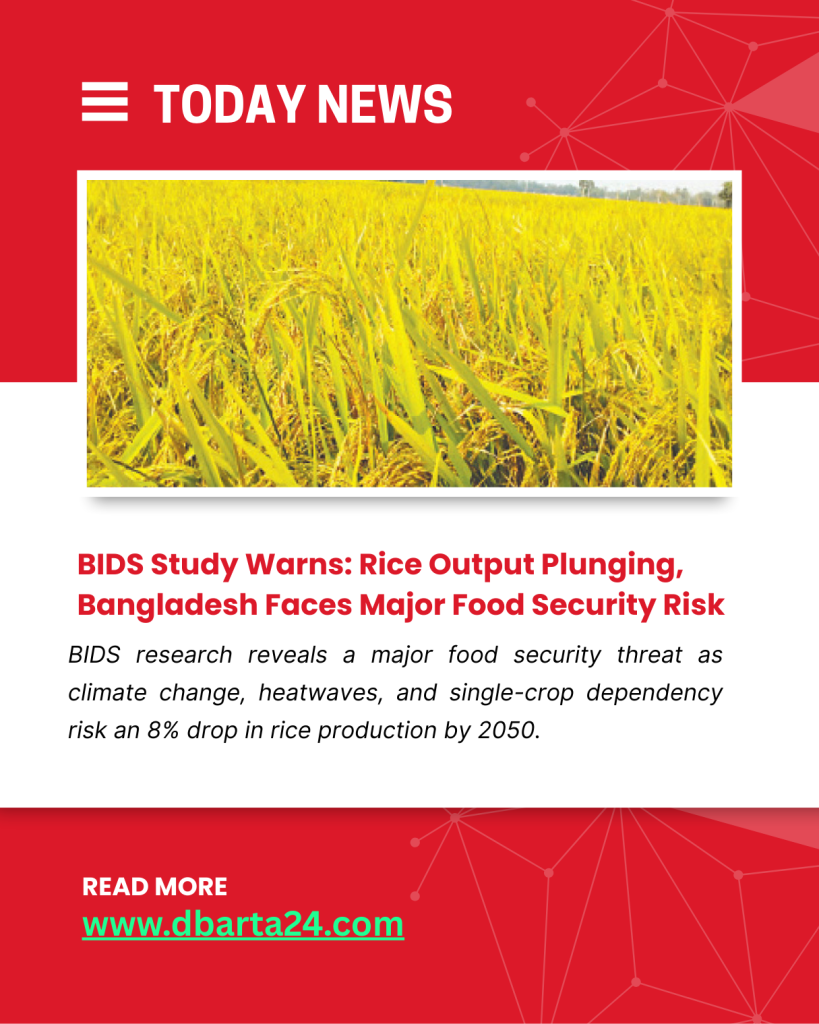
Khairul Alam; DHAKA – Bangladesh is heading for a major food crisis as climate change, intense heatwaves, and deep structural issues threaten the core of its agricultural system. A new research report by the Bangladesh Institute of Development Studies (BIDS) predicts that rice production could fall by up to 8% between 2030 and 2050, placing severe pressure on national food security.
The findings were presented at a seminar titled ‘Perspectives on Agri-Food Management in Bangladesh’ on Tuesday at the BIDS Conference Room in Agargaon. The report lays bare the multifaceted challenges crippling the sector, which remains the single largest employer in the rural economy.
🔥 Climate Impact Hits Farmers Hardest
The study highlights that climate change is the single most destructive force in Bangladeshi agriculture. Unpredictable rainfall, rising ambient temperatures, and frequent heatwaves are severely disrupting the life cycles of major food grains, including rice, wheat, and maize.
Crucially, the heat is directly impacting the labor force. The research found that agricultural labor hours have decreased by approximately 20% across several districts due to heatwaves. This reduction in effective work time is lowering overall productivity, increasing the time and cost required for tasks like land preparation, and causing a ripple effect across the entire rural economy, affecting market transactions and purchasing power.
Key Finding: “Climate change intensity, uncertain rainfall, rising temperatures, and mismanagement—coupled with slow mechanization and low crop diversity—are severely hampering production.”
🍚 Monoculture and Stagnation Create Vulnerability
The BIDS report points out that Bangladesh’s heavy reliance on a single staple crop creates a systemic vulnerability. About 80% of all cultivable land is still dedicated primarily to rice (monoculture), leaving the agricultural economy undiversified and highly exposed to environmental shock.
Of particular concern is the production of Boro rice, the country’s most vital crop grown in the dry season. The rate of production growth for Boro has stagnated in recent years. Agricultural experts are now calling for the urgent adoption of new high-yielding, water-efficient, and salinity-tolerant varieties to mitigate the severe risks facing this key season.
🚜 Mechanization and Policy Bottlenecks
Beyond climate and crop issues, the study notes non-environmental challenges are slowing progress:
-
Slow Mechanization: Despite government pushes, the full benefits of mechanization are not reaching small farmers due to the high cost of machinery, a lack of information, and insufficient training.
-
Soil Degradation: The overuse of chemical fertilizers and pesticides, driven by farmers seeking faster yields, is damaging soil quality and risking the contamination of groundwater with high levels of nitrate and phosphate, which threatens long-term sustainable agriculture.
💡 Call for Coordinated Reform
The seminar, chaired by BIDS Director General Professor A. K. M. Enamul Hoque, and attended by Planning Division Secretary S. M. Shakil Akhtar as chief guest, concluded with a strong call for comprehensive reform.
Secretary Akhter specifically highlighted a significant lack of coordination in the country’s agricultural data systems, noting a disparity between the figures provided by the BBS and the Department of Agricultural Extension (DAE). He stressed that without accurate, reliable information, effective policy and project implementation remains impossible.
To secure food production by 2050, the experts stressed the immediate need for a multi-pronged strategy focusing on:
-
Crop diversification
-
Modern agricultural machinery
-
Efficient water management
-
Research-based new crop varieties
-
Sustainable pesticide use
This proactive approach is deemed essential to avoid a significant national food security disaster.