


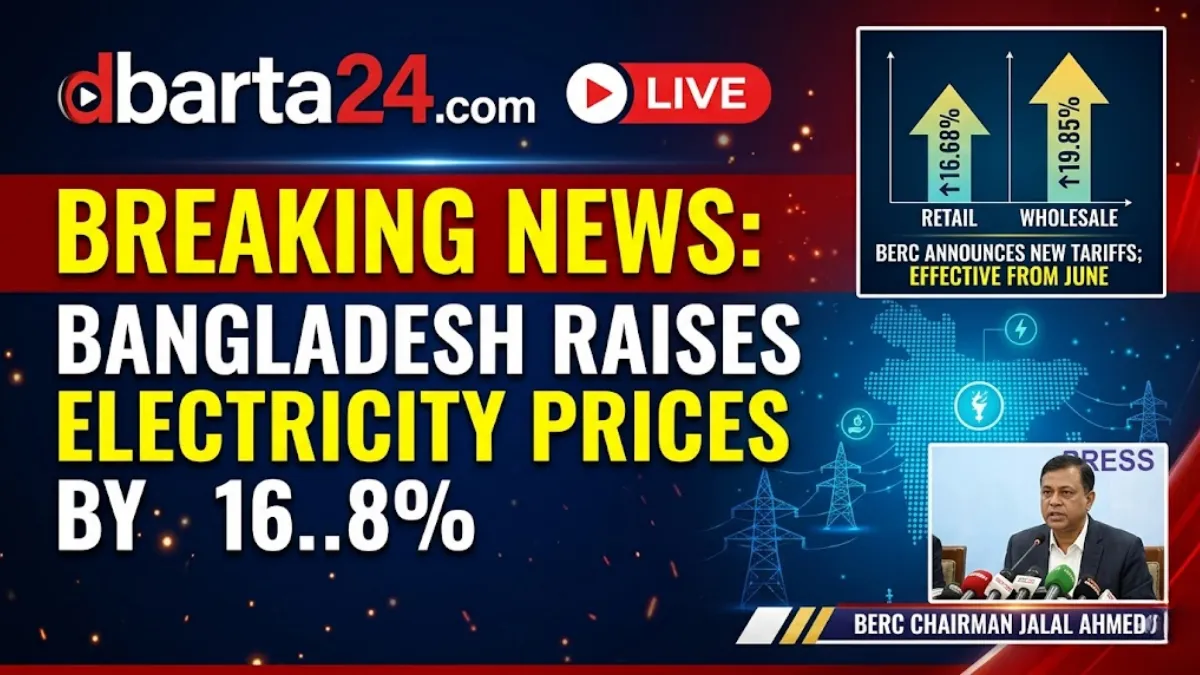
Muhammad Tareq , Dhaka – Electricity prices have been hiked once again in Bangladesh at both the wholesale and retail levels. The Bangladesh Energy Regulatory Commission (BERC) announced the decision at a press conference in the capital on Wednesday.
According to the new decision, retail electricity prices will increase by BDT 1.52 per unit, while wholesale prices will see a hike of BDT 1.39 per unit. As a result, the average electricity price at the retail level has increased by 16.68%, and at the wholesale level by 19.85%.
BERC Chairman Jalal Ahmed stated that the new rates will come into effect starting from the June billing cycle.
New Price Breakdown
According to BERC data, the previous average wholesale price of electricity was BDT 7 per unit. With the BDT 1.39 increase, the new wholesale price has been fixed at BDT 8.39 per unit. On the other hand, the average retail price will rise from BDT 9.11 to BDT 10.63 per unit.
Additionally, the electricity transmission charge (wheeling charge) has been raised from the existing 31.35 paisa to 38.86 paisa.
Why are Electricity Prices Increasing?
BERC explained that the new tariff was set considering:
-
Rising costs of electricity generation, purchase, and imports.
-
Increased transmission and distribution expenses.
-
The overall financial condition of the power sector.
The commission noted that despite the wholesale price hike, the government will still need to provide an annual subsidy of approximately BDT 41,000 crore to cover the deficit of the Bangladesh Power Development Board (BPDB).
The Background
Earlier in May, multiple power sector entities—including BPDB, Power Grid Bangladesh, DESCO, DPDC, REB, WZPDCO, and NESCO—submitted proposals to increase wholesale, transmission, and retail prices. Public hearings on these proposals were held on May 20 and 21.
BPDB had proposed an increase of BDT 1.20 to BDT 1.50 per unit at the wholesale level, while various distribution companies requested retail hikes ranging from 3 paisa to 29 paisa.
Public and Analyst Reactions
The sudden price hike has triggered deep concern among consumers who are already struggling with high inflation.
“Prices of everything are rising, but income is not increasing proportionally,” said Kabir Hossain, a resident of Malibagh in the capital. “If it’s due to international market factors, we understand. But if expenses are rising because of irregularities and corruption, why should ordinary citizens bear the burden?”
Economic analysts warn that the impact of this hike will stretch far beyond monthly utility bills. It is expected to drive up industrial production costs, irrigation expenses for agriculture, and operating costs for small businesses, putting further inflationary pressure on the public.