


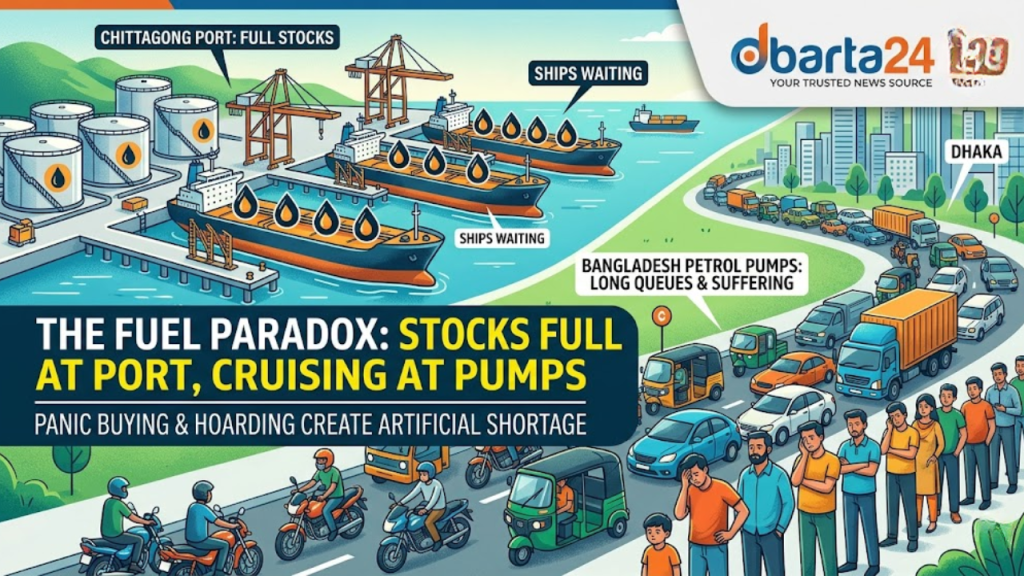
Saad Sajid From CHITTAGONG/DHAKA – A strange paradox has gripped Bangladesh’s energy sector. While tankers loaded with fuel are lining up at the Chittagong Port and storage tanks remain at near-full capacity, consumers at the field level—ranging from commuters in Dhaka to farmers in rural districts—are facing grueling waits at petrol pumps.
Surplus at the Port, Scarcity at the Pump
According to port sources, five vessels carrying approximately 169,000 tons of fuel (142,000 tons of diesel and 27,000 tons of octane) are currently in Bangladeshi waters. Unloading is already underway for the vessels MT Oaktree and MT Cape Bonnie. However, three other ships—MT Lian Song Hu, MT Pacific Indigo, and MT Navy Cielo—are forced to wait at sea because the onshore depots are currently at maximum storage capacity.
Data from the Bangladesh Petroleum Corporation (BPC) suggests that as of April 20, octane stocks stood at 27,612 tons, with another 27,000 tons currently being unloaded. With an average daily sale of 1,134 tons, officials believe the current stock is sufficient to meet the nation’s demand for at least two months.
The Grassroots Reality: Hours of Waiting
Despite the optimistic statistics, the scene at the pumps tells a different story. In Dhaka’s Tejgaon area, vehicle queues stretch onto the main roads.
“I have been standing in line since 5:00 PM. It’s been over two hours, and I still haven’t reached the nozzle,” said Meraj Hossain, a frustrated motorcyclist.
The situation is even more dire in rural areas like Gaibandha. Farmers in Sundarganj are struggling to secure fuel for irrigation during the crucial Boro season.
“If we don’t water the fields every other day, the crops will dry up. I’ve spent the whole day at the pump but still can’t get enough fuel,” lamented Dhiren Chandra Sarkar, a local farmer.
The Cause: Panic Buying and Hoarding
The government maintains that there is no genuine shortage. Zahed Ur Rahman, the Prime Minister’s Information and Broadcasting Adviser, addressed the situation during a press briefing at the Press Information Department (PID).
He attributed the local crisis to “panic buying” and illegal hoarding by dishonest traders.
“There is no major crisis in fuel reserves. Artificial shortages are being created by those buying more than they need out of fear, and by unscrupulous businessmen,” he stated.
Crackdown on Illegal Stocks
To combat the artificial crisis, the government has intensified its enforcement. As of April 19:
-
53 mobile courts have been conducted.
-
47 cases have been filed.
-
17.2 million BDT in fines have been collected.
-
10 individuals have been sentenced to various prison terms for illegal hoarding.
While the government continues its drive against hoarders, the common citizen remains caught between a surplus at the port and a dry nozzle at the pump.