
















Bangladesh Reports 4 More Suspected Measles Deaths as Casualties Mount
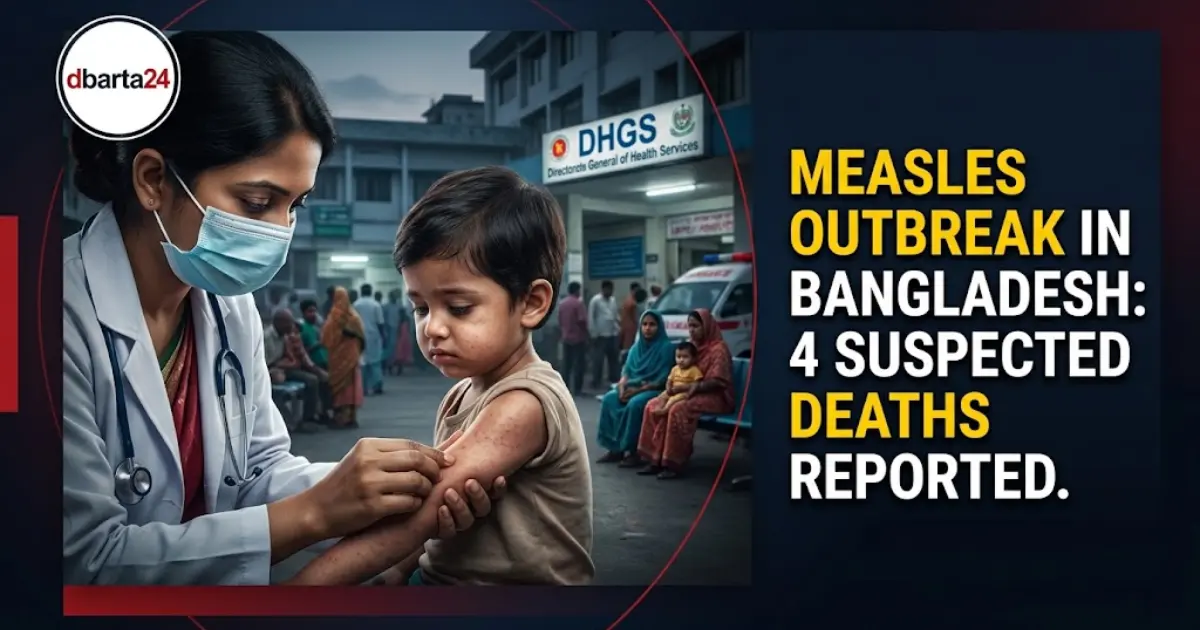
Muyabia Labony; Dbarta24 – Four more patients presenting symptoms of measles have died across Bangladesh over the past 24 hours, according to the latest routine update from the Directorate General of Health Services (DGHS) released on Wednesday.
While no deaths were confirmed to be directly caused by laboratory-verified measles during this period, the four fatalities occurred among patients experiencing classic measles-like symptoms.
The latest casualties were reported across four major administrative divisions, with one death each registered in Dhaka, Chattogram, Mymensingh, and Sylhet.
During the same 24-hour period, health officials identified 128 newly confirmed cases of measles, while an additional 1,221 individuals presented with suspected symptoms of the viral infection nationwide.
Outbreak Scale and Cumulative Data
The cumulative health data released by the DGHS underscores the ongoing burden of suspected viral infections across the country. Total casualties associated with both laboratory-confirmed measles and suspected infections since the beginning of the year have now reached 1,108.
| Category | Past 24 Hours | Cumulative Total (Year-to-Date) |
| Confirmed Cases |
128
|
21,520
|
| Suspected Cases |
1,221
|
191,731
|
| Confirmed Deaths |
0
|
101
|
| Suspected Measles Deaths |
4
|
1,007
|
| Total Combined Fatalities |
4
|
1,108
|
Public Health Context
Measles is a highly contagious airborne disease caused by a virus that primarily affects children. Symptoms typically include high fever, cough, runny nose, red watery eyes, and a characteristic rash that spreads across the body.
The substantial difference between suspected and laboratory-confirmed cases highlights ongoing diagnostic screening efforts, as health workers continue monitoring patients presenting with fever and rash syndromes across divisional hospitals.
Health authorities continue to urge parents to ensure their children receive timely routine MMR (measles, mumps, and rubella) vaccinations, as immunization remains the most effective defense against severe outcomes and transmission.