


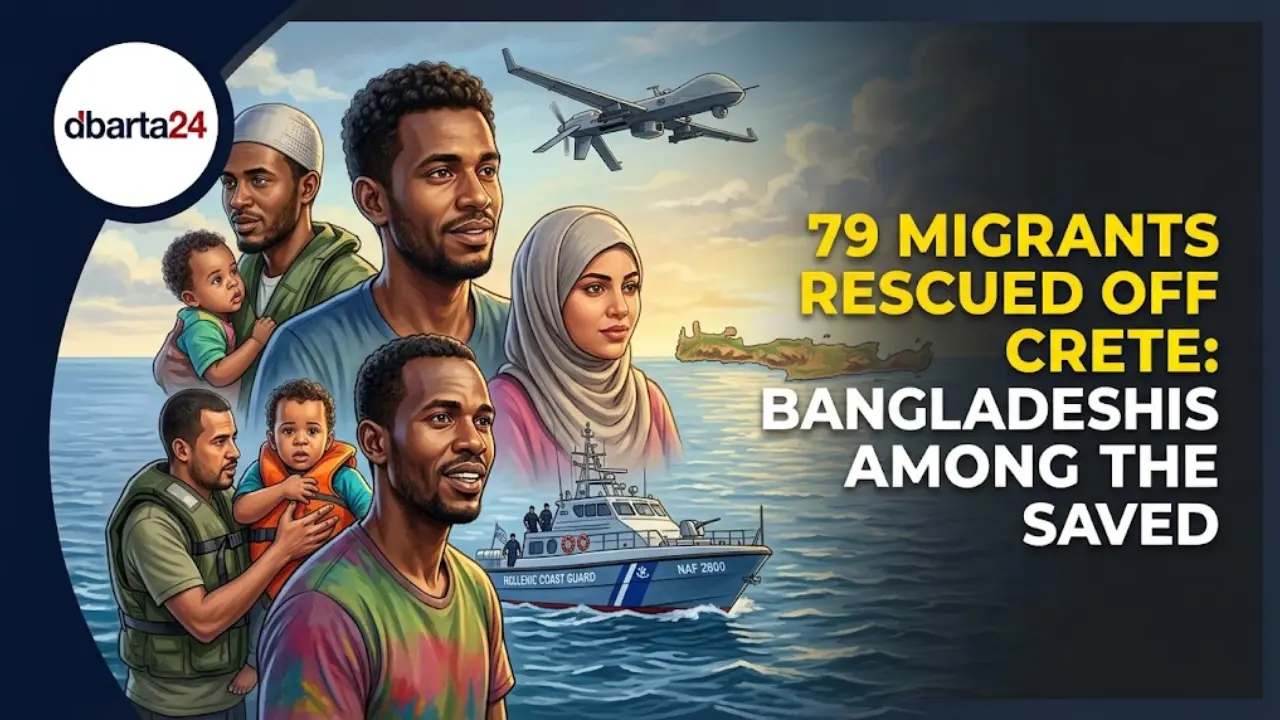
Dbarta24 Desk — Greek Coast Guard authorities have rescued 79 migrants, including citizens from Bangladesh and war-torn Sudan, after two distressed vessels were detected off the southern coast of Crete on Tuesday.
The operation highlights an ongoing surge in search-and-rescue actions along the Mediterranean route.
According to a spokesperson for the Greek Coast Guard, the vessels were initially spotted near the port of Kali Limenes in southern Crete by a surveillance drone operated by the European Union’s border agency.
The rescued group included at least two women and two children, all of whom were safely brought ashore.
While initial reports by the Greek news agency ANA cited 85 individuals, authorities later clarified the final count to be 79.
Following standard emergency procedures, officials transferred a segment of the rescued migrants to the port of Mytilene on the island of Lesbos, from where they will be accommodated at the Kara Tepe temporary refugee camp to alleviate strain on Crete’s infrastructure.
The southern island of Crete and nearby Gavdos—located approximately 320 kilometers (200 miles) off the coast of Libya—have increasingly served as a key transit entry point into the European Union for asylum seekers attempting the treacherous Mediterranean crossing.
Despite recent coastal interceptions, overall migration arrivals in Greece have seen a downward trend.
According to official figures released by the Ministry of Migration, arrival rates dropped by roughly 31% over the past year—falling from 61,000 migrants recorded in the 12 months leading to August 2025 down to 42,000 in the subsequent 12-month period.
The shifting figures come as European governments enforce stricter border controls amidst rising political influence from right-wing and anti-immigration blocs across the continent.
Under Migration Minister Thanos Plevris, Greece has maintained a tough stance on unauthorized entry.
Greek officials are actively engaging with Germany and other EU member states to explore establishing offshore processing and “return hubs” outside the bloc to handle asylum claims and deportations.