


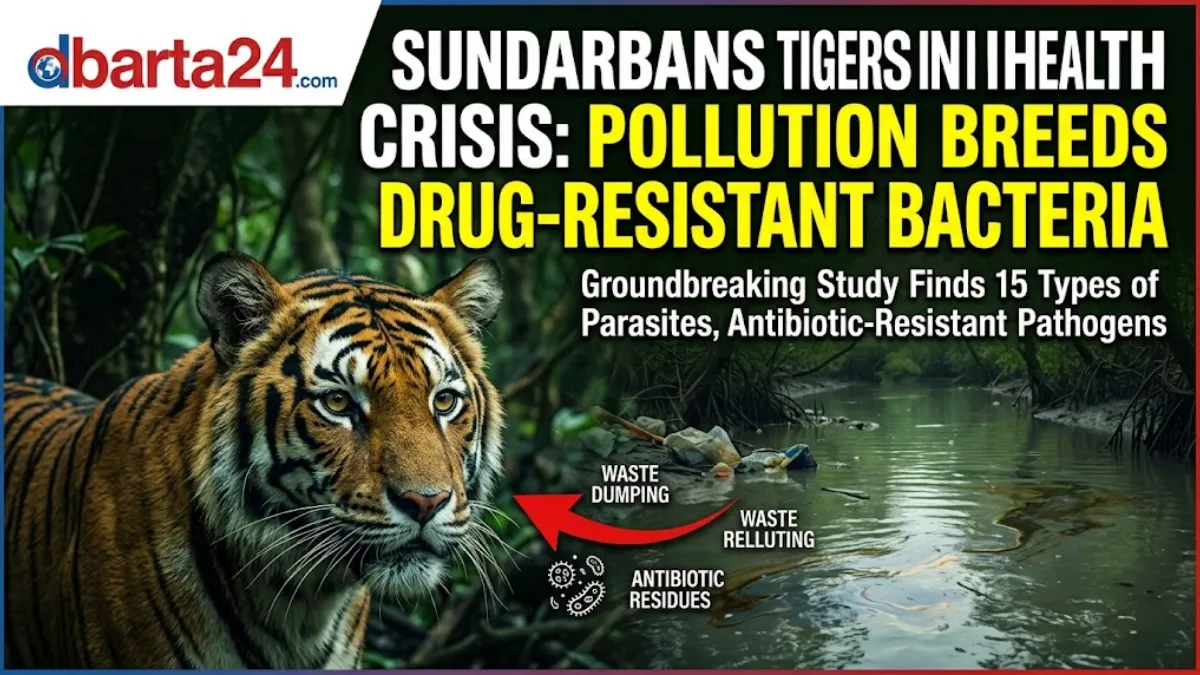
Khairul Alam , Dbarta24 Special – The iconic Royal Bengal Tigers of the Sundarbans are facing an unprecedented health crisis.
For the first time, a comprehensive scientific study has detected alarming levels of antibiotic-resistant bacteria and 15 distinct types of parasites in the tigers’ systems.
Experts warn that this bio-hazard, largely driven by river and environmental pollution, poses a severe long-term threat to the survival of the apex predators.
The shocking revelations emerged from a two-year research project titled “Parasitic Infection and Other Infectious Diseases, Pathogens, and Prevalence of Infection in Sundarbans Tigers.”
The final report, published recently under the government’s Sundarbans Tiger Conservation Project, marks Bangladesh’s first-ever epidemiological investigation into its wildlife.
Epidemic in the Ecosystem: The Numbers
The study paints a grim picture of health across the entire food chain of the mangrove forest.
Researchers analyzed 399 samples, including 232 tiger stool samples, using a cluster grid approach across four major ranges: Chandpai, Sharankhola, Khulna, and Satkhira.
The laboratory tests, conducted jointly at Bangladesh Agricultural University (BAU), Sylhet Agricultural University (SAU), and Bangabandhu Sheikh Mujibur Rahman Agricultural University, yielded highly concerning statistics:
-
Bengal Tigers: 85.3% of the collected fecal samples tested positive for various parasites.
-
Spotted Deer (Primary Prey): 73.6% infection rate.
-
Monkeys: 84.9% infection rate.
-
Wild Boars: 66.7% infection rate.
While the tigers currently test negative for the fatal Canine Distemper Virus (CDV), the study discovered that 56% of domestic dogs in adjacent forest villages carry CDV antibodies. This indicates a high risk of spillover if stray dogs breach the deep forest boundaries.
Deadly Parasites and Superbugs
The research identified 15 types of parasites in tigers. Among them, the tapeworm Spirometra mansoni had the highest prevalence at 60.3%, followed by the roundworm Toxocara cati at 43.5%, and the protozoan Balanantidium colai at 26.7%.
“The roundworm Toxocota cati is incredibly lethal for tiger cubs. Similar variants cause high mortality in cattle calves. Furthermore, Spirometra mansoni can migrate to an animal’s brain, eyes, or spinal cord, causing severe tissue damage,” explained Professor Abdul Alim, a member of the research team from BAU.
Equally alarming is the discovery of four types of multi-drug resistant bacteria: Klebsiella pneumoniae, Enterococcus faecalis, Escherichia coli, and Staphylococcus aureus.
This is the first time in Bangladesh that E. coli and K. pneumoniae have been molecularly identified in wildlife via PCR testing. Because these bacteria are resilient to standard antibiotics, treating sick wildlife will now become an extreme veterinary challenge.
How Pollution Reaches the Tigers
Researchers have mapped out a direct link between human pollution and wildlife degradation. During high and low tides, polluted water from surrounding rivers floods the interior creeks of the Sundarbans.
This water carries untreated hospital waste, human excrement, and chemical residues containing antibiotic traces.
Additionally, thousands of tourists, fishermen, honey collectors, and watercraft operators dump waste directly into the river systems.
The antibiotic-resistant microbes enter the food chain via fish and herbivores like deer and monkeys. When tigers hunt these infected animals, the pathogens bioaccumulate inside them.
The Path Forward
Since conventional medication cannot be administered to wild tigers, experts emphasize strict preventative measures. Professor Sultan Ahmed, head of the consultant team from Sylhet Agricultural University, noted:
“We must build a safety biosecurity ring around the forest. The priority is to stop external bacteria from entering the wild, and prevent infected wildlife pathogens from spilling over into human localities.”
The research team outlined several immediate actions:
-
Mass vaccination of dogs in surrounding villages against Rabies and Canine Distemper.
-
A total ban on domestic cattle grazing inside the forest.
-
Mandatory health certificates and deworming courses for all forest-dependent workers (honey collectors, fishermen).
-
The establishment of a dedicated Central Wildlife Disease Diagnostic Laboratory along with recruiting specialized wildlife epidemiologists.
Forest authorities are already moving into action. A 74-kilometer nylon net fencing has been erected in critical zones to bar domestic animals from entering the wilderness.
Mihir Kumar Doe, Conservator of Forests (Khulna Circle), confirmed that policy implementations have begun. “We have initiated discussions with the Ministry of Environment, Forest and Climate Change regarding the setup of the specialized wildlife diagnostic lab and the execution of the other medical recommendations to safeguard our national pride,” he stated.