


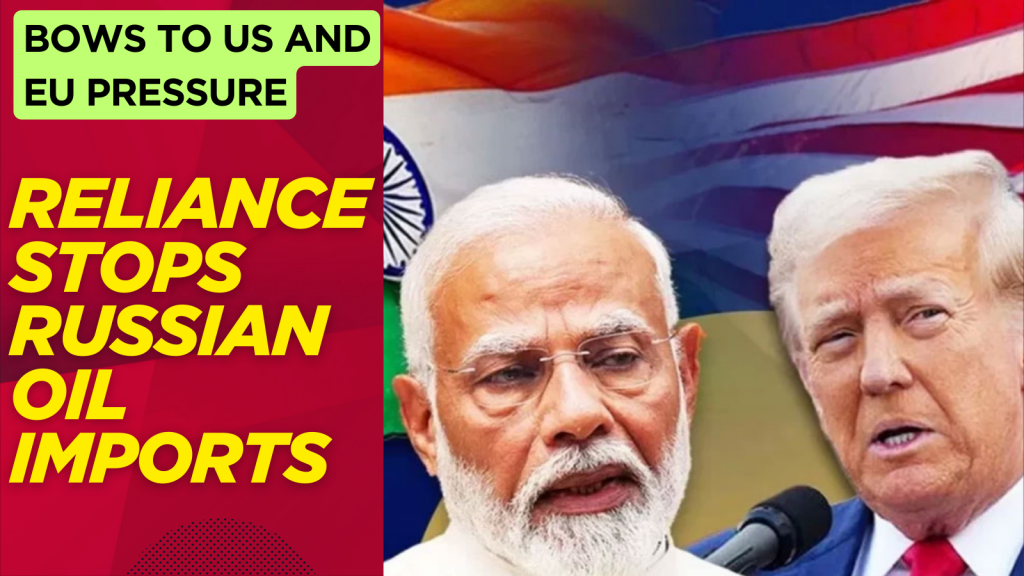
International Desk : Reliance Industries, India’s largest business group owned by billionaire Mukesh Ambani, has officially stopped importing crude oil from Russia. According to a BBC report, Reliance will no longer source Russian oil for its export-oriented refinery in Jamnagar, Gujarat. This decision comes amidst growing global sanctions and pressure from the West.
Why the sudden stop?
Reliance’s decision follows new restrictions from the European Union (EU) and the United States.
-
EU Ban: The EU is set to ban fuel imports from third-party countries that are made using Russian crude oil.
-
US Sanctions: The move also comes immediately after the US imposed sanctions on major Russian oil producers Rosneft and Lukoil just last Friday.
In a statement, Reliance clarified that this change was made ahead of schedule to ensure full compliance with import restrictions that are set to take full effect by January 21, 2026.
The “Trump Factor” and Trade Tensions
The relationship between India and the US has been tense regarding the purchase of Russian oil.
-
Tariffs: The report mentions that the Trump administration imposed a massive 50% tariff on India last August. Of this, a specific 25% was a “penalty” for buying Russian oil and arms, which the US claims funds Moscow’s war in Ukraine.
-
Changing the Trend: Before the Ukraine war (2022), Russian oil made up only 2.5% of India’s imports. By 2024-25, this surged to 35.8%. Reliance alone accounted for nearly half of these Russian imports.
However, despite months of resistance from New Delhi, the mounting pressure seems to have worked. The White House has welcomed Reliance’s decision, stating they look forward to “meaningful progress” in US-India trade talks.
Shifting Supply Chains
Data suggests a clear shift in strategy. According to the Carnegie Endowment:
-
Reliance cut Russian orders by 13% in October.
-
Simultaneously, they increased imports from Saudi Arabia by 87% and Iraq by 31%.
-
Bloomberg reports that state-controlled refineries in India are also avoiding Russian crude for their December contracts.
What Experts Say
Ajay Srivastava from the Global Trade and Research Initiative (GTRI) told the BBC that since India is meeting American expectations, the US should immediately remove the extra 25% tariff.
“If tariffs remain even after India meets expectations, it undermines goodwill and risks slowing down already fragile trade negotiations,” Srivastava warned.
While trade talks had been derailed by the oil dispute, Reliance’s latest move signals that tensions between Washington and New Delhi may finally be cooling down.