


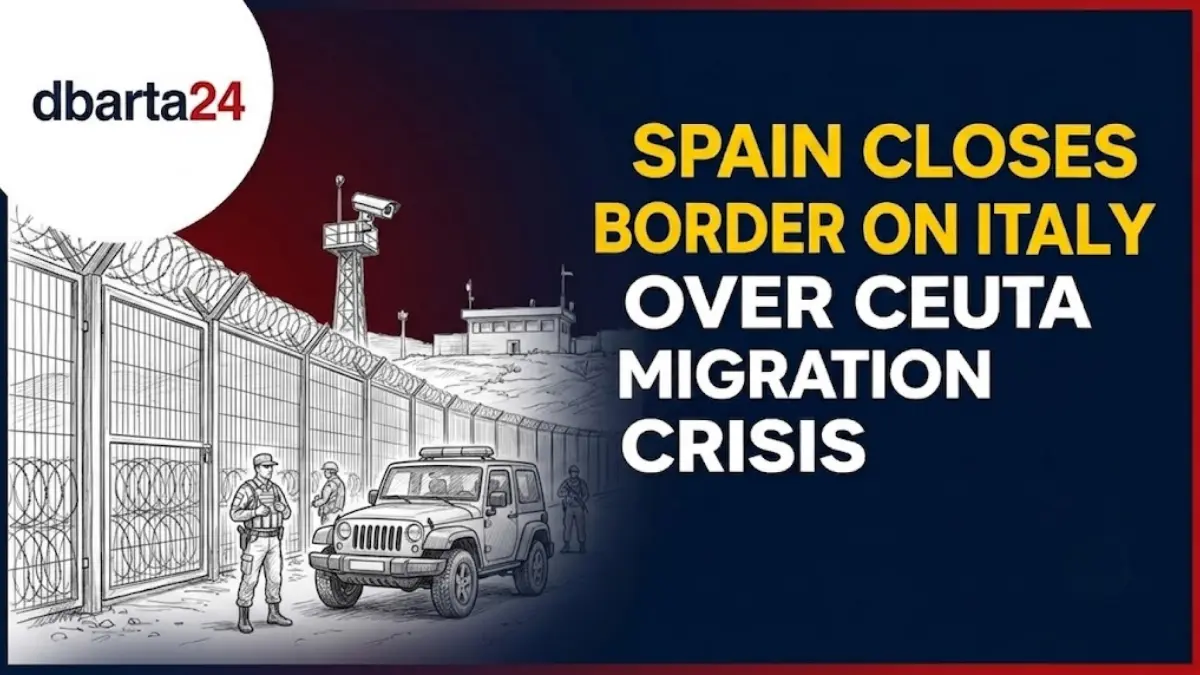
Dbarta24 International Desk — Spain has officially instituted border controls on air and sea travel arriving from Italy, marking a sharp escalation in a diplomatic dispute between the two Mediterranean nations over a recent migration surge in the Spanish enclave of Ceuta.
Effective midnight Friday, the temporary measures are slated to remain in place for one month.
The decision follows a similar move by Rome last week, which imposed border restrictions after nearly 7,800 migrants crossed into Ceuta from Morocco.
Italian officials stated their controls would stay in effect until at least August 15, refusing Spain’s deadline demand to dismantle search operations by Sunday.
Diplomatic Strain Over Schengen Rules
The conflict underscores a growing ideological rift between Spanish Prime Minister Pedro Sánchez’s government and Italian Prime Minister Giorgia Meloni, an outspoken advocate for stricter European Union migration policies.
Rome justified its border enforcement under temporary provisions of the Schengen Agreement, arguing the measures prevent migrants who entered Spain from subsequently moving into Italy.
Madrid firmly rejected the rationale as unfounded, maintaining that migrants arriving in Ceuta have no access to the broader Schengen Area and pose no security risk to Italian borders.
While Italian authorities noted that returning Italian citizens are exempt from extra checks, non-Schengen travelers face heightened scrutiny.
Spanish media reported that passengers arriving from Spain are encountering significant delays in dedicated lines at several Italian airports.
Under Spain’s reciprocal protocol, officials will thoroughly verify passports, nationality, and visa status for all arrivals from Italy through at least September 7.
Background of the Ceuta Surge
The dispute stems from an unprecedented influx in Ceuta, where thousands of migrants attempted to reach Spanish territory by swimming from neighboring Morocco.
While the vast majority were repatriated within days, approximately 1,400 unaccompanied minors—many at a very young age—remain in the enclave under Spanish care.
The exact trigger for the sudden surge remains under investigation. EU Migration Commissioner Magnus Brunner suggested that human trafficking networks likely circulated misinformation to provoke the mass movement, an assessment endorsed by the Spanish government.
Legal parameters within Spain have also altered border dynamics. A recent Spanish Supreme Court ruling prohibited authorities from instantly returning migrants intercepted at sea near Ceuta or Melilla without formal processing.
Moroccan officials criticized the judicial ruling, claiming it weakened deterrence mechanisms along the border. Questions also remain regarding why Moroccan border guards did not intercept the initial wave of swimmers.
Broader Implications for the EU
The Spanish Prime Minister’s office confirmed it is closely monitoring the situation and does not anticipate a second immediate influx from Morocco.
However, the tit-for-tat border restrictions between two major EU members place fresh strain on the Schengen Zone’s free-movement model, highlighting the political challenges facing European migration governance.