


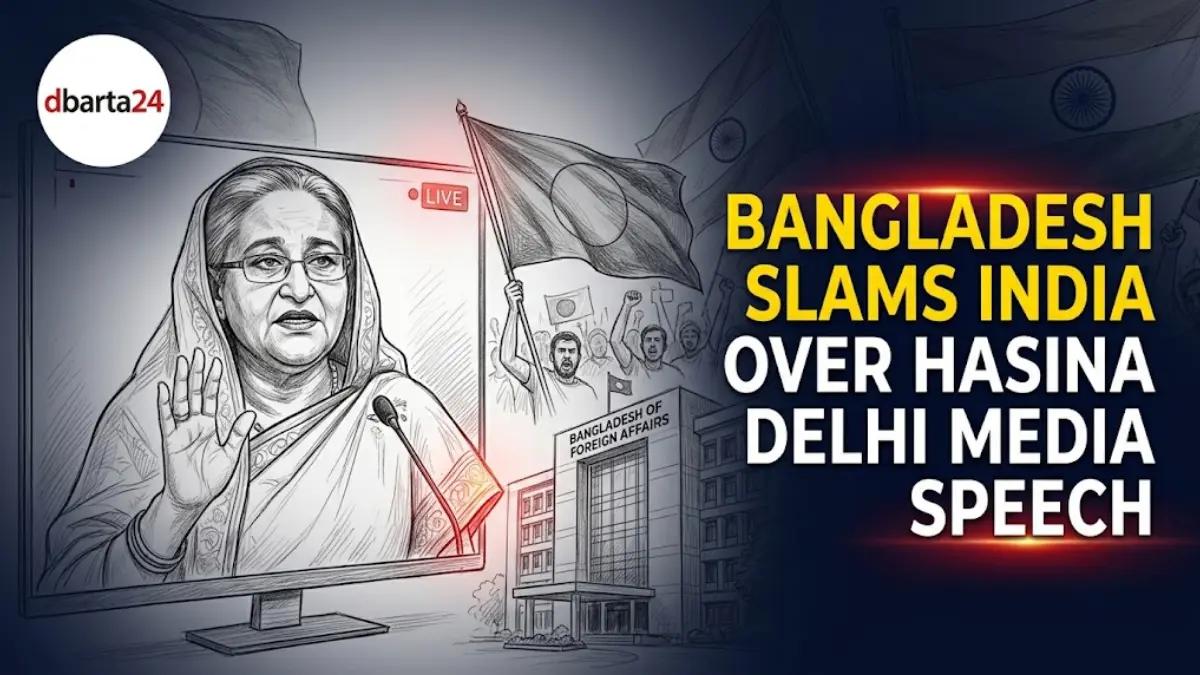
Special Correspondent; Dbarta24 — The Bangladesh Ministry of Foreign Affairs issued a stern statement late Wednesday expressing deep outrage and disappointment over India’s decision to allow convicted former Prime Minister Sheikh Hasina to address a public media conference in New Delhi.
The diplomatic backlash comes as Bangladesh observes the anniversary of the July-August 2024 mass uprising, which culminated in the fall of the Awami League government.
Speaking virtually at an event hosted by the Foreign Correspondents’ Club of South Asia (FCC South Asia) in New Delhi on Wednesday evening, Hasina delivered remarks and answered questions from reporters. This marks the first time she has directly addressed a media event organized in the Indian capital since taking refuge there two years ago.
A Threat to Bilateral Ties and Sovereign Respect
In a strongly worded press release, Dhaka characterized the event as a direct insult to the sovereignty of Bangladesh and a grave disrespect toward the martyrs of the July Revolution.
“Bangladesh is outraged that convicted fugitive mass murderer Sheikh Hasina was permitted to speak directly to the media in New Delhi, where she and her associates spread toxic hatred against the Bangladeshi state and its people,” the foreign ministry stated.
The government highlighted that it had proactively communicated its concerns to New Delhi regarding the potential damage such an event could inflict on efforts to establish a fresh trajectory in bilateral relations.
Dhaka expressed profound regret that Indian authorities permitted the platform despite these warnings.
The ministry further condemned Hasina’s attempt to deny UN-verified findings regarding the killings of innocent civilians and children during the 2024 uprising, labeling it a futile attempt to rewrite history.
Extradition Request Remains Unanswered
The official statement reiterated Dhaka’s desire to maintain a constructive, forward-looking relationship with India based on sovereign equality, mutual respect, non-interference, and national dignity.
However, it pointed out a growing friction point: India’s failure to respond to repeated formal requests under the 2013 Bilateral Extradition Treaty to return Hasina to Bangladesh to face justice.
Instead, granting her a platform to address the public “deeply hurts the sentiments of the Bangladeshi people and harms the development of harmonious bilateral ties,” the ministry noted.
Diplomatic Warnings Preceded the Incident
The confrontation comes despite explicit diplomatic engagements earlier this week. On August 3, Humayun Kabir, Foreign Affairs Adviser to the Chief Adviser, met with Indian High Commissioner to Bangladesh Dinesh Trivedi in Dhaka.
During the meeting, Kabir requested that the Indian government prevent Hasina or any members of the banned Awami League from using Indian territory for political commentary, warning that such activities threaten positive diplomatic momentum.
Similarly, Foreign Minister Khalilur Rahman raised the issue with the Indian High Commissioner on July 29, emphasizing that Hasina’s political activities on Indian soil remain a significant obstacle to normalizing relations between the two neighbors.
Despite these formal representations, the Delhi event proceeded, leaving diplomatic relations between Dhaka and New Delhi facing a renewed period of strain as Bangladesh firmly asserts that the perpetrators of the 2024 atrocities will no longer hold a place in its political landscape.