


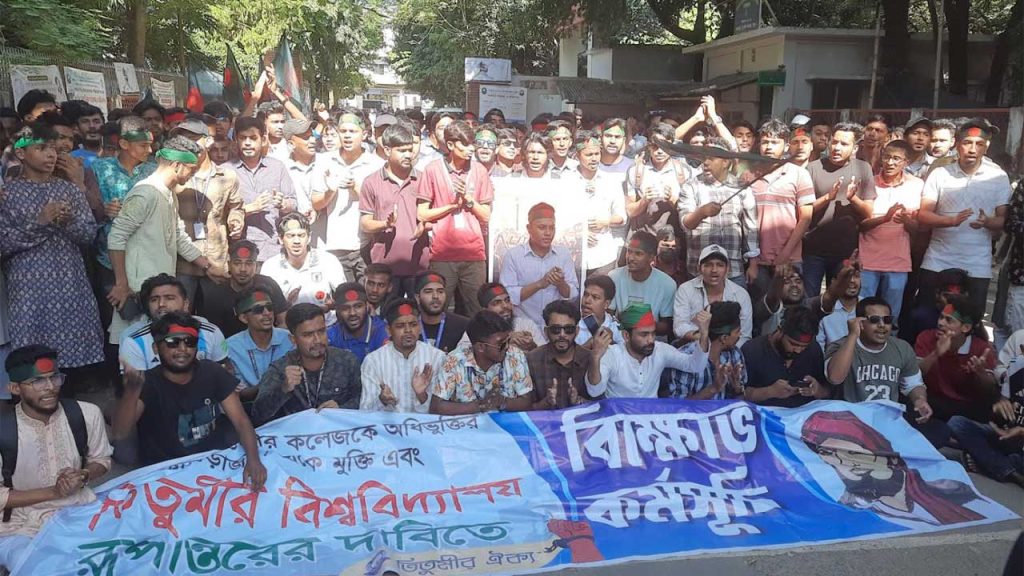
Special Correspondent: Dhaka, the capital of Bangladesh, has become a city of protests, with various groups taking to the streets to voice their demands, causing widespread public suffering.
The interim government, led by Dr. Yunus, is struggling to manage the country amid mounting pressure for swift elections and significant reforms.
Meanwhile, job seekers, students from seven colleges, and Titumir College students have launched separate movements, creating a multi-faceted crisis for the administration.
On Sunday, February 2, Titumir College students blocked roads demanding the college be declared an independent university, halting traffic from Mohakhali to Gulshan.
Similarly, victims of the July uprising staged protests near Pangu Hospital and other key areas, demanding better medical care and the abolition of the category system. Their blockades caused severe traffic jams, forcing many to walk home after work.
In another demonstration, police officers and their families, who lost jobs during the Awami League regime, gathered at the High Court premises, demanding reinstatement.
Meanwhile, the Inquilab platform announced a protest demanding the resignation of the Home Affairs Advisor for failing to address the July massacre.
These protests have paralyzed the city, with at least 20 demonstrations occurring in the past three days.
Local businesses have shut down, and commuters, including public transport drivers, are stranded for hours. Patients and emergency services are particularly affected, with ambulances struggling to navigate blocked roads.
Residents are calling for stricter regulations to ban protests in key areas, citing the unbearable disruption to daily life.
As Dhaka grapples with this wave of unrest, the interim government faces mounting challenges in restoring order and addressing public grievances.