


Muhammad Tareq — In a strategic move to safeguard economic stability, Bangladesh has officially requested the United Nations to extend its Least Developed Country (LDC) graduation preparatory period by an additional three years.
The country has sought reinforced cooperation from the UN to ensure a sustainable and seamless transition, alongside pushing forward its Sustainable Development Goals (SDGs) and institutional reform agendas.
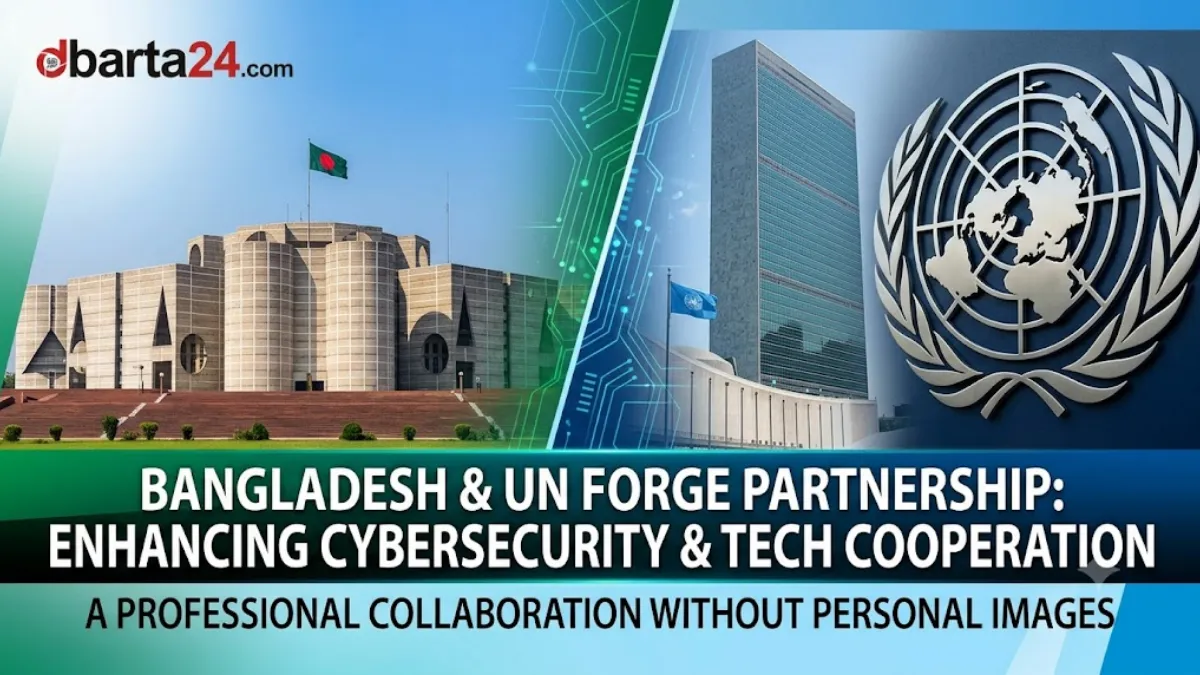
The proposal was formally presented during a series of high-level, separate bilateral meetings held at the UN Headquarters in New York on Tuesday by Dr. Rashed Al Mahmud Titumir, the Prime Minister’s Advisor on Finance and Planning.
Securing Macroeconomic Stability
During a pivotal meeting with Li Junhua, the UN Under-Secretary-General for Economic and Social Affairs, Dr. Titumir detailed the rationale behind seeking the timeline extension.
He emphasized that the breathing room is vital for stabilizing the national economy before transitioning out of the LDC category.
“Bangladesh has requested an extension of the LDC graduation preparatory period by another three years. This extension is proposed to ensure macroeconomic stability, effectively implement the Smooth Transition Strategy, and guarantee a sustainable and irreversible graduation.”
— Dr. Rashed Al Mahmud Titumir, Advisor on Finance and Planning
In response, Li Junhua assured that the UN Department of Economic and Social Affairs (UN DESA) remains fully committed to supporting Bangladesh’s development journey.
He affirmed the department’s intent to work hand-in-hand with the government to make the graduation process resilient and successful.
Driving Reform Through the ‘Three R’ Strategy
In another engagement with Armida Salsiah Alisjahbana, the Executive Secretary and Under-Secretary-General of the UN Economic and Social Commission for Asia and the Pacific (UN-ESCAP), Dr. Titumir highlighted how the mandate from the February 2026 national elections has fortified the government’s pursuit of institutional accountability, good governance, and citizen-centric growth.
He briefed the UN official on the government’s newly minted “Three R” (Recovery, Restoration, and Reconstruction for Acceleration) strategy, describing it as the primary roadmap for restoring economic balance and driving long-term fiscal momentum.
Alisjahbana praised Bangladesh’s progressive steps toward launching universal social security and promised UN-ESCAP’s continued backing in enhancing regional connectivity and climate resilience.
Sustaining Democratic Governance
The advisor also met with Kanni Wignaraja, the Assistant Secretary-General and UNDP Regional Director for the Bureau for Asia and the Pacific.
Their discussions focused tightly on democratic governance and the realization of sustainable development priorities.
Dr. Titumir pressed the need for consistent UNDP partnership during this critical phase of structural overhaul, to which Wignaraja reiterated the agency’s steadfast commitment to aiding Bangladesh’s institutional reforms.
Outlook for a Resilient Transition
As global and domestic economic headwinds present complex challenges, Bangladesh’s appeal for a three-year delay underlines a cautious, pragmatic approach to international trade changes.
Striking a balance between the prestige of leaving the LDC bracket and managing the loss of preferential trade benefits remains a core priority for Dhaka.
By seeking a revised timeline, the administration aims to build a sounder economic cushion to prevent any reversal of its developmental gains.