


Desk Report; DHAKA – Amid a deepening global fuel crisis, law enforcement agencies in Bangladesh have intensified operations to curb the illegal hoarding and smuggling of petroleum products.
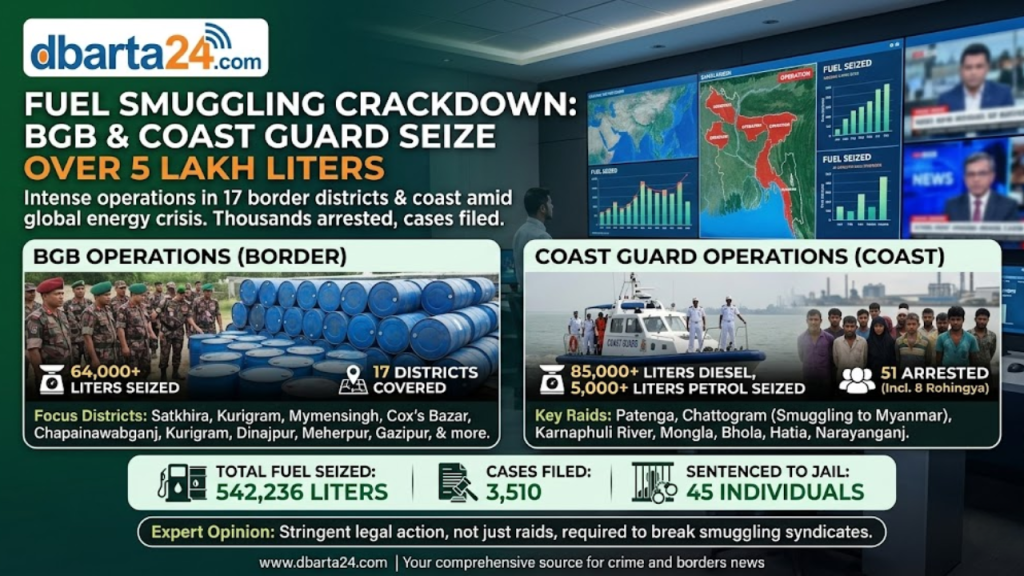
Border Guard Bangladesh (BGB) has conducted extensive drives across 17 frontier districts, seizing over 64,000 liters of fuel intended for the black market.
Massive Seizures at Border and Coast
According to BGB data, raids took place in districts including Satkhira, Kurigram, Mymensingh, Cox’s Bazar, and Chapainawabganj.
In a parallel effort, the Bangladesh Coast Guard seized 85,000 liters of diesel and 5,000 liters of petrol, arresting 51 individuals.
A significant operation on April 4 at the Patenga coast in Chattogram led to the arrest of 12 people, including eight Rohingya nationals, who were attempting to smuggle 6,000 liters of diesel to Myanmar.
Earlier, on March 26, authorities recovered 37,000 liters of illegally hoarded diesel from a lighterage ship in the Karnaphuli River.
Nationwide Drive Against Hoarding
The Energy and Mineral Resources Division reported that as of last Tuesday, a total of 542,236 liters of fuel—comprising diesel, octane, petrol, and furnace oil—have been seized nationwide.
To ensure fair distribution, 9,116 operations were conducted until April 14, resulting in 3,510 cases and fines totaling over 15.6 million BDT. Additionally, 45 individuals received various jail sentences through mobile courts.
The Root of the Crisis
Experts attribute the current local shortage to the escalating conflict between Iran, Israel, and the USA, which has disrupted global energy supplies.
In Bangladesh, daily demand in March averaged over 12,000 tons of diesel. Taking advantage of supply gaps at depots, syndicates and unscrupulous traders have begun hoarding fuel to create artificial crises.
Law enforcement remains on high alert, particularly in border zones like Kurigram and Dinajpur, where hoarding activities are most prevalent.
Under the Petroleum Act of 1934, storing fuel without a license is a punishable offense, and mobile courts led by Executive Magistrates continue to cancel licenses and impose strict penalties on dishonest businessmen.