


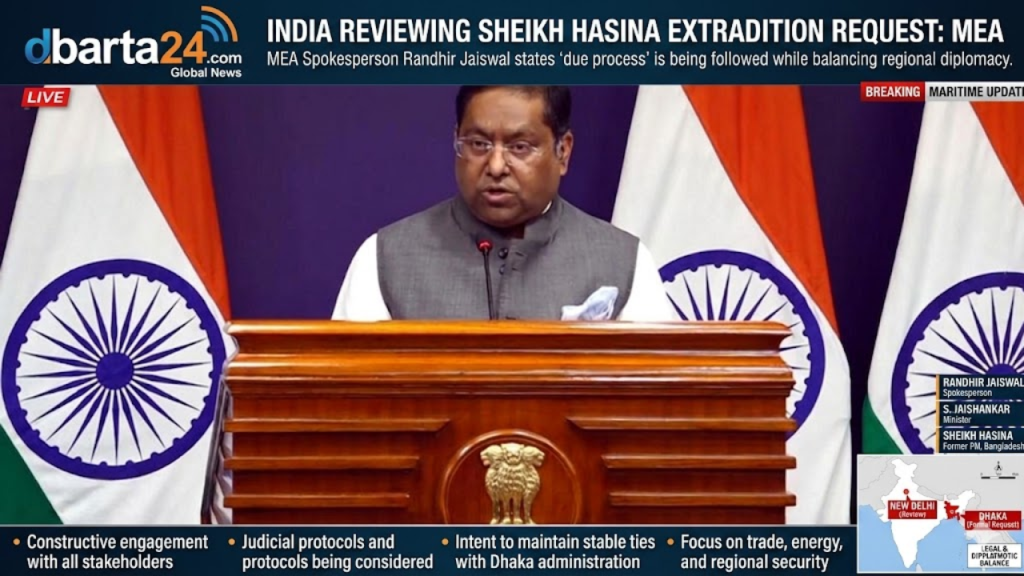
International Desk; NEW DELHI – India has officially confirmed that it is reviewing a formal request for the extradition of ousted former Prime Minister Sheikh Hasina through established legal and judicial channels.
Legal and Judicial Review
In a weekly media briefing on Friday (April 17, 2026), Ministry of External Affairs (MEA) spokesperson Randhir Jaiswal stated that the Indian government is balancing its legal obligations with regional diplomacy.
“The request is being examined as part of ongoing judicial and internal legal processes,” Jaiswal said. “We will continue to engage constructively with all stakeholders and are monitoring the situation closely.”
India acknowledged receiving the initial extradition request earlier and emphasized that the process is currently undergoing a rigorous assessment within India’s judicial framework, governed by internal legal protocols.
Diplomatic Re-engagement with Dhaka
Despite the sensitivity surrounding Sheikh Hasina’s presence in India since August 2024, New Delhi has signaled its intent to maintain stable relations with the new administration in Dhaka. Citing External Affairs Minister S. Jaishankar, the spokesperson reiterated India’s desire to work constructively with the new government to strengthen bilateral ties.
Both nations have agreed to utilize formal channels to discuss new proposals for cooperation in key sectors, including:
-
Trade and Economy
-
Energy Security
-
Regional Security
Upcoming High-Level Meetings
Schedules for official-level meetings are being finalized to align the perspectives of both countries on regional and global issues. “Official meetings are expected to take place at an early date to exchange views on mutual interests,” Jaiswal added.
The current government in Dhaka is under significant domestic pressure to bring Sheikh Hasina back to face trial following the student-led mass uprising in July 2024. Conversely, New Delhi’s priority remains the “best interests of the people of Bangladesh” while ensuring that its own legal “due process” is followed without jeopardizing strategic bilateral relations.