


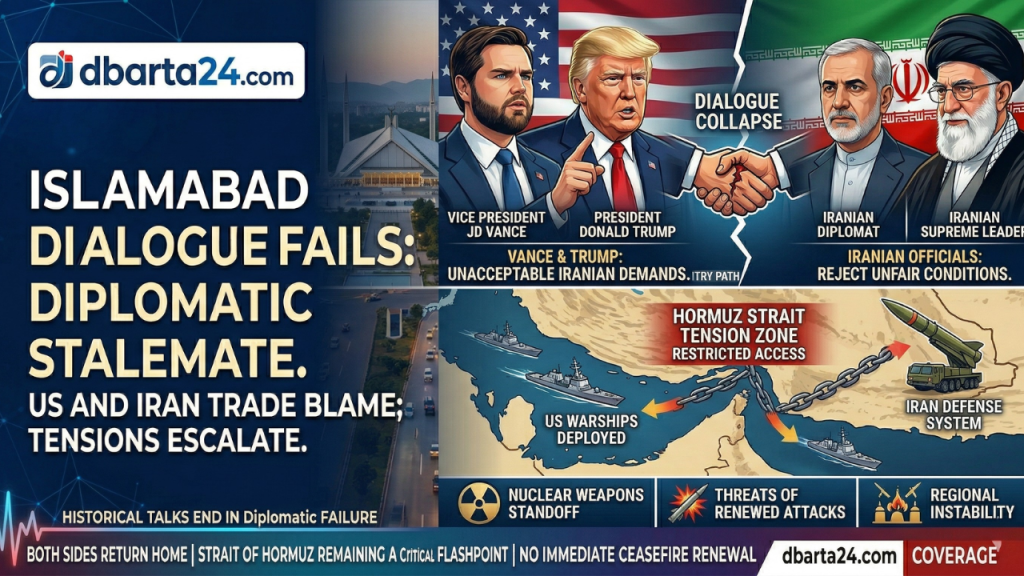
International Desk: dbarta24.com – The highly anticipated direct talks between the United States and Iran in Islamabad have ended without an agreement.
Both parties left the Pakistani capital on Sunday, trading blame for the diplomatic collapse. With the dialogue failing to secure a permanent peace treaty, the region now faces renewed uncertainty.
The Hormuz Strait and Military Escalation
One of the most critical points of contention remains the Strait of Hormuz, which Iran has largely kept restricted. According to international correspondents, the failure of these talks effectively ends the possibility of reopening the vital waterway through diplomacy.
The recent deployment of two U.S. warships to the Gulf suggests that Washington may now be pursuing a “Plan B” involving military pressure.
Nuclear Standoff and Renewed Threats
Washington attributed the failure to Tehran’s refusal to commit to halting its nuclear weapons program—a program Iran continues to claim is for peaceful purposes.
Analysts warn that after facing two major conflicts within a single year, the pro-nuclear voices within Iran might gain more influence.
While a two-week ceasefire was implemented last Wednesday following President Trump’s threats toward Iranian infrastructure, there has been no official confirmation on whether U.S. strikes will resume immediately.
However, the lack of a diplomatic breakthrough makes a return to hostilities highly likely.
Historical Diplomacy or Failure?
Experts describe the Islamabad summit as historic yet potentially one of the greatest diplomatic failures in modern history.
Ross Harrison, a senior fellow at the Middle East Institute, told Al Jazeera that if the rigid public stances mirrored the private negotiations, the path forward is incredibly narrow.
The world now waits to see if any “back-channel” progress was made behind closed doors, though visible signs point toward a dangerous escalation.