


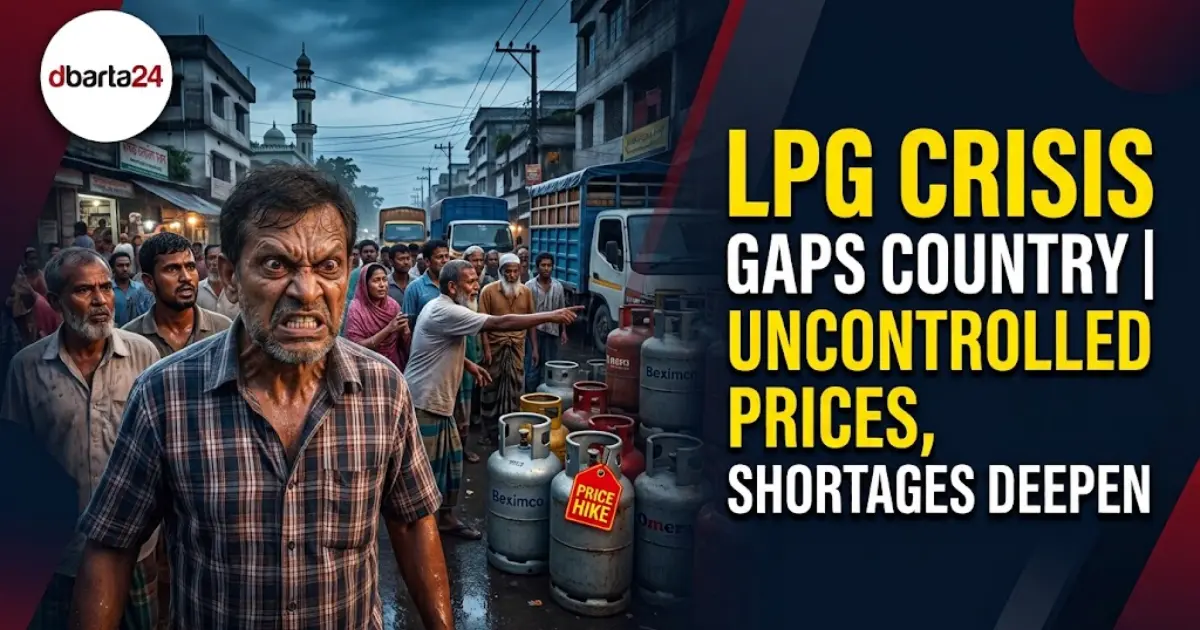
Dbarta24 Report — A severe supply crunch and rampant overcharging continue to destabilize Bangladesh’s Liquefied Petroleum Gas (LPG) market, leaving consumers helpless even after energy regulators authorized a sharp price increase.
Despite the Bangladesh Energy Regulatory Commission (BERC) hiking the retail price of a 12 kg private LPG cylinder by Tk 252 to Tk 1,837 starting Sunday evening, distributors and retailers across multiple districts are defying official tariffs. Consumers report paying anywhere between Tk 400 and Tk 900 above the mandated rate, with 12 kg cylinders fetching up to Tk 2,500 in severely affected areas.
Market Anarchy Across Districts
The gap between official regulation and market reality is stark across the country:
-
Munshiganj & Mymensingh: Consumers report paying between Tk 2,200 and Tk 2,500 for a standard 12 kg cylinder.
-
Comilla: Steel cylinders are selling for around Tk 1,950, while plastic variants are priced as high as Tk 2,300.
-
Rajshahi & Bogra: Retailers in Kazla, Bhadra, and Charghat are selling cylinders for Tk 1,950 to Tk 2,000, with several shops hoarding stock while claiming an absence of supply.
-
Barisal, Rangpur, & Gaibandha: Popular brands like Omera and Igas are retailing for Tk 1,820 to Tk 1,940, with small vendors struggling to secure stock.
The price surge has severely impacted commercial consumers as well. In Mymensingh, larger 30 kg and 45 kg commercial cylinders are being sold at premiums of Tk 1,200 to Tk 1,500 above the BERC rate. A typical restaurant consuming around 20 large cylinders monthly faces an unexpected operational cost overrun of Tk 24,000.
Transport Disruptions and Law Enforcement Crackdowns
The shortage has spilled onto public infrastructure. On Sunday, Auto-LPG drivers blocked the Cox’s Bazar–Chittagong highway at Link Road for nearly two hours to protest severe gas shortages before local authorities intervened to restore traffic flow.
In response to widespread allegations of gouging, market monitoring drives have intensified:
-
Ashulia: Two commercial establishments were fined Tk 10,000 and Tk 2,00,000, respectively. Charges against one facility included illegal price markups, illegally refilling small cylinders from larger units, and adulterating cylinders with water.
-
Barisal, Gaibandha, & Munshiganj: Multiple retail outlets faced cumulative fines exceeding Tk 80,000 for failing to display or adhere to official pricing charts.
Cost Drivers: Global Trends and Import Premiums
BERC attributed the recent price surge to rising international benchmarks and elevated shipping expenses. The regulator adjusted the October tariff based on Saudi Aramco’s updated Contract Price (CP):
| Metric | September 2026 | October 2026 |
| Propane Price (per ton) | — | $680 |
| Butane Price (per ton) | — | $730 |
| Average Saudi CP (35:65 ratio) | $647.75 | $712.50 |
| Freight & Merchant Premium (per ton) | $160.00 | $250.00 |
| USD Exchange Rate Benchmark | — | Tk 123.18 |
Concurrently, Auto-LPG prices were revised upward from Tk 73.09 to Tk 84.62 per liter. While the state-owned LP Gas Company’s 12.5 kg cylinder price remains pegged at Tk 825, severe supply bottlenecks mean only a fraction of consumers can access government-subsidized gas.
The Blame Game: Importers vs. Distributors
Market stakeholders remain sharply divided over the root cause of the shortfall. The LPG Business Cooperative Association alleged that major importers slashed supply by approximately 80% after September 20, with key depots halting deliveries entirely after September 25.
Importers, however, vehemently deny allegations of artificial hoarding. They maintain that international price hikes and soaring freight charges created logistics challenges, asserting that they continue to supply distributors at official BERC benchmark rates.
To verify supply claims, BERC issued formal show-cause notices to 12 major LPG importing companies requesting import and distribution ledgers for September. As of Sunday, only five importers had submitted data.
“We are currently reviewing the submitted import and sales records from the importers and will determine our next administrative actions based on these findings.”— Jalal Ahmed, Chairman, BERC
Until administrative enforcement aligns retail pricing with BERC regulations and import data resolves supply transparency issues, Bangladeshi households and commercial enterprises remain trapped between mounting living costs and unpredictable market supplies.