


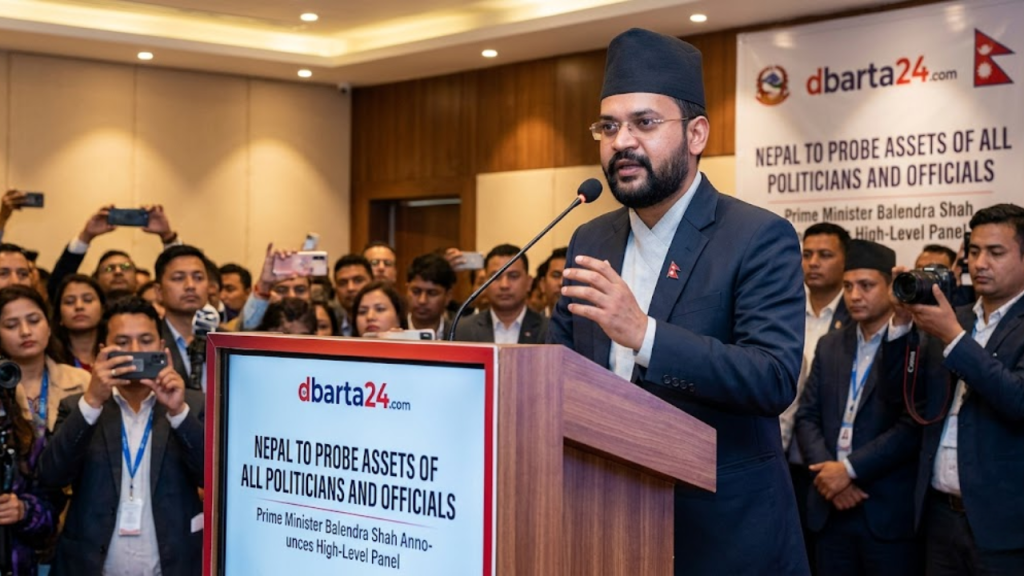
The decision follows the landmark parliamentary elections held on March 5, which saw a landslide victory for the Rashtriya Swatantra Party (RSP).
The party is led by 35-year-old Balendra Shah, a former rapper who rose to political prominence as the Mayor of Kathmandu. This was the country’s first national election since the “Gen Z” anti-corruption protests last September.
A Reformist Mandate
Prime Minister Balendra Shah built his reputation on a reformist agenda during his three-year tenure as Kathmandu’s mayor. His administration’s latest move fulfills a core campaign promise to root out deep-seated graft.
Cabinet spokesperson Shashmit Pokhrel announced that the five-member investigation panel will be headed by Rajendra Kumar Bhandari, a retired Justice of the Supreme Court.
“An impartial investigation will be conducted based on evidence and legal standards,” Pokhrel told reporters following a cabinet meeting on Wednesday night. “The government will take action through relevant agencies based on the panel’s findings and recommendations.”
No Time Limit Set
While the panel has been granted significant authority, the government has not yet specified a deadline for the submission of the final report.
Political analysts suggest that the probe could cover hundreds of officials who have held office since 2008—the year a mass movement abolished Nepal’s 239-year-old monarchy.
The RSP’s rise to power marks a significant shift in the political landscape, as the young party successfully challenged the traditional political elite that had dominated Nepal for decades.