


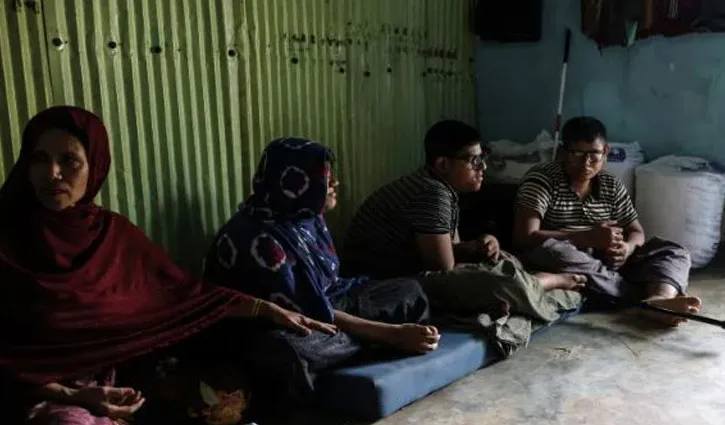
Khairul Alam,Cox’s Bazar: The world’s largest refugee camp, housing over a million displaced Rohingya Muslims, is on the brink of a severe humanitarian crisis as international aid dwindles. Once described as the most persecuted, the Rohingya now appear to be among the most forgotten, facing an uncertain future after Myanmar’s military junta orchestrated a campaign of ethnic cleansing against them.
During his visit to the camp last May, UN Secretary-General António Guterres highlighted the dire situation, stating, “Cox’s Bazar is now the epicenter where budget cuts are having the most devastating impact on the most vulnerable people.” His visit coincided with significant budget reductions to USAID by then-US President Donald Trump, stalling several crucial projects in the camp. Simultaneously, the UK announced cuts to foreign aid to boost defense spending, leading to a major decline in healthcare services for the Rohingya.
Personal Stories of Suffering
The impact of these cuts is deeply personal for many. Zahid Alam, 53, a former farmer from Myanmar, shared his ordeal with Al Jazeera. In 2016, his left leg inexplicably swelled, making it impossible to work. He later fled Myanmar when the military attacked his village, eventually joining his family in Bangladesh. Zahid is now receiving treatment at the Kutupalong camp under Doctors Without Borders (MSF), but doctors are considering amputation for what might be elephantiasis. “They call me ‘lame’ when they see I can’t walk properly,” he said, yet remains hopeful.
Jahanara Begum, living near Zahid, carries her own burden. Her three adult children are blind and suffer from intellectual disabilities, conditions that went untreated in Myanmar. “It was heartbreaking to see them like this,” she recounted. MSF is now providing eyeglasses and investigating the root cause of their disabilities. Despite their limited communication, Jahanara finds strength in hearing her children utter “Amma,” meaning “Mother.”
Landmine Victims’ Plight
The physical and mental toll extends to victims of landmines. Anwar Shah, 25, lost a leg to a landmine last year while collecting firewood in Myanmar. “That was the longest, most painful day of my life,” he recalled, now reliant on crutches. He feels like a burden, saying, “The pain is not just physical—it’s deep, in my mind.” Similarly, 25-year-old Abdul Hashem’s life changed drastically after stepping on a landmine in February 2024. Both are undergoing rehabilitation, with Humanity & Inclusion providing prosthetic limbs and gait training to restore their independence. Myanmar’s conflict zones are among the deadliest globally for landmine casualties, with over a thousand victims in 2023.
Tough Choices for Aid Workers
Aid workers face agonizing decisions due to funding cuts. A Bangladeshi health worker, who wished to remain anonymous, told Al Jazeera, “With reduced aid, we now have to choose between providing food or offering education and healthcare.” John Quinley of Fortify Rights emphasized that the Rohingya crisis is a shared regional responsibility, urging Southeast Asian countries and OIC members to step forward.
The funding shortfall is critical. The 2024 Joint Response Plan for Rohingya required $852.4 million, but only 30% has been received. For 2025, only 15% of the $934.5 million appeal has materialized so far. Blandine Buniol of Humanity & Inclusion called the aid budget cuts a “short-sighted policy” that will have devastating consequences for the refugees.