


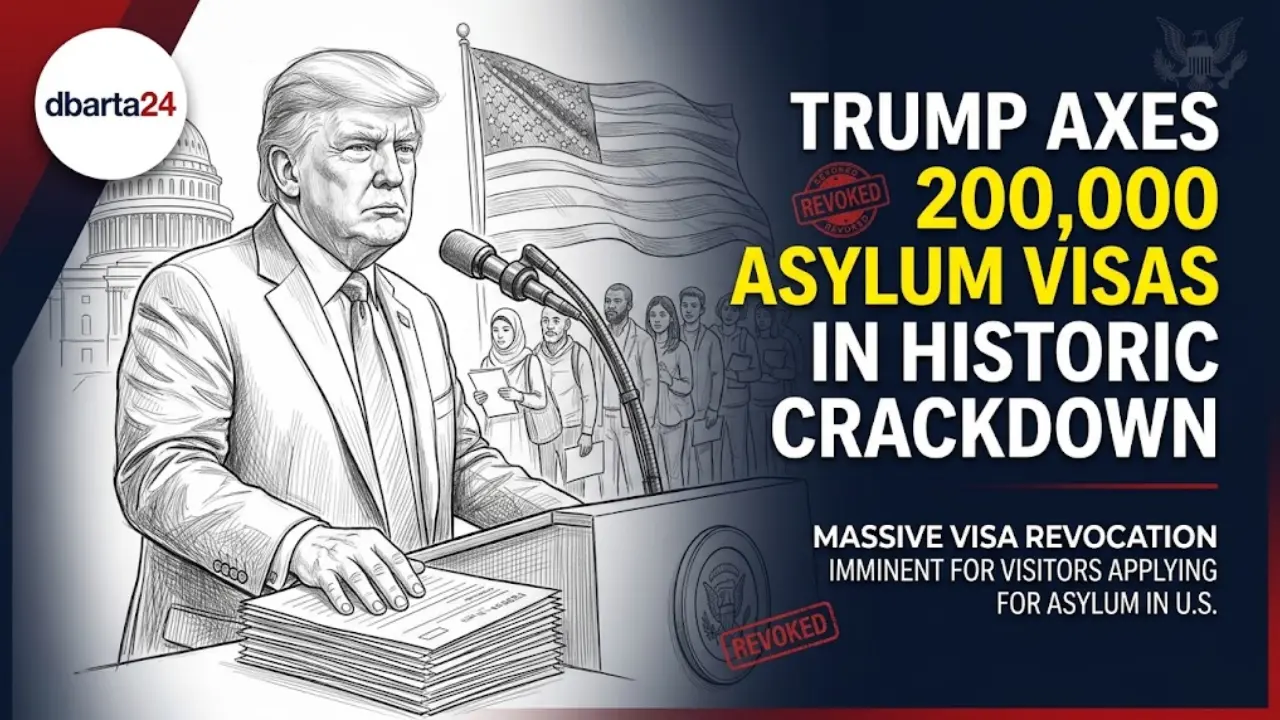
Dbarta24 International Desk — In what could mark the largest mass visa revocation in United States history, the administration of President Donald Trump is preparing to cancel the temporary visas of nearly 200,000 foreign nationals who applied for asylum after entering the country.
The move, confirmed on Monday by a U.S. Department of State official, forms part of a broader, aggressive crackdown aimed at curbing both legal and unauthorized immigration.
Under the initiative, the State Department is collaborating with the Department of Homeland Security (DHS) to identify foreign visitors who arrived on short-term visas and subsequently filed for permanent asylum.
While the State Department did not disclose exact figures, reports citing internal U.S. official documents indicate that the decision targets holders of B-1 (business) and B-2 (tourism) visas issued between 2016 and 2026.
Shift in Legal Status
The revocation of a visa will not trigger immediate deportation for those affected.
Individuals with pending asylum claims will remain in the country while their cases proceed through the immigration system, though their status will be reclassified.
However, they will forfeit all benefits and privileges associated with their original business or tourist visitor status.
Defending the initiative, Deputy Secretary of State Christopher Landau addressed the issue on social media platform X, criticizing past enforcement.
“The U.S. immigration system has long been flooded with baseless or fraudulent asylum claims,” Landau stated.
The announcement follows disclosures by the State Department earlier this month revealing that the Trump administration has already revoked over 175,000 visas during its current term.
Expanding Immigration Enforcement
Delivering on key campaign promises to strictly control U.S. borders, the Trump administration has continuously ramped up immigration enforcement since taking office.
The strategy includes revoking visas and green cards, expediting deportations, and tightening entry requirements for prospective immigrants.
The aggressive policy push has sparked intense criticism from human rights organizations and legal advocacy groups.
Rights defenders contend that the measures undermine due process, restrict freedoms, and create heightened insecurity for racial and ethnic minority communities.
Several of the administration’s immigration policies are already facing legal challenges in federal courts.
As court battles loom, the U.S. government shows no signs of slowing its efforts to overhaul the national immigration framework.