


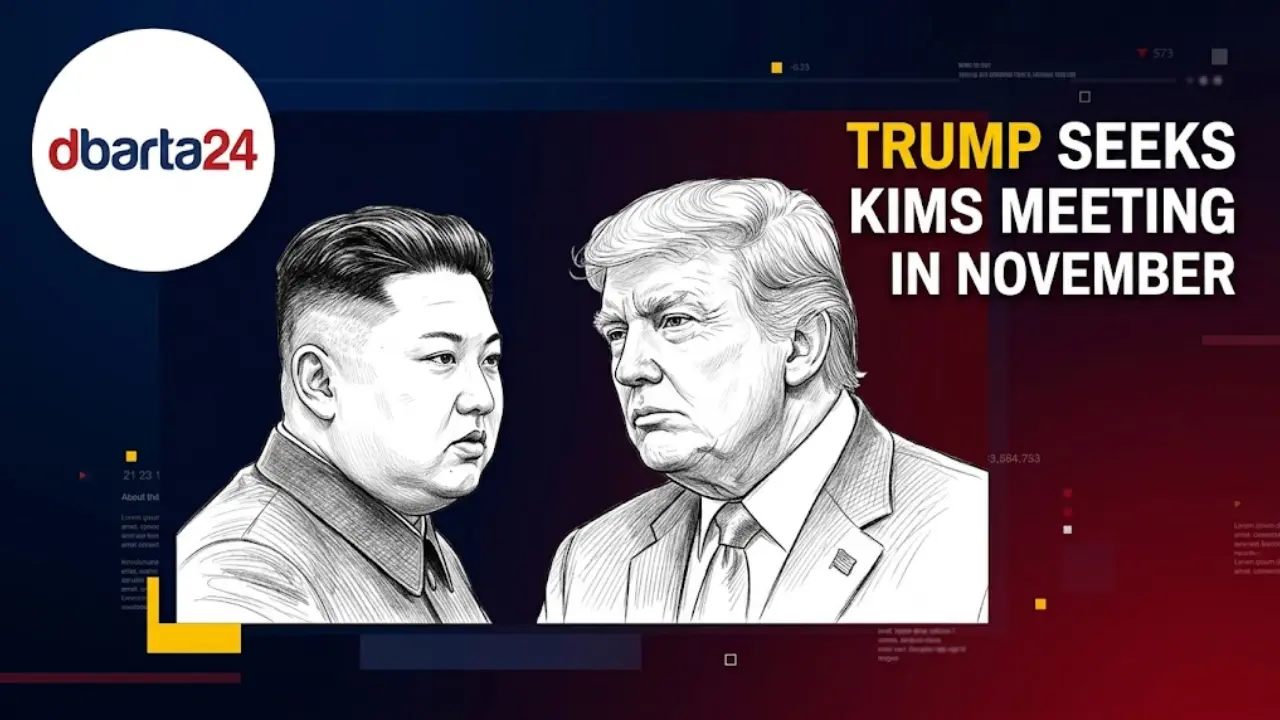
Dbarta24 International Desk — U.S. President Donald Trump is seeking to hold a bilateral summit with North Korean Supreme Leader Kim Jong Un this coming November, aiming to revive direct leader-level diplomacy between Washington and Pyongyang.
Senior White House officials revealed that Trump plans to utilize his upcoming trip to China for the Asia-Pacific Economic Cooperation (APEC) summit in Shenzhen as an opportunity to meet with the North Korean chief.
According to sources, Trump has already instructed his administrative team and White House staff to initiate necessary preparations for arranging the high-stakes engagement.
Addressing queries regarding the potential encounter, a White House spokesperson stated:
“Our president will meet with Kim Jong Un at the appropriate time.”
Members of North Korea’s delegation to the United Nations have so far declined to comment on the proposal.
Historical Precedent and Past Diplomacy
Donald Trump remains the only sitting U.S. president in history to have ever met face-to-face with a supreme leader of North Korea. During his first presidential term (2016–2020), Trump and Kim met on three separate occasions to discuss denuclearization and bilateral security:
-
June 2018 (Singapore): The historic first summit marked the first-ever meeting between active leaders of the two nations.
-
February 2019 (Hanoi, Vietnam): A second summit focused on sanctions relief and nuclear disarmament protocols.
-
June 2019 (Korean Demilitarized Zone): An impromptu meeting in the DMZ, where Trump briefly stepped into North Korean territory, becoming the first U.S. president to set foot on North Korean soil.
High Stakes for Regional Stability
If realized, a November summit in Shenzhen would represent the first formal meeting between the two leaders in over seven years. While Washington maintains its official stance of being open to engagement, foreign policy observers note that any diplomatic reset will carry significant implications for nuclear proliferation and geopolitical security across East Asia.
Whether Pyongyang accepts the invitation remains unconfirmed, but Trump’s proactive administrative moves signal a renewed attempt to rebuild direct lines of communication between the U.S. and North Korea.