


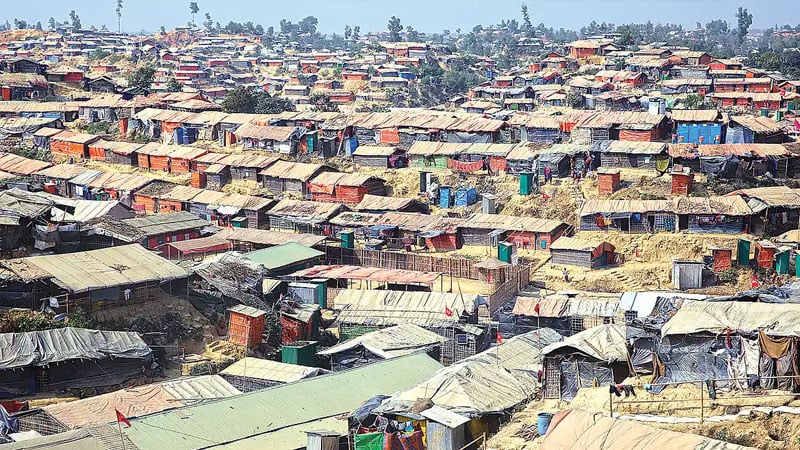
Ifaz Rehan: The United Nations has unveiled the “Joint Response Plan 2024” aimed at addressing the humanitarian crisis affecting Rohingya refugees in Bangladesh.
Since their exodus from Myanmar in August 2017, the Rohingya have faced dire conditions, prompting concerted efforts by the government and the UN.
Despite ongoing assistance efforts, funding shortages continue to plague humanitarian initiatives. This year, the demand for aid remains high, encompassing both Rohingya refugees and local communities in Cox’s Bazar, totaling around 1.5 million individuals.
However, due to funding constraints, assistance can only be provided for 1.3 million people.
Today, in Geneva, the Bangladesh government, led by Prime Minister’s Office Principal Secretary Mohammad Tofazzal Hossain Mia, will participate in the unveiling of “JRP-2024”.
The plan, with a projected budget of $850 million, aims to cater to the needs of both Rohingya refugees and host communities. However, with two million Bangladeshis excluded from the plan due to funding limitations, concerns about the exacerbation of the crisis persist.
The priority areas of the plan include ensuring food security, providing dignified shelter, healthcare services, clean water, sanitation facilities, and facilitating safe repatriation. Food security emerges as the foremost concern, requiring immediate attention.
Reflecting on past assistance, in 2023, international support dwindled, meeting only 50% of the required funding. In contrast, in previous years, assistance hovered around 69-75% of the demand.
The decreasing aid poses risks of further deterioration in living conditions, potentially leading to lawlessness and compromising local law enforcement efforts.
The UN stresses the importance of managing projects sustainably, empowering Rohingya to become self-sufficient and enhancing their skills.
Moreover, the UN warns that a reduction in food assistance could exacerbate malnutrition and instability within camps, increasing the vulnerability of Rohingya, particularly women and children, to trafficking and exploitation.
The situation underscores the urgent need for continued international support to alleviate the Rohingya crisis in Bangladesh.