


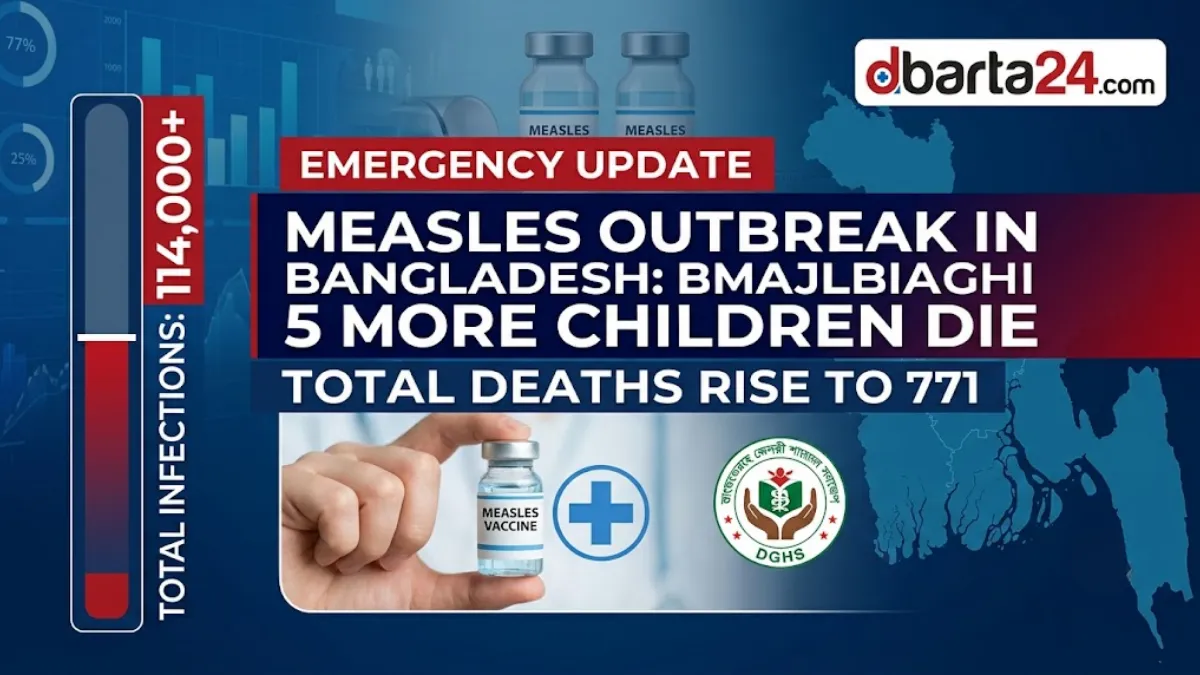
Muyabia Labony ; Health Desk — A devastating measles outbreak continues to sweep across Bangladesh, claiming the lives of five more children and infecting over a thousand others within a single day.
The Directorate General of Health Services (DGHS) confirmed these latest casualties in its daily update on Wednesday, signaling a critical public health crisis that has caught health officials and parents off guard.
Of the five children who died from measles symptoms in the last 24 hours, four were from Dhaka, while one death was reported in Mymensingh.
Rapid Spreading and Mounting Casualties
According to official statistics, a staggering 1,092 children were newly diagnosed with measles or exhibited strong symptoms over the past 24 hours. Among these, 172 cases were laboratory-confirmed.
This latest wave of infections pushes the grim toll of this outbreak to historic highs:
-
Since March 15, a total of 771 children have died nationwide from the disease.
-
Of the total fatalities, 676 children died with severe measles symptoms, while 95 succumbed after their laboratory tests confirmed a positive measles diagnosis.
-
During this period, 114,164 children have shown symptoms of the virus, with 13,907 officially testing positive.
-
Hospitalizations have spiked dramatically, with 96,878 children admitted for treatment. Fortunately, 93,260 have successfully recovered and returned home.
In the last 24 hours alone, 851 children were hospitalized, while 877 were discharged after recovery.
A Historic Crisis: The Roots of the Resurgence
Bangladesh has never witnessed a measles outbreak of this magnitude in its recorded history. Over the past two and a half decades, the annual number of infections has never breached the 50,000 mark.
To put this in perspective, the previous record high occurred in 2005 with 25,934 recorded cases. Since then, highly effective immunization campaigns successfully drove the numbers down. In 2025, Bangladesh recorded a mere 132 measles cases.
The preceding five years also maintained extremely low figures: 2,410 cases in 2020, 203 in 2021, 311 in 2022, 281 in 2023, and 247 in 2024, with virtually zero deaths reported.
The current crisis began taking root in January of this year. Health analysts point to a severe gap in routine immunization programs during the term of the previous interim government as the primary catalyst behind the sudden, explosive spread of the highly contagious virus.
Critical Need for Immediate Intervention
Public health experts warn that containing this unprecedented surge requires an aggressive, countrywide supplemental immunization campaign.
Without immediate and widespread catch-up vaccination drives to target the children missed during recent administrative transitions, the virus will continue to find vulnerable hosts, putting thousands more young lives at immediate risk.