


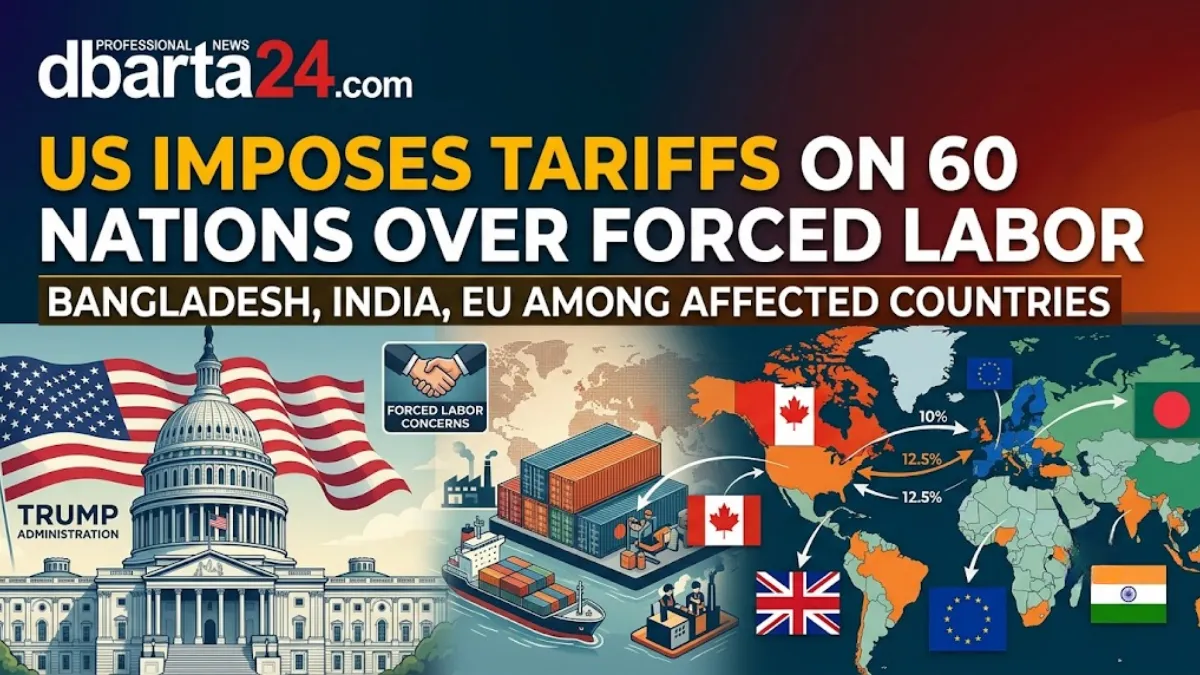
Business Desk — The US administration under President Donald Trump is set to levy new import tariffs ranging from 10% to 12.5% on 60 trading partners, including Bangladesh, India, and the European Union.
The decision comes as a punitive measure against nations that Washington accuses of failing to take adequate steps to prevent forced labor.
According to a Reuters report, these new measures will take effect immediately following the expiration of the temporary 10% global tariffs. The newly restructured tariffs will impact approximately 99.4% of all goods imported into the United States.
However, critical sectors such as oil and gas, fertilizers, select food products, and items already subjected to national security tariffs will be exempted from this rollout.
Legal Grounding and Strategy
The White House confirmed that the administration is implementing the new duties under Section 301 of the Trade Act of 1974.
This legal pivot follows a US Supreme Court ruling in February, which struck down President Trump’s previously proposed “reciprocal tariffs” that relied on national emergency powers.
By anchoring the decision to Section 301, legal analysts note that the administration has built a more formidable defense against potential court challenges, given the extensive historical precedent of the statute.
Defending the move, US Trade Representative Jamison Greer stated, “For nearly a century, the United States has prohibited and strictly enforced the ban on imports made with forced labor.
It is time for our trading partners to implement similar safeguards.” He added that the new tariffs are designed to directly combat human rights abuses and address distorted trade practices.
Global Breakdown of the Tariff Tiers
The tariff structure divides US trading partners into specific categories based on existing trade relationships and labor assessments:
-
The 10% Tier: Bangladesh, India, the United Kingdom, Canada, Malaysia, Mexico, Pakistan, and Sri Lanka are among the 18 nations hit with a flat 10% tariff.
-
The Adjusted Tier (10% to 12.5%): The European Union, Japan, South Korea, Taiwan, and Switzerland will see their total effective tariff rates adjusted to either 10% or 12.5%, factoring in existing duties.
-
The High Tier (12.5%): The remaining 38 nations, including China, face a 12.5% tariff. Washington has continuously alleged that China uses forced labor involving Uyghur Muslims and other minorities in the Xinjiang region—an accusation Beijing has repeatedly denied.
US officials emphasized that for countries holding active trade agreements with the United States, the newly introduced duties will not breach the maximum tariff ceilings established under those existing treaties.
Rising Backlash At Home and Abroad
The sweeping economic policy has sparked swift condemnation globally. Expressing strong opposition, Norway’s Foreign Minister Espen Barth Eide stated, “Norway has clear laws to prevent trade in goods produced by forced labor. Therefore, there is no justification for imposing such tariffs on us.”
Both Australia and Brazil labeled the tariffs unjustified and demanded an immediate withdrawal, while Canada announced it would engage in direct negotiations with US officials.
Domestically, the policy is also facing political friction. Massachusetts Governor Maura Healey criticized the administration’s strategy, warning of severe domestic economic consequences.
“This will increase costs for businesses, reduce market competitiveness, and ultimately hit the pockets of American consumers,” Healey said.
While the Trump administration frames the massive tariff rollout as a human rights and fair-trade victory, the strategy introduces fresh friction into the global supply chain.
With key allies and domestic leaders warning of inflationary pressures, the long-term impact on international trade relations remains highly volatile.