


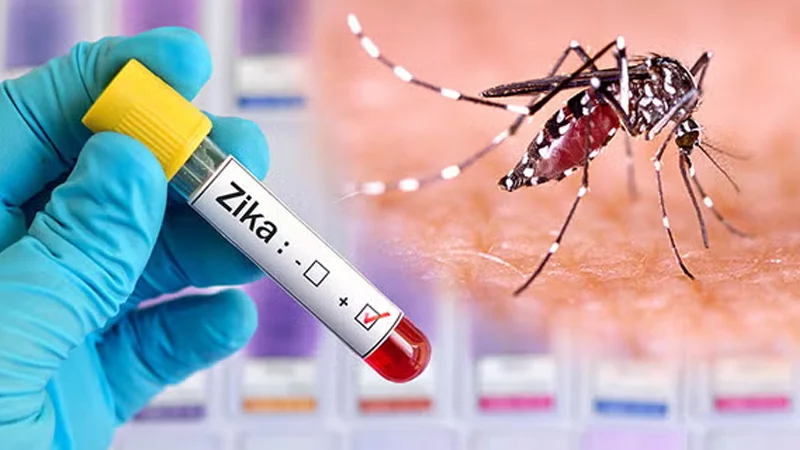
Special Correspondent, Dhaka: In the past three months, eight individuals in Dhaka have been diagnosed with the Zika virus, according to researchers from the International Centre for Diarrhoeal Disease Research, Bangladesh (ICDDR,B). All of the affected individuals are residents of the capital.
This was confirmed on Wednesday by Dr. Nausher Alam, the Chief Scientific Officer of the Virology Division at ICDDR,B, and the Institute of Epidemiology, Disease Control and Research (IEDCR).
The infected individuals are from the neighborhoods of Dhanmondi, Shamoli, and Banani in Dhaka. Zika virus was also found in mosquito samples collected from their homes.
However, samples from outside Dhaka have not been tested by ICDDR,B or IEDCR, so the situation in other regions remains unclear.
Zika is a viral disease that can cause serious health issues. Older adults infected with Zika may develop Guillain-Barré Syndrome (GBS), which leads to muscle weakness and potential paralysis.
Pregnant women who contract the virus risk giving birth to babies with microcephaly, a condition where the baby’s head is smaller than normal. The virus is transmitted by Aedes mosquitoes.
ICDDR,B sources confirmed that the Zika virus strains identified in Dhaka are of the Asian type, which is one of the two known strains—African and Asian.
Zika was first detected in Bangladesh in 2014 when it was identified through testing of blood samples stored at IEDCR. The first reported case was from Chittagong.
The disease was formally acknowledged by IEDCR in a 2017 scientific publication.
According to IEDCR’s website, in 80% of cases, Zika infection shows no symptoms. In the remaining 20%, symptoms may include a rash, headaches, red eyes, and muscle and joint pain.
These symptoms typically appear 3 to 12 days after infection and last for 2 to 7 days.
IEDCR has stated that there is no specific treatment for Zika; management is symptomatic.
Infected individuals are advised to rest, drink plenty of fluids, and take medication for fever and pain as prescribed by a healthcare provider.
If the patient’s condition worsens, they should seek medical attention at the nearest government hospital.