


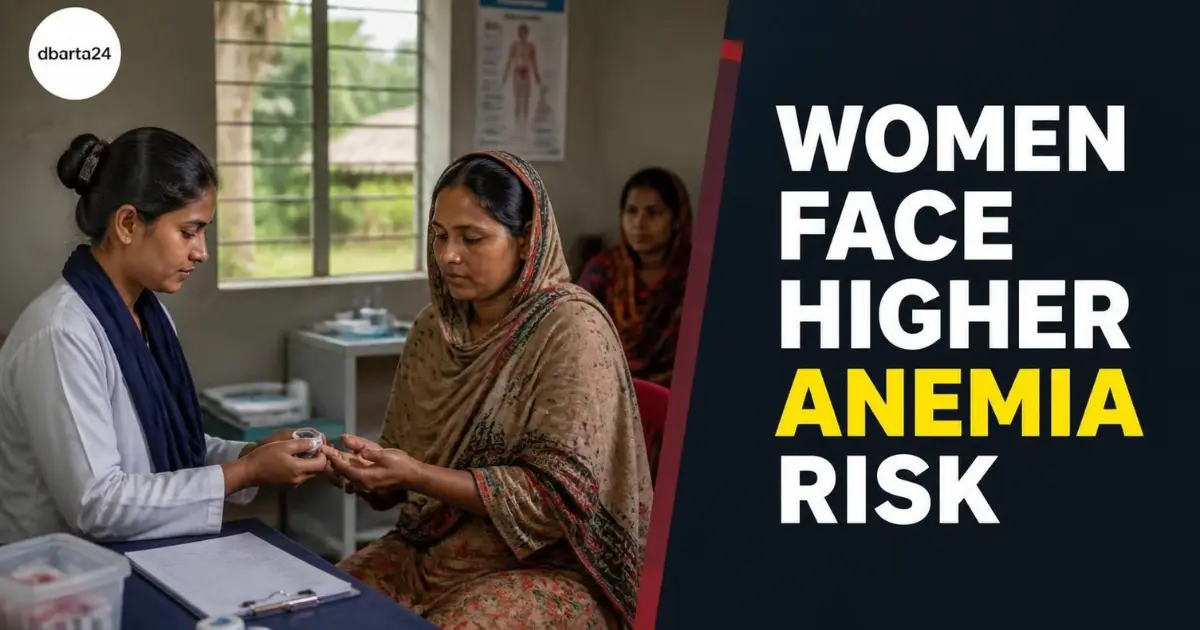
Muyabia Labony ; Dbarta24 — Nearly eight in 10 women included in a study of adults seeking healthcare in rural parts of Chattogram Division had anemia, compared with about four in 10 men, highlighting a striking gender gap in the study sample.
The research, published in *Health Science Reports* in October 2026, analyzed hemoglobin results for 459 adults who sought care in four rural unions.
Anemia was found in 59.3% of participants overall: 77.9% of women and 39.7% of men. The study drew on health-service data collected between November 2016 and November 2017. Its findings describe the people tested, not the whole country.
Among all participants, 27% had mild anemia, 29.6% had moderate anemia and 2.6% had severe anemia.
Women in the sample had 2.51 times the relative risk of mild anemia and 11.53 times the relative risk of moderate anemia compared with men.
The researchers cautioned that the estimate for severe anemia was less certain because relatively few participants had the condition.
Low body weight was also associated with moderate anemia: participants who were underweight had 3.42 times the risk of those with normal weight, according to the study.
Why women may face greater risk
Heavy menstrual bleeding and the increased nutritional demands of pregnancy and childbirth can contribute to anemia. Poor access to a varied, nutritious diet may compound those risks.
Anemia can also result from deficiencies in folate or vitamin B12, chronic inflammation, infection and inherited blood disorders—not only iron deficiency.
Public health specialist Dr. Afsana Habib Shuli said undernutrition from adolescence, early marriage and motherhood can increase women’s nutritional needs while limiting their ability to meet them through food.
She also pointed to limited awareness of dietary diversity as a continuing challenge.
Mohammad Aminul Islam, a study co-researcher and assistant professor in the Department of Media Studies and Journalism at the University of Liberal Arts Bangladesh, said awareness campaigns alone would not be enough.
He called for a coordinated, long-term response that includes regular hemoglobin testing, follow-up care and further tests to identify the cause of anemia.
A targeted response is needed
The researchers recommended prioritizing adolescent girls, women of reproductive age and pregnant women for screening and treatment. They also urged health services to monitor whether patients take prescribed supplements, manage side effects and improve over time.
Dietary measures can support prevention: a varied diet that includes fish, meat, eggs, lentils and vegetables, along with iron-rich foods, may help improve nutrient intake. Vitamin C-rich fruit can help the body absorb iron from food, while tea with meals may hinder iron absorption.
Because anemia has multiple possible causes, the article’s experts cautioned against taking iron tablets without medical advice. They recommended testing and appropriate care to determine the underlying cause.
The study’s results should be interpreted cautiously: only 459 of the 2,118 adults considered had hemoglobin measurements available, and the data came from healthcare-seeking adults in four rural unions nearly a decade ago.
The figures therefore cannot be treated as a current national prevalence estimate. The findings nevertheless point to the need for more representative research and services that address women’s greater burden in the study sample.