


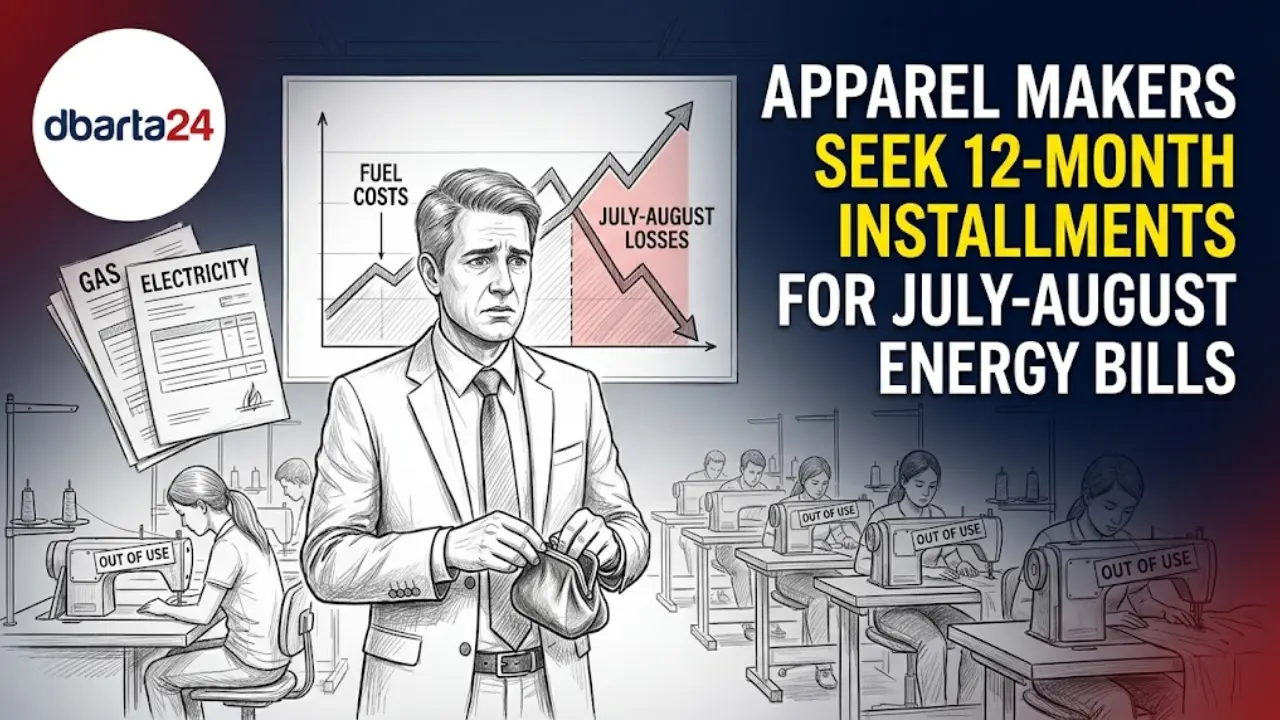
Dbarta24 Report — Facing severe disruption to factory operations due to nationwide energy shortages, the Bangladesh Knitwear Manufacturers and Exporters Association (BKMEA) has requested government approval to pay gas and electricity bills for July and August in 12 equal monthly installments.
Formal Appeal to Energy Ministry
BKMEA President Mohammad Hatem submitted a formal letter to Iqbal Hassan Mahmud, the Minister for Power, Energy, and Mineral Resources, requesting emergency policy support for the sector.
The letter outlined that acute gas and electricity shortages during July and August severely disrupted production across most industrial units. The crisis was compounded by suspensions in gas supplies delivered via cascade cylinders, forcing several factories to halt normal operations.
Surging Operational Expenses
To preserve export orders, maintain worker employment, and ensure business continuity, many factory owners resorted to purchasing high-cost alternative fuels—including diesel and Liquefied Petroleum Gas (LPG)—on cash terms. BKMEA highlighted that these unplanned expenditures significantly exceeded standard operating budgets.
The association noted a double financial hit: slashed production volumes on one hand and sharp spikes in operational costs on the other. Under these conditions, settling full, lump-sum utility bills for July and August presents a critical liquidity challenge for factory management.
Status of the Submission
To safeguard export earnings and protect workers’ employment, BKMEA requested direct ministerial intervention to instruct relevant utility authorities to implement the requested 12-month payment window.
Copies of the letter were officially dispatched to key sector executives and regulatory bodies, including:
-
The Secretary of the Energy and Mineral Resources Division
-
The Chairman of Petrobangla
-
The Managing Director of Titas Gas Transmission and Distribution PLC
-
The Managing Directors of DPDC, BREB, and DESCO
Industry leaders warn that layering full, immediate utility payments over existing production losses could push vulnerable manufacturing units toward closure.
Allowing deferred, installment-based utility payments is seen by exporters as a vital measure to stabilize the nation’s primary foreign-currency-earning sector.