


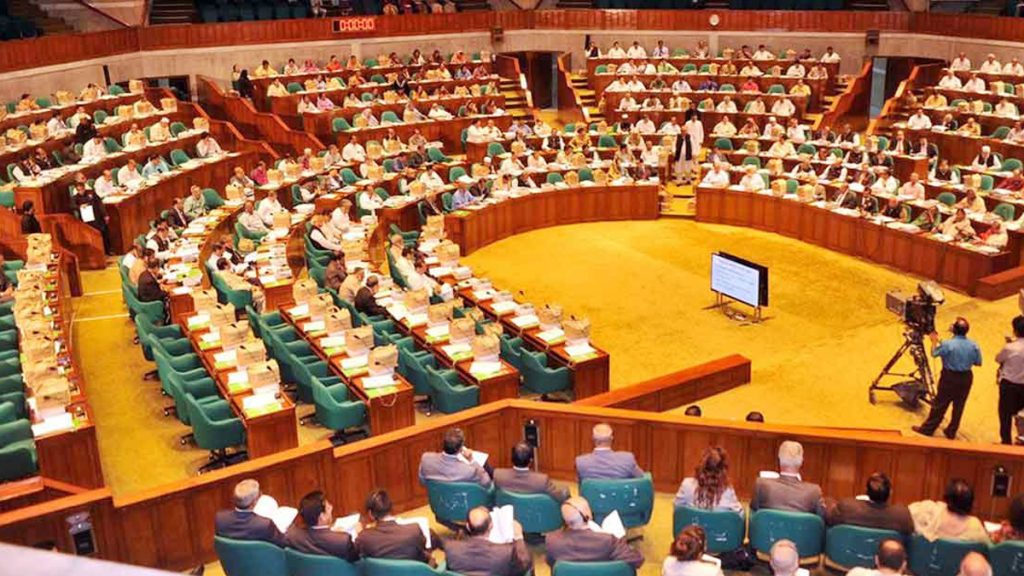
Khairul Alam: Amidst heated debates and controversy, the ‘Cybersecurity Bill 2023’ has been passed, raising concerns among opposition parties.
The bill includes provisions for prosecuting individuals for spreading false information and engaging in cybercrimes without requiring a warrant.
On Wednesday, September 13th, the Minister of Posts, Telecommunications, and Information Technology, Junaid Ahmed Palak, presented the bill for approval in the parliament session.
After scrutiny, deliberation by the selection committee, and amendments, the bill was finally passed with a majority vote.
Opposition members argue that while freedom of expression and the right to voice opinions are enshrined in the constitution, various clauses in the bill seem to undermine these rights by allowing the curtailment of individual freedoms.
Several members have demanded revisions to the clauses related to arrests without a warrant and the expansion of investigation powers.
In response to these concerns, Minister Junaid Ahmed Palak emphasized that freedom should not mean infringing on the rights of others.
He stressed that one’s freedom does not include disrespecting or making derogatory comments about others, especially towards women.
He emphasized that there is no alternative to ensuring these matters are addressed definitively.


The decision to pass the Cybersecurity Bill comes after the government withdrew a contentious digital security law that had sparked extensive criticism and debate both domestically and internationally.
Following its presentation to parliament on September 5th, the bill has now been sent to a parliamentary committee for further examination and review.
In the wake of the bill’s publication, human rights activists and journalist organizations have raised concerns, highlighting that the Cybersecurity Bill essentially continues the core elements of the previously criticized Digital Security Act.
It remains to be seen how the implementation of this law will affect digital rights and freedom of expression in the country.