


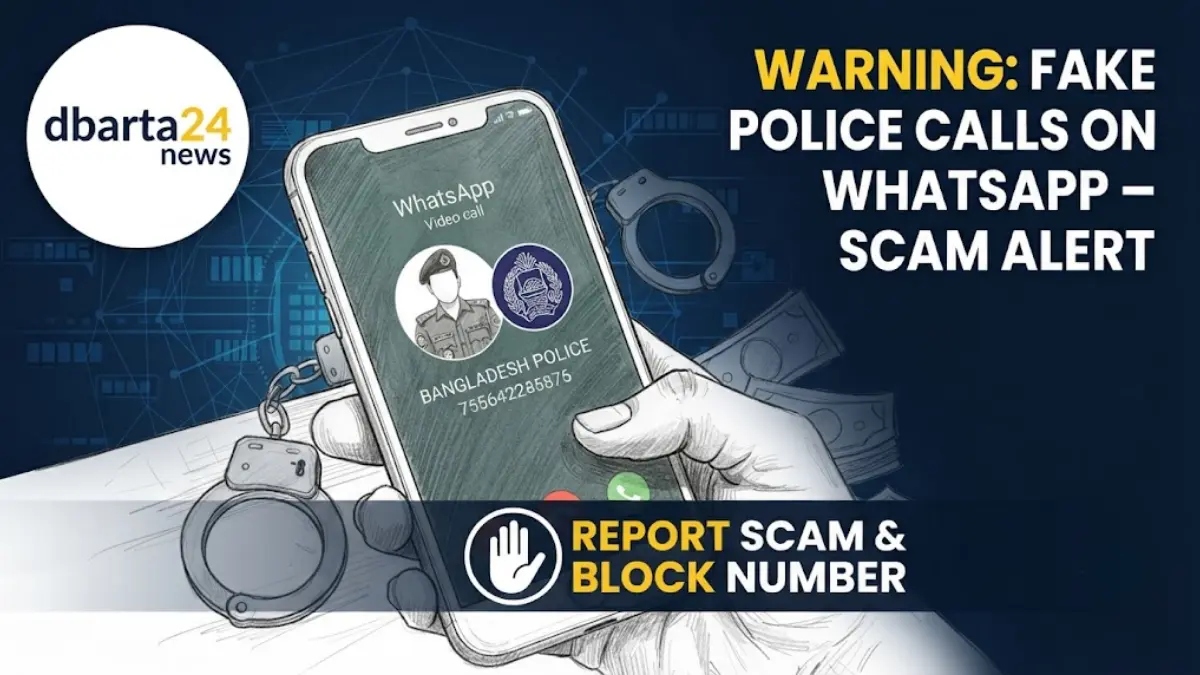
Dbarta24 Crime Desk – Cybercriminals are increasingly targeting smartphone users with a sophisticated wave of scams on WhatsApp, fraudulently posing as members of law enforcement agencies including the Bangladesh Police, Detective Branch (DB), Criminal Investigation Department (CID), and Rapid Action Battalion (RAB).
By utilizing fake profile pictures featuring individuals in law enforcement uniforms or official government insignia, these scammers project an illusion of authority designed to intimidate victims into compliance.
Anatomy of the Scam: Fear and Extortion Tactics
The scam typically begins with an alarming call or message. Perpetrators accuse the target of being implicated in a criminal case, using their mobile number to threaten others, or being linked to illicit activities.
To heighten the panic, they warn that immediate legal action or arrest is imminent unless urgent measures are taken.
In many cases, the fraudsters demand a specific amount of money to “settle” the matter outside the legal system. In other instances, they send malicious links disguised as legal documents or verification forms.
Clicking these links can automatically install spyware or malware, giving hackers remote access to personal data, banking credentials, social media accounts, and private photos.
Key Red Flags: How to Identify a Fake Call
Security experts emphasize that citizens must remain vigilant against these tactics. Critical warning signs include:
-
Unorthodox Communication Channels: Law enforcement agencies do not investigate crimes, issue warrants, or demand financial settlements over WhatsApp calls.
-
Unfamiliar International or Local Numbers: Calls originating from suspicious numbers coupled with aggressive or coercive language.
-
Artificial Urgency: Pressuring the victim to make rushed decisions or keep the conversation a secret.
-
Fake Visuals: Relying solely on a uniform or a police logo in a profile picture is no guarantee of authenticity, as digital assets are easily manipulated.
Essential Steps: What to Do If You Receive a Suspicious Call
If you or a family member receive a threatening call or message claiming to be from law enforcement, follow these safety guidelines immediately:
-
Stay Calm: Do not panic or immediately believe the caller’s claims.
-
Never Send Money: Refuse to transfer funds via mobile financial services like bKash, Nagad, or traditional banking channels.
-
Avoid Links and Apps: Do not click on unknown links or download unsolicited apps.
-
Protect Confidential Data: Never share One-Time Passwords (OTPs), National Identity (NID) card numbers, PINs, or account passwords with anyone.
-
Preserve Evidence: Take screenshots of the call logs, messages, or profile details for potential reporting.
-
Block and Report: Block the suspicious number immediately and use WhatsApp’s reporting tool to flag the account.
How to Verify and Stay Safe
If someone claims to be a government official, do not make decisions based solely on their word. Verify their identity by contacting the relevant police station or government office directly through official, verified channels.
Cyber fraudsters routinely exploit human fear, urgency, and a lack of technical awareness.
By taking a few moments to verify information, citizens can protect themselves from devastating financial losses and severe privacy breaches. Families are especially encouraged to brief elderly members and tech-novice relatives, who remain primary targets for these malicious syndicates.