


Heatwave to Continue Until Friday
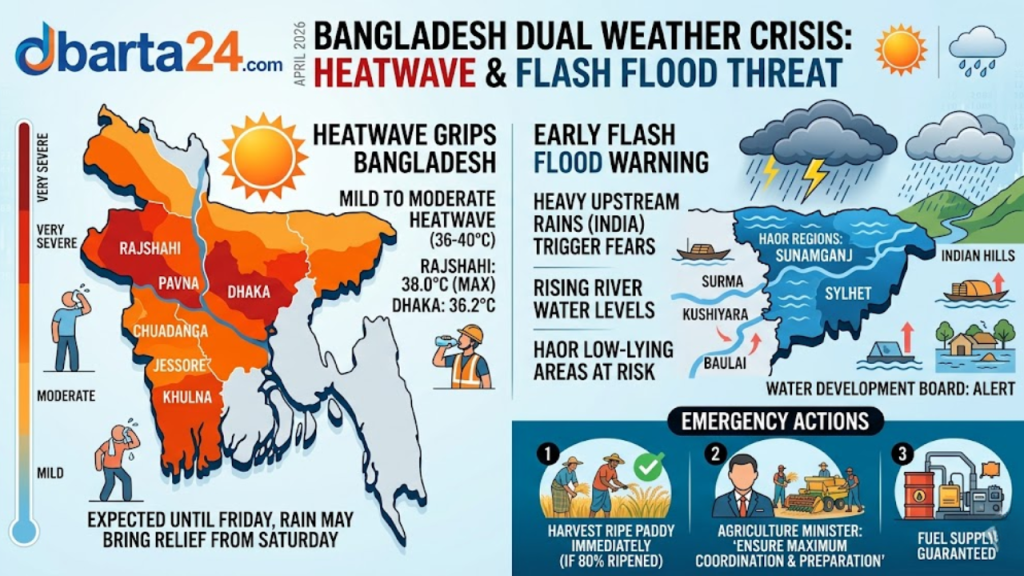
The Bangladesh Meteorological Department (BMD) reported that a heatwave is moving over Dhaka, Rajshahi, Khulna, and several other districts. Yesterday, Rajshahi recorded the country’s highest temperature at 38.0°C, while Dhaka saw a sweltering 36.2°C.
Meteorologist Tariful Newaz Kabir noted that this heatwave may persist until Friday. However, relief is expected from Saturday as the chances of rain increase, which should bring down daytime temperatures.
Flash Flood Warning for Farmers
While the west swelters, the northeast is on high alert. The Water Development Board (WDB) warned that water levels in the Surma, Kushiyara, and Baulai rivers are rising rapidly due to heavy rains in India’s Meghalaya and Assam.
Key Emergency Measures:
-
Harvesting Order: The WDB has urged Haor farmers to immediately harvest their paddy if 80% of the crop has ripened.
-
Government Action: Agriculture Minister Mohammad Amin Ur Rashid has directed local authorities to bring in extra harvesters and laborers from neighboring districts to finish the harvest before the water enters the plains.
-
Fuel Supply: The government assured that there would be no shortage of fuel for agricultural machinery during this emergency period.
The combined force of scorching heat in the cities and rising waters in the wetlands has put both urban laborers and rural farmers under immense pressure.
Expert Tip: To avoid heatstroke during this period, laborers are advised to stay hydrated and avoid direct sun exposure between 12:00 PM and 3:00 PM. For farmers, the next 48 hours are critical for saving the Boro crop.