
















Fuel and Wheat Imports Surge in FY26 Amid Sharp Drop in Capital Goods and Raw Materials
Dbarta24 Business Desk – Bangladesh experienced a significant surge in fuel and wheat import settlement during the 2025–26 fiscal year (FY26), driven by growing domestic demand and depleted natural gas reserves.
However, this growth stands in stark contrast to a broad contraction in industrial capital machinery, intermediate goods, and raw material imports—highlighting persistent economic stagnation and dampened private investment.
Fuel and Grain Drive Import Expenses:
According to the latest data from Bangladesh Bank, total Letter of Credit (LC) settlements for FY26 reached $70.41 billion, marking a marginal increase of 0.09% compared to $70.34 billion in the previous fiscal year.
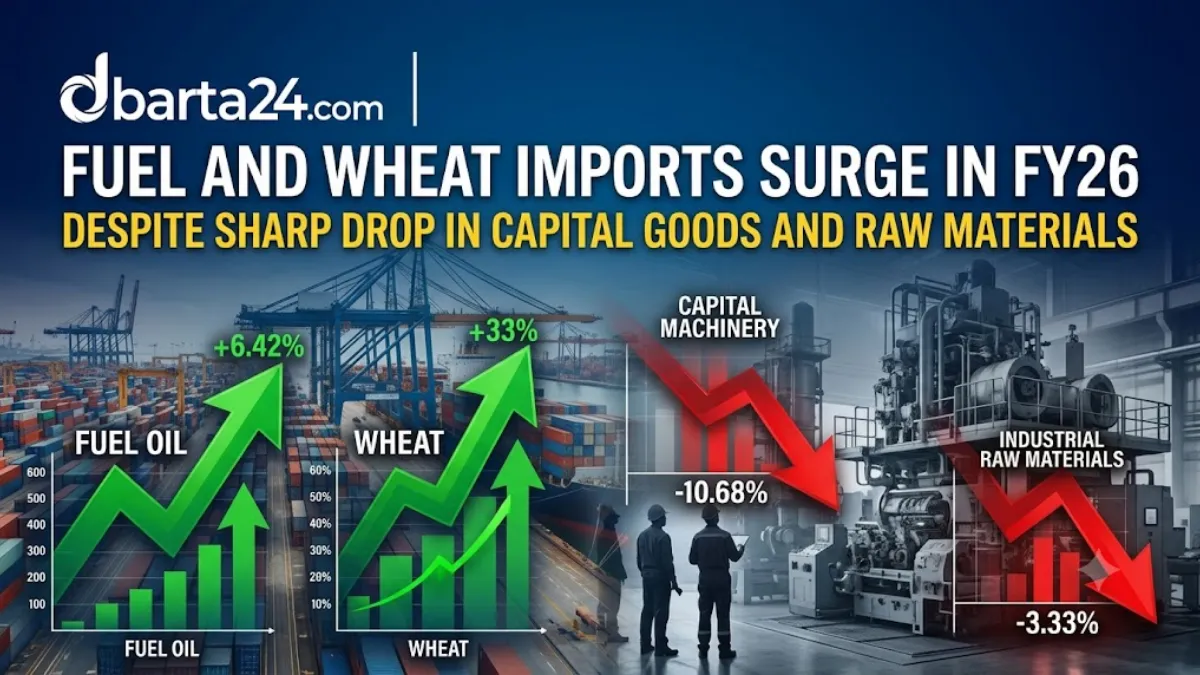
Petroleum imports surged by 6.42% to reach $10.68 billion, up from $10.03 billion in FY25. Concurrently, LC settlements for wheat rose dramatically by 33%, climbing from $1.5 billion to $2.0 billion to ensure domestic market stability.
Central bank officials noted that while overall trade activity stagnated across most sectors, the elevated import spending on energy products, food grains, and certain dairy commodities helped balance the total import bill.
Dwindling Energy Reserves and Industrial Strain:
Industry experts attribute the spike in energy imports to declining domestic natural gas production. To maintain power generation and keep industrial units running, the country has become heavily reliant on imported Liquefied Natural Gas (LNG), coal, and refined petroleum.
Despite higher fuel imports, businesses continue to face an acute energy crisis. Mohammad Hatem, President of the Bangladesh Knitwear Manufacturers and Exporters Association (BKMEA), voiced concerns over the challenging business climate:
“Despite the increase in fuel imports, there remains a severe and chronic energy shortage. Driven by high bank interest rates, unfavorable tax policies, and global volatility, entrepreneurs are struggling for survival rather than making new investments. Under the current circumstances, many enterprises have put expansion plans on hold, leading to a decline in LC opening and settlement.”
Capital Machinery Deficit Signals Stalled Investment:
The central bank’s report reveals alarming trends in industrial investments. Private sector investment, often dubbed the primary driver of employment generation, dropped below 5%.
LC settlements for capital machinery plummeted by 10.68%, reflecting a sharp drop in capital equipment imports.
Furthermore, imports of intermediate goods fell by 6.51%, while industrial raw material imports declined by 3.33%. Consumer goods imports also registered a 6.92% drop.
Economists warn that a prolonged decline in capital machinery imports indicates frozen investments, which will subsequently restrict job creation and exert long-term pressure on macro-economic stability.
Systemic Constraints and Trade Slowdown:
Helal Ahmed Joni, Senior Research Fellow at Change Initiative, highlighted structural challenges affecting trade execution:
“The overall investment climate remains unfavorable due to budget tax policies, political instability, and future business uncertainties. Even when LCs are opened, clearance is frequently delayed because treasury divisions in commercial banks face foreign currency shortages. Furthermore, several capital-deficit banks are struggling to secure confirmations from foreign financial institutions, severely disrupting import activities.”
The downturn in raw material imports directly correlates with reduced export output. Data from the Export Promotion Bureau (EPB) shows that Bangladesh’s merchandise export earnings fell by 0.58% to $48 billion in FY26, underscoring the compounding challenges facing the nation’s import-dependent export industry.
While increased energy and wheat imports have averted immediate supply shortages, the widespread contraction across capital machinery and industrial raw materials highlights deep-rooted economic headwinds.
Restoring investor confidence and addressing structural banking constraints will remain vital for Bangladesh’s economic recovery.