


Md. Tareq; Dbarta24— Bangladesh is grappling with one of its worst energy crises in recent history as severe gas shortages and coal supply disruptions have forced 41 power plants to shut down entirely.
The widespread closures have pushed the national power grid into extreme deficit, resulting in a record-breaking load shedding of 3,757 Megawatts (MW) and leaving large portions of the country—particularly rural regions and key industrial hubs—in darkness.
According to distribution companies, load shedding has averaged around 3,000 MW daily in recent days, setting consecutive national records within hours.
On Sunday at 3:00 PM, national load shedding hit 3,671 MW, before climbing to a peak of 3,757 MW by 1:00 AM. This surpasses previous record highs, including 3,512 MW logged on August 3 and the 3,419 MW recorded in June 2023.
Crippled Gas and Coal Supply Chains
The primary driver behind the power generation collapse is an acute gas shortage. Power stations across Bangladesh are currently receiving less than one-third of their required fuel supply.
Data from Petrobangla reveals that gas-fired power plants require approximately 2.52 billion cubic feet (bcf) of gas daily to operate efficiently, with a absolute minimum threshold of 1.0 to 1.1 bcf needed to keep load shedding under control.
However, current supply stands at a meager 700 million cubic feet (mmcf)—less than 28% of total demand. As a result, electricity generation from gas has plummeted from a peak of nearly 5,500 MW to between 3,500 MW and 4,000 MW, leaving vast generation infrastructure idle.
The gas deficit worsened significantly following damage to Excelerate Energy’s floating LNG terminal in Maheshkhali, Cox’s Bazar, on July 21. The incident immediately reduced daily supply by 600 mmcf.
Although partial repairs restored 250 mmcf after 15 days, the facility is not yet running at full capacity.
“Repair work on the terminal may take two to three more days,” said Engr. Md. Shoaib, Director of Operations at Petrobangla. “If all goes according to plan, gas supply will increase later this week by an additional 300 to 350 million cubic feet, allowing us to allocate more fuel to power plants.”
Compounding the crisis, coal-based generation has dropped to roughly 5,500 MW against an installed capacity of 7,945 MW.
Adverse sea weather in Kutubdia has delayed transshipment from large vessels to lighter ships, cutting generation in half at the 1,200 MW Patuakhali Thermal Power Plant.
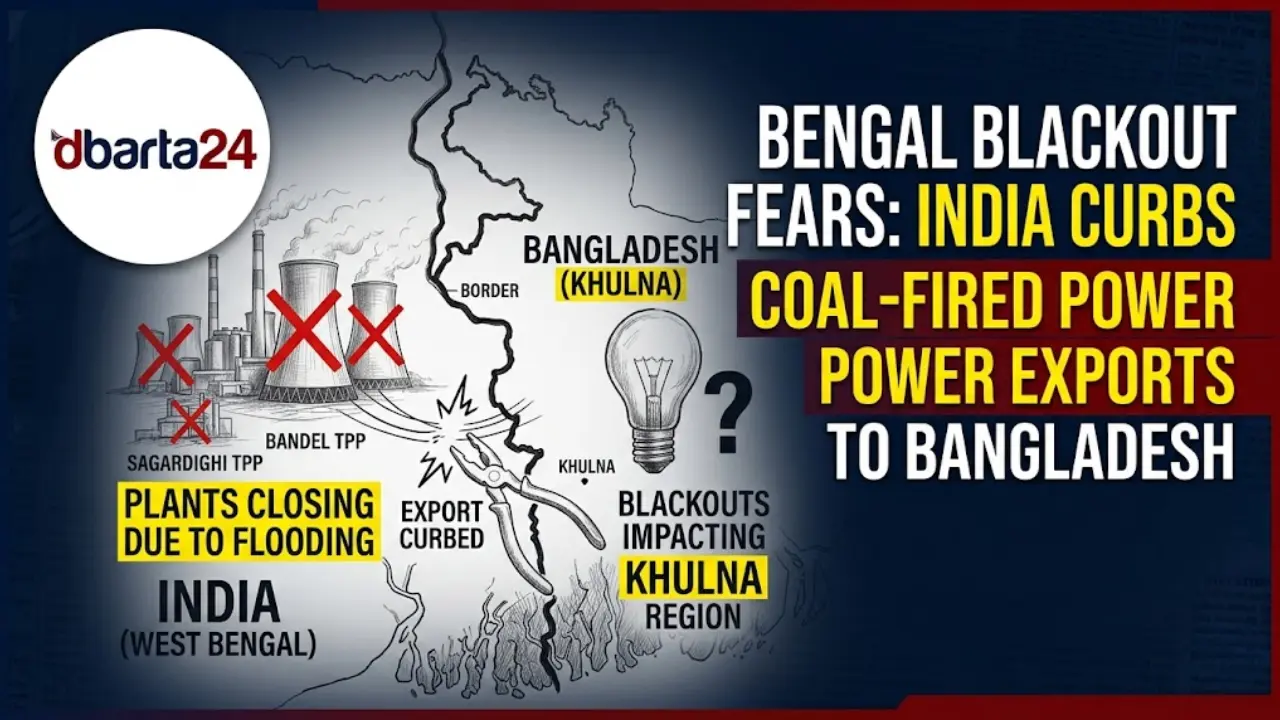
Simultaneously, cross-border imports from Adani Power’s Jharkhand plant in India fell from 1,400 MW to between 800 MW and 1,000 MW due to wet coal caused by local flooding.
Public Suffering and Industrial Strain
The generation deficit has translated into unbearable conditions for everyday consumers and businesses.
Rural districts report power outages lasting 10 to 12 hours a day during extreme heatwaves, affecting water supply, healthcare, and education.
Public frustration has boiled over into civil unrest, including public street blockades in Sylhet’s Tuker Bazar, where supply fell 45 MW short of the 247 MW local demand.
In the industrial sector, factory owners face a double blow. Unannounced blackouts halt assembly lines, requiring lengthy restarts and forcing reliance on costly diesel generators, driving up operational overheads.
Local transmission bottlenecks exacerbate generation shortfalls. In Narayanganj’s Rupganj and Araihazar regions, a 60 MW deficit remains unaddressed due to delays in completing the 132/33 kV grid substation, which has been stalled since 2020 pending technical input from specialized foreign engineers.
Temporary Measures and Long-Term Mismanagement
To plug the deficit, the Power Development Board (PDB) is attempting to scale up generation from expensive liquid-fuel (oil-fired) plants.
However, PDB officials acknowledge that running oil-based units over extended periods creates immense fiscal pressure due to unpaid bills to private power producers and skyrocketing government subsidy costs.
Officials remain cautiously optimistic about short-term relief. PDB Chairman Engr. Md. Rezaul Karim noted that high-level coordination with Petrobangla is underway to prioritize gas allocation to plants that can sync quickly with the national grid.
He expects modest improvements within two to three days once the LNG terminal is fully operational and coal shipments stabilize.
Energy experts, however, warn that temporary supply boosts will not fix structural flaws.
They cite chronic mismanagement, declining domestic gas production, over-reliance on volatile imported LNG, and uncoordinated capacity additions as the root causes of the recurring crisis.
“The energy crisis is currently the country’s biggest challenge, and a rapid recovery is not possible,” stated energy expert Professor M. Tamim. “To keep the industrial and power sectors functioning, we must temporarily increase LNG imports while aggressively prioritizing domestic gas exploration.”
Until long-term structural reforms—including domestic exploration, grid modernization, and renewable energy adoption—are fully implemented, Bangladesh remains vulnerable to volatile international fuel markets and severe domestic outages.