


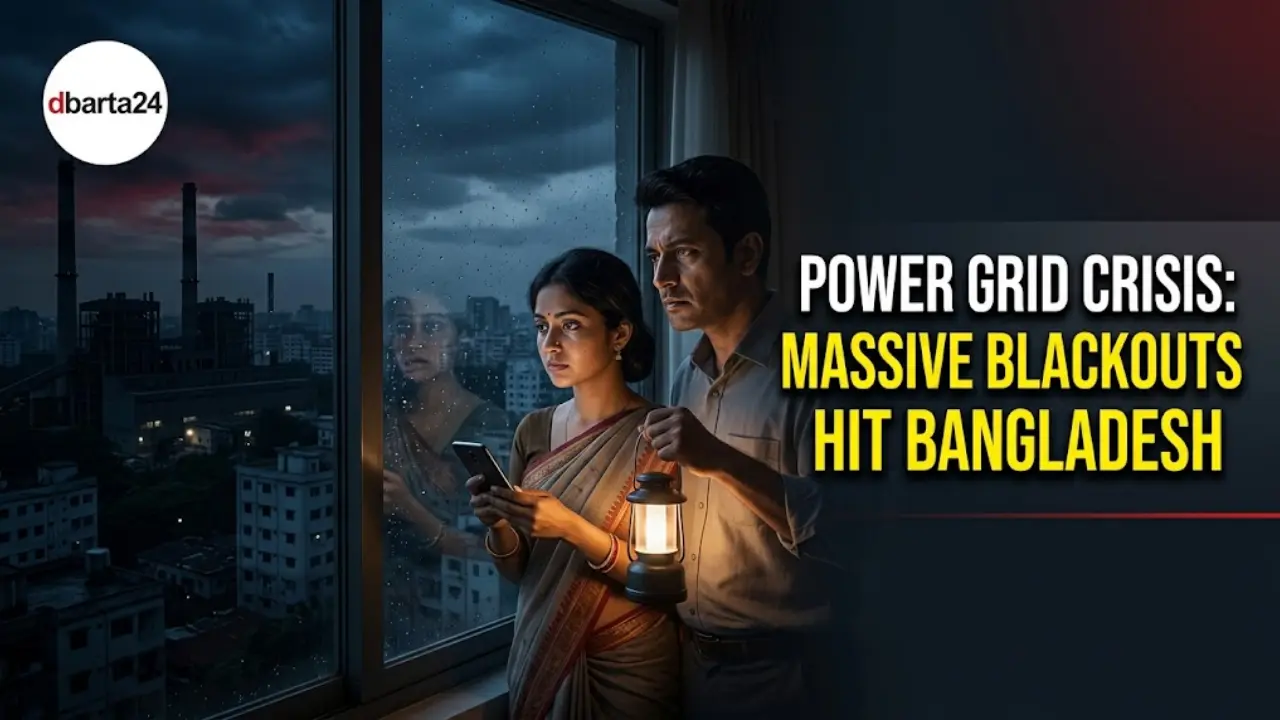
Md Tareq; Dbarta24 – Worsening fuel supply constraints and unexpected technical glitches at major power generation facilities have severely disrupted operations across Bangladesh’s power grid.
On Thursday, power generation was impaired at 62 power stations, pushing daytime load shedding to a peak of 3,664 megawatts (MW) and causing widespread public distress.
According to official data from the Bangladesh Power Development Board (BPDB) and the Power Grid Bangladesh PLC (PGCB), 20 of the country’s 137 power plants were shut down completely, while 42 operated at limited capacity.
Despite Bangladesh possessing a total installed capacity of nearly 29,000 MW, actual generation fell drastically short.
During peak demand of 16,946 MW on Thursday, the national grid received only 13,282 MW—leaving more than half of the nation’s total generation capacity unutilized.
A primary driver of the deficit is an ongoing gas shortage. Gas-fired plants have a combined capacity exceeding 12,000 MW, but over 5,000 MW currently remains offline.
Petrobangla reported that daily gas supply stood at 2.35 billion cubic feet against a national demand of 3.8 billion cubic feet.
Liquefied Natural Gas (LNG) imports dropped significantly due to delays in cargo arrivals following a recent incident at an offshore terminal in Maheshkhali.
Consequently, gas allocations to power generation were diverted to sustain industrial units, worsening electricity shortfalls.
The crisis is further compounded by disruptions at coal-fired plants. Outages at single units of the Payra and Matarbari power stations, technical issues at Barapukuria, and reduced supply from India’s Adani Power plant have reduced coal-based generation below 5,000 MW against an installed capacity of nearly 7,000 MW.
Meanwhile, 24 oil-fired power plants faced primary fuel supply shortages.
“Production is halted at one unit each in two large coal-fired power plants. We are also not receiving full capacity from the Adani power plant. Gas supply is not increasing, and oil-fired plants cannot be operated continuously—they can only be run at half capacity due to required operational breaks. This has widened the power deficit.”— Md. Johurul Islam, Member (Generation), BPDB
While rural areas served by the Rural Electrification Board (REB) continue to bear the heaviest burden—accounting for 2,470 MW of the 2,828 MW nationwide load shedding recorded at midnight on Wednesday—urban centers are no longer immune.
Power distributors DPDC and DESCO have initiated scheduled rotational load shedding across Dhaka, though residents report frequent unscheduled outages that disrupt daily life and commercial activities.
Energy experts emphasize that reliance on costly short-term fixes without structural overhaul will fail to resolve the sector’s chronic instability.
“Amid the crisis, direct LNG procurement, importing via unsuitable vessels, and constructing terminals with inexperienced foreign companies show no signs of recovery. Structural reforms are essential; without them, mismanagement, chaos, and systemic leakages will persist, and the crisis will not end.”— M. Shamsul Alam, Energy Adviser, Consumer Association of Bangladesh (CAB)
Industry representatives suggest that resolving financial backlogs could unlock immediate capacity. Imran Karim, former president of the Bangladesh Independent Power Producers Association (BIPPA), noted that oil-fired plants operated at 60% to 70% capacity in recent financial years.
Settling outstanding dues between private producers and BPDB could enable higher generation from these facilities to bridge the immediate gap.