


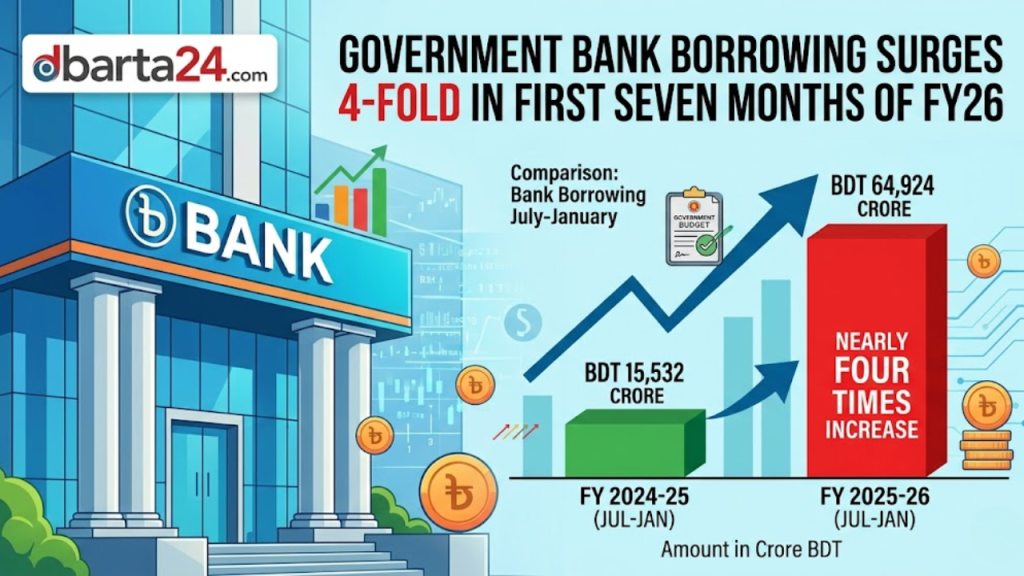
Economics Desk | dbarta24.com ; DHAKA – To bridge the budget deficit, the government has borrowed approximately 73,000 crore BDT from the financial sector during the first seven months (July–January) of the current 2025–26 fiscal year.
According to the latest report from Bangladesh Bank, the government’s reliance on the banking sector has increased nearly four times compared to the same period in the previous fiscal year.
Of the total domestic borrowing, nearly 65,000 crore BDT was sourced directly from banks, while 7,724 crore BDT came from other financial institutions.
Statistics show that the government has already exhausted over 58% of its annual domestic borrowing target within just seven months. Last year, domestic borrowing for the same period stood at 40,144 crore BDT.
Target vs. Reality
In the 2025–26 national budget, the government set a domestic borrowing target of 1.25 lakh crore BDT. This includes:
-
Bank Sector: 1.04 lakh crore BDT (62% already borrowed)
-
Non-Banking Sources: 21,000 crore BDT
While bank borrowing soared, reliance on non-banking sources—such as National Savings Certificates (Sanchayapatra) and Treasury bonds—saw a significant decline, dropping from 24,612 crore BDT last year to just 7,724 crore BDT this year.
Economic Pressure Points
Economists and stakeholders point to a shortfall in revenue collection and a slower-than-expected flow of foreign aid as the primary reasons for this heavy bank dependency.
This borrowing occurred largely under the interim administration, with the new government taking charge in mid-February amidst rising economic pressures.
Global uncertainties, including conflicts in the Middle East and doubts regarding the release of the next IMF loan installment, have further strained the economy.
Experts warn that massive government borrowing from banks could “crowd out” the private sector, making it difficult for entrepreneurs to secure loans and driving up interest rates.