


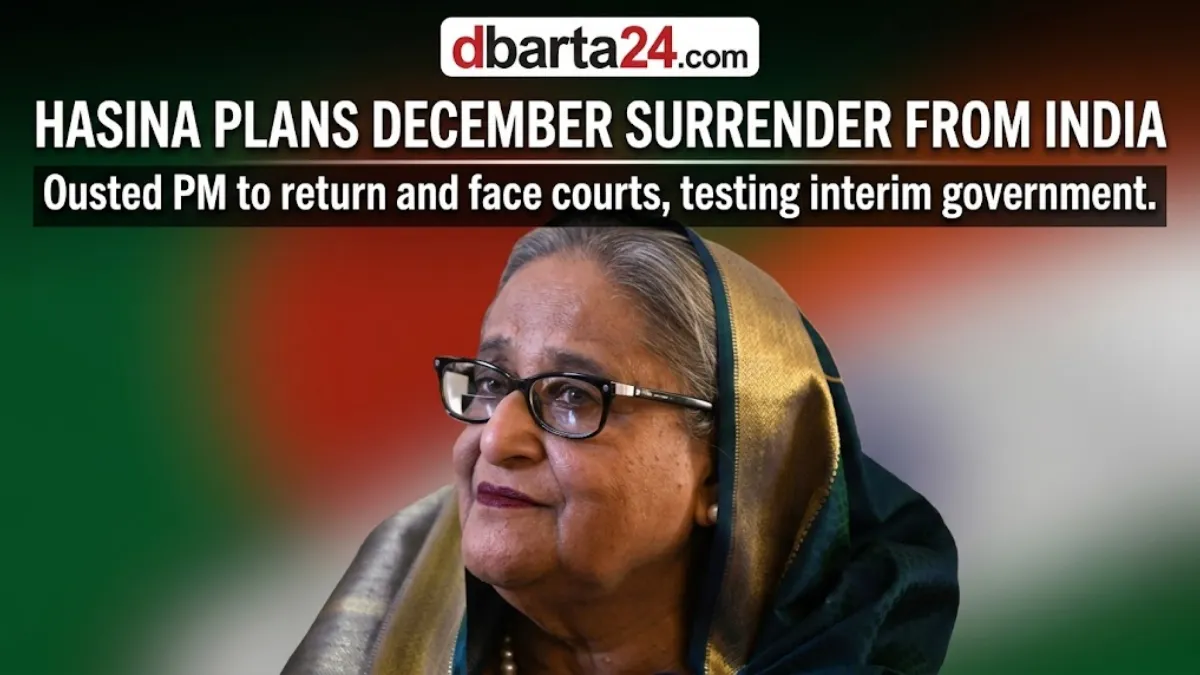
Desk Report – In a dramatic turn of events, ousted Bangladesh Prime Minister Sheikh Hasina has announced plans to return to the country this December alongside senior leaders of her party, the Awami League, to voluntarily surrender before the court.
Speaking in a telephone interview with Reuters on Thursday night, the exiled leader expressed awareness of the grave risks awaiting her upon her return but emphasized her determination to face the consequences on her home soil.
“They may arrest me when I return, they may even kill me. But I have to go,” Hasina told Reuters. “My party leaders, workers, and supporters are facing severe persecution. If death comes, I want it to be on my own soil.”
Sheikh Hasina fled to India in August 2024 following a massive, student-led mass uprising that ended her 15-year rule.
The aftermath of the transition saw heavy legal repercussions for the former regime.
In November 2024, Bangladesh’s International Crimes Tribunal (ICT) sentenced Hasina to death for crimes against humanity related to the casualties during the July-August protests.
Additionally, the political activities of the Awami League and its affiliate organizations have been legally banned.
The interim administration in Dhaka has consistently pressured New Delhi, sending multiple official requests demanding her extradition to face justice.
This marks the first time since her political downfall that Hasina has set a specific timeline for her return.
She clarified that this decision was made independently without consulting any foreign governments, stating, “They [the Bangladesh government] are repeatedly writing letters to India requesting my repatriation. I will leave on my own.”
Political analysts suggest that her return could test the current administration’s grip on stability. Over the past two years, the interim government has been working to restore economic and political order.
A sudden, high-profile return of the former premier—especially flanked by senior party leaders—threatens to reignite deep-seated political polarization and trigger fresh unrest.
Among the senior Awami League leaders planned to return with her is former Home Minister Asaduzzaman Khan Kamal, who has also been sentenced to death.
Efforts by reporters to reach other senior party leaders for comment were unsuccessful.
While Sheikh Hasina frames her return as a challenge to the legal and political framework of the current authorities, it places both Dhaka and New Delhi in a complex diplomatic spot.
Government spokespersons in Dhaka have not yet responded to requests for comment regarding the ousted prime minister’s announced timeline.
The upcoming month of December is poised to be a critical turning point for the future landscape of Bangladeshi politics.