


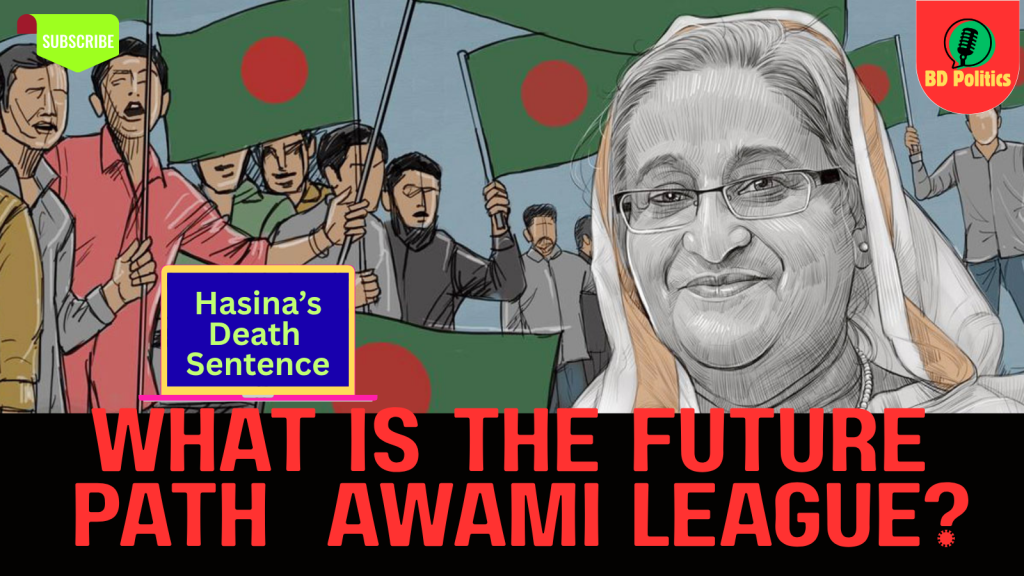
Sheikh Hasina’s Death Sentence and the Future of the Awami League
Khairul Alam: The political future of the Awami League (AL) is uncertain following a series of dramatic events in Bangladesh. The party is currently banned from political activity, and the government has clearly stated that it cannot participate in the upcoming general election.
The majority of the AL’s top leaders are either in hiding or have sought refuge abroad, with many others imprisoned. The situation became even more critical when the International Crimes Tribunal (ICT) sentenced the party’s president, Sheikh Hasina, to death for crimes against humanity.
In this dire situation, the question arises: What is the future path for the Awami League?
The Leadership’s Unyielding Stance
Despite the crushing setbacks, the AL’s top leadership remains defiant and shows no regret for past actions.
-
Goal: AL leaders in hiding or abroad are focused on ensuring the party is included in the next election.
-
Strategy: They believe the only way to achieve this is by overthrowing the current Interim Government led by Professor Yunus. If they cannot overthrow the government, their aim is to sabotage the Thirteenth Parliamentary Election to prevent it from being held smoothly.
-
Lack of Change: There is no discussion among the leadership about apologising for past mistakes or reconciling with other political parties. There are calls within the party and from foreign well-wishers for a “refined” or “purified” Awami League, but the current leaders are resistant.
Recently, Sheikh Hasina offered a hint of change in an interview with the Indian media outlet News18, stating that the US or other foreign powers were not “actively involved” in the downfall of her government. This contradicts her earlier claims, but whether it signals a willingness to admit fault remains to be seen.
The Path to a Comeback
Political analysts suggest the Awami League may have a chance to return, perhaps through some members competing independently or for other parties in the next election. However, returning as a full political force depends heavily on a change in the party’s current policies and strategies. The possibility of the 78-year-old Sheikh Hasina actively returning to politics, with a death sentence on her head, is considered low.
According to AL sources and analysts, there are only two main routes for the party’s return:
-
A Second Mass Uprising: To orchestrate another student-people’s uprising, similar to the one that ousted them. This is viewed as nearly impossible by AL members themselves because their central leadership is abroad or in jail, and there is growing internal conflict and financial disputes among the leaders in exile.
-
Admitting Guilt and Seeking Forgiveness: To publicly admit their mistakes, apologise to the people, and ask for another chance. Currently, there is no intention of pursuing this path, as leaders believe admitting guilt would be an admission of responsibility for the student-people’s killings.
Leadership Change: There are internal discussions about a major shift, including Sheikh Hasina stepping down and handing over power to another family member, and sidelining many former ministers and MPs. However, Hasina is reportedly reluctant to do this immediately, preferring to navigate the current difficult period with the controversial leaders she has.
Lack of Sympathy and Foreign Hopes
The Awami League is facing a severe shortage of sympathy both domestically and from the current government:
-
Domestic Opposition: The UN fact-finding report on the July uprising cites the killing of around 1,400 students and citizens and 30,000 injuries. The families of the victims and the youth who led the uprising (such as the National Citizen Party, NCP) are staunchly opposed to the AL’s return.
-
Political Rivals: The Bangladesh Nationalist Party (BNP) and Jamaat-e-Islami, who suffered over 15 years of repression under the AL, will not welcome the party or Sheikh Hasina back if they come to power.
-
Government Stance: Given the AL’s consistently hostile attitude towards the Interim Government, the government is unlikely to offer any concessions, except perhaps allowing some individuals to contest elections independently.
Reliance on Foreign Powers: Since their fall, a large segment of AL leaders has taken refuge in India. They view the Indian government’s cooperative behaviour as a sign that the influential neighbour will assist their return. This hope, along with a past reliance on winning support from foreign powers and the security forces (despite their earlier anger towards them), remains a cornerstone of the leadership’s current strategy to maintain the morale of workers on the ground.
The political future of the Awami League now largely depends on how the next elected government behaves after the February election, leaving the current AL leadership with little option but to wait and see.