


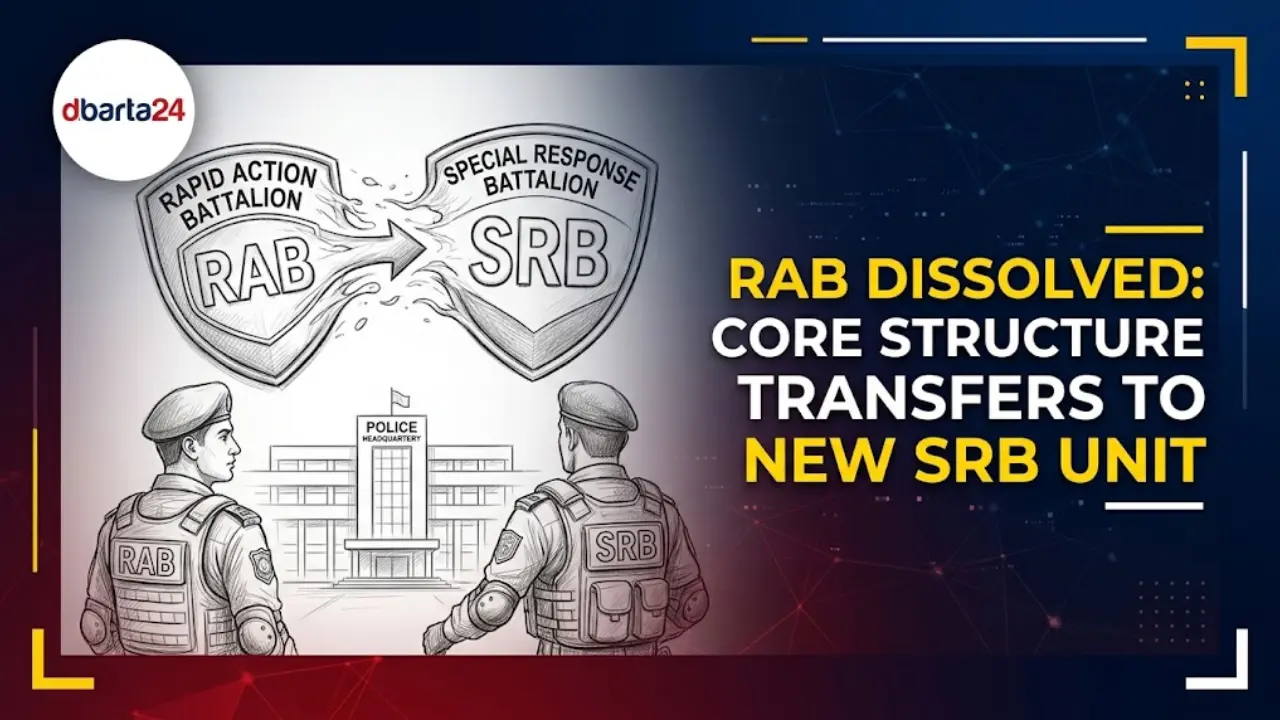
M K Alam; Dbarta24 — The Cabinet has officially approved the draft of the “Special Response Battalion (SRB) Act, 2026,” paving the way for the total dissolution of the elite Rapid Action Battalion (RAB) and replacing it with a new specialized unit under the Bangladesh Police.
However, a detailed analysis of the approved draft indicates that despite the legal disbandment, the new unit will largely inherit RAB’s existing manpower, powers, assets, responsibilities, and ongoing operations.
The policy and final approval came during a weekly Cabinet meeting. Following vetting by the Legislative and Parliamentary Affairs Division, the draft legislation repeals the original 2003 amendment that established RAB.
In its place, the Special Response Battalion will function as a specialized unit directly under Bangladesh Police.
Background and International Scrutiny
The move comes following years of intense criticism and systemic allegations of grave human rights abuses leveled against RAB, including enforced disappearances, extrajudicial killings, and secret detention facilities.
These allegations prompted sanctions from the United States on December 10, 2021, against RAB and seven of its former and current top officials. Subsequently, the United Nations, the Commission of Inquiry on Enforced Disappearances, and major international human rights organizations explicitly recommended disbanding the force.
Transfer of Powers and Institutional Continuity
Under the draft law, all existing RAB assets, funds, liabilities, active contracts, and pending court cases will transition seamlessly to the SRB. Officers and personnel currently serving in RAB will automatically become members of the SRB under their existing terms of service.
Key provisions of the draft include:
-
Deputation Opportunities: Officers from the armed forces (Army, Navy, Air Force) and other disciplined forces can still be deputed to the SRB. This stands in contrast to recommendations by the Enforced Disappearance Inquiry Commission, which suggested staffing specialized units exclusively with trained police officers.
-
Warrantless Searches and Arrests: Under Section 12 of the proposed law, SRB officers retain the authority to enter, search, seize, and arrest without a warrant under specific circumstances involving narcotics, illegal arms, terrorism, human trafficking, cybercrime, and threats to state security.
-
Expanded Investigative Mandate: While RAB previously required government authorization to investigate cases, the SRB can initiate inquiries upon direction from the courts, the government, or the Inspector General of Police (IGP).
-
Removal of Immunity Clause: Unlike the founding RAB legislation, the new draft excludes the former blanket immunity clause that protected members for actions taken in “good faith.”
Official Stance vs. Rights Advocates
Addressing concerns over the unit’s restructuring, Home Minister Salahuddin Ahmad rejected assertions that the government is merely renaming the controversial elite force.
“It is not simply a matter of retaining RAB under a changed name. The new legislation incorporates defined mechanisms for resolving complaints from both citizens and personnel, redefines disciplinary breaches, and mandates transparency and accountability. The state requires a specialized unit capable of combating modern threats like cybercrime, narcotics, and organized crime while upholding human rights.”
However, human rights advocate Nur Khan expressed deep concern over the draft law, warning that preserving the previous power dynamic and organizational skeleton risks duplicating old abuses.
“This draft is fundamentally unsupportable. If the legacy structure, operational authority, and personnel remain intact, the SRB risks becoming another dangerous and unaccountable force in the future.”
Consisting of 27 distinct clauses, the draft SRB Act 2026 creates a clear legal mechanism to formally dissolve RAB while ensuring uninterrupted operational capability for specialized policing.
While the government frames the legislation as a vital step toward transparency, accountability, and institutional reform, the heavy reliance on RAB’s existing framework leaves critical questions about whether the transition will deliver genuine human rights safeguards.