


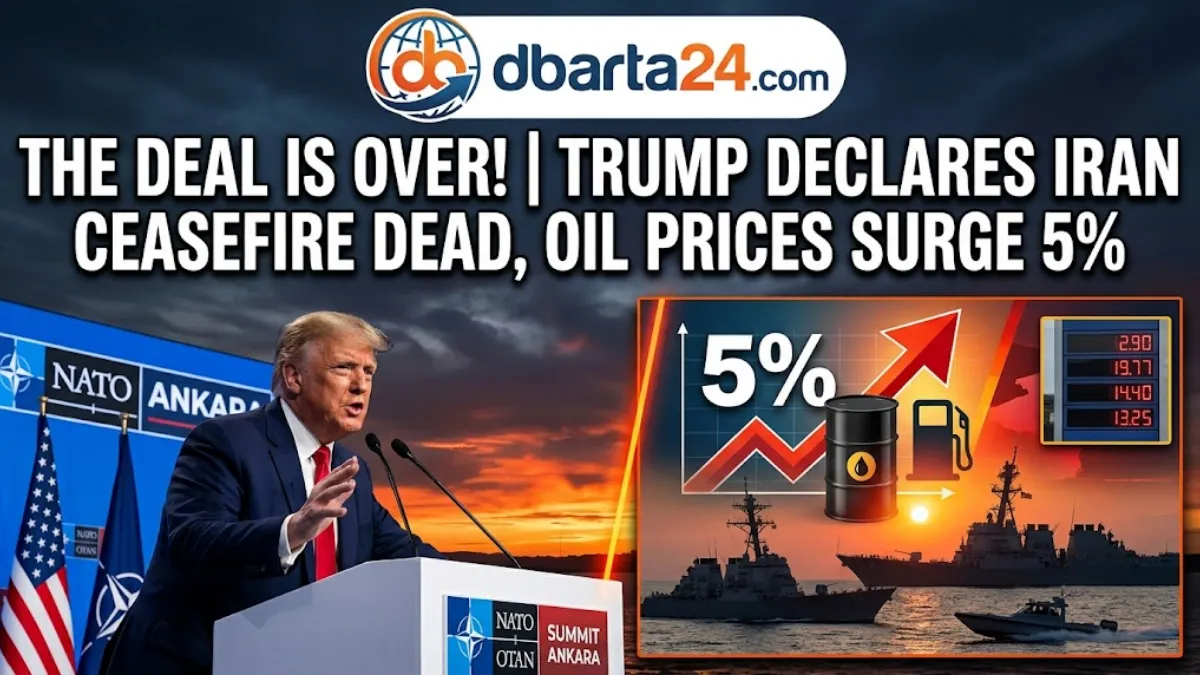
International Desk — U.S. President Donald Trump has officially declared the fragile ceasefire between the United States and Iran dead, stating he has no intention of pursuing further diplomatic agreements with Tehran.
Speaking at the NATO summit in Ankara, Turkey, on Wednesday, Trump’s fiery remarks sparked immediate panic in global markets, sending crude oil prices surging by 5%.
The President’s declaration follows a volatile 24 hours of direct military escalation, which effectively shattered the 60-day truce signed on June 17.
When pressed by reporters at the summit on whether the ceasefire agreement was still viable following recent retaliatory strikes, Trump was unequivocal: “I think it’s over. I don’t want to make any more deals with them. They are garbage.”
Trump Slams Iranian Leadership
Launching a scathing rhetorical attack against Tehran’s ruling elite, Trump questioned their stability and warned of their nuclear ambitions. “They are terrible, mentally sick people leading them.
They are extremely aggressive and violent by nature. If they had any nuclear weapons, they would have used them,” Trump stated.
The now-collapsed June 17 memorandum of understanding was intended to enforce a 60-day cessation of hostilities, providing a window for diplomatic envoys—including U.S. representatives Steve Witkoff and Jared Kushner—to negotiate a permanent settlement.
While Trump noted he would consult with Witkoff and Kushner, he expressed deep skepticism about returning to negotiation, accusing Iranian officials of systematic deception.
“In my opinion, talking to them is just a waste of time. They are liars,” Trump remarked, claiming that Iran repeatedly misrepresented terms regarding its nuclear program. “Everyone agreed on not having nuclear weapons. We made a deal. And they went out and jokingly told journalists that we never even spoke about it. They have problems, they are truly crazy.”
Strait of Hormuz Crisis Deepens
Trump’s formal termination of the truce raises the specter of an all-out regional conflict, with the strategic Strait of Hormuz serving as the primary flashpoint.
Tehran remains unyielding in its bid to assert absolute control over the vital maritime corridor. Iranian authorities have demanded “service fees” from transit vessels and issued stern warnings to any ships attempting to bypass their authorized shipping routes.
Reaffirming this hardline stance, Iran’s joint military central command, Khatam al-Anbiya, declared that Tehran will tolerate zero American interference in the management of the Strait of Hormuz.
The diplomatic breakdown follows days of rapid military kinetic actions. After Iranian forces targeted at least three commercial vessels last week, the U.S. launched heavy airstrikes against strategic targets inside Iran on Tuesday night.
In swift retaliation on Wednesday, Iran’s Islamic Revolutionary Guard Corps (IRGC) claimed responsibility for targeted missile and drone strikes against U.S. military bases located in Kuwait and Bahrain.
NATO Backs U.S. Response
Despite the escalating threat to global energy corridors, Washington’s western allies have rallied behind the administration’s military posture.
Speaking to journalists on the sidelines of the Ankara summit, NATO Secretary General Mark Rutte strongly defended the American military intervention.
Rutte emphasized that the fresh U.S. strikes against Iran were absolutely necessary, stating that a robust response was vital given Tehran’s clear violations of the ceasefire agreement.