


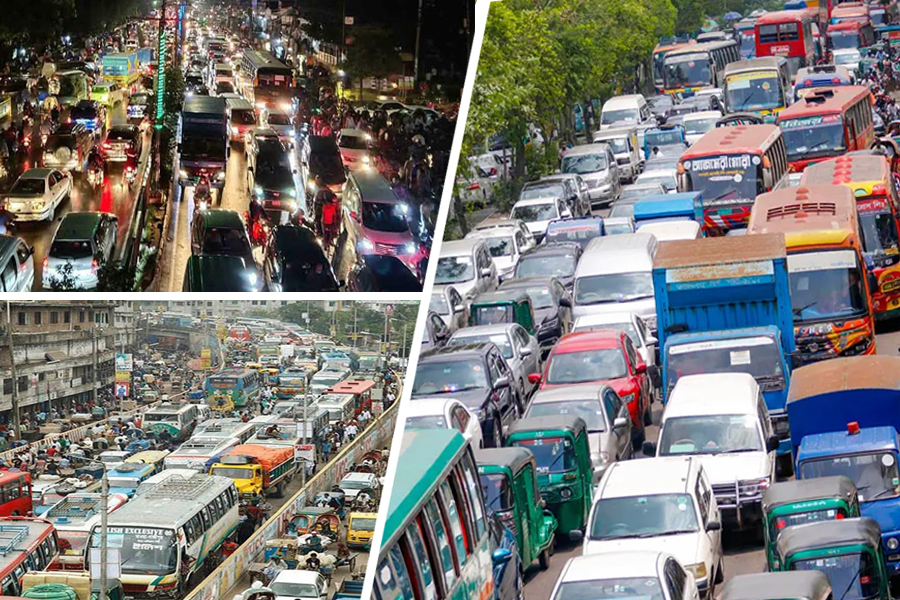
Khairul Alam: Every year around this time, a piece of news tends to cast a shadow of disappointment over the residents of our cities. It’s the annual ranking of the world’s most livable cities. And this year’s report brings even more disheartening news for Dhaka, the capital of Bangladesh. Dhaka has slipped three places in the global livability index! According to the Economist Intelligence Unit’s (EIU) 2025 Global Livability Index, our capital now stands at a dismal 171st position.
It’s quite astonishing to think that out of 173 cities worldwide, Dhaka is now almost at the very bottom. At the absolute lowest rung of this list, at 173rd position, is the war-torn capital of Syria, Damascus. And just above it, at 172nd, is the capital of Libya, Tripoli. This means Dhaka is the third least livable city in the world. Just before Dhaka, at 170th and 169th positions, are Karachi in Pakistan and Algiers in Algeria, respectively.
The EIU, or Economist Intelligence Unit, publishes this index annually as a crucial international standard for measuring the quality of life in major cities worldwide. The organization assesses 173 cities across five key criteria:
- Stability
- Healthcare
- Culture & Environment
- Education
- Infrastructure
However, Dhaka city, the capital of Bangladesh, scores in these criteria, given its 171st position in the world. With a total score of 41.7 points, Dhaka’s performance across the five metrics is quite disappointing:
- Stability: 45 (out of 100) – This indicates that Dhaka still faces significant challenges in terms of political stability and social security.
- Healthcare: 41.7 – There are major deficiencies in the quality of medical treatment, hospital facilities, and the availability of healthcare professionals.
- Culture & Environment: 40.5 – Dhaka suffers from severe air and noise pollution, a lack of green spaces, and insufficient recreational opportunities.
- Education: 66.7 – While there has been some improvement in the education system, it still lags far behind global standards.
- Infrastructure: 26.8 – This is arguably Dhaka’s weakest point. Roads, transportation systems, electricity, water, and sanitation services are all plagued by extreme mismanagement and inadequacy.
Earning just 26.8 points in infrastructure is a truly shameful score for a modern capital city. It’s simply unacceptable.
Now, let’s turn our attention to the top of this list. In 2025, Copenhagen, the capital of Denmark, has risen to the top as the most livable city in the world. Previously, Vienna, the capital of Austria, held the top spot for three consecutive years, but Copenhagen has now surpassed it.
Copenhagen achieved a perfect 100 points in Stability, Infrastructure, and Education. Additionally, it scored 95.8 in Healthcare and 95.4 in Culture & Environment. Overall, the city’s total score stands at 98. These cities are not just economically robust; they also serve as excellent examples of how citizens can live in peace and comfort, with high quality of life. Clean air, well-planned transportation systems, excellent education and healthcare, and ample green spaces – these are the core characteristics of a truly livable city.
So, let’s take a look at the top 10 most livable cities in the world for 2025:
- Copenhagen, Denmark
- Vienna, Austria
- Zurich, Switzerland
- Melbourne, Australia
- Geneva, Switzerland
- Sydney, Australia
- Osaka, Japan
- Auckland, New Zealand
- Adelaide, Australia
- Vancouver, Canada
This list clearly shows that cities in Western Europe primarily dominate the top ranks. Cities in Australia, New Zealand, Japan, and Canada also feature prominently. These are all cities where citizens genuinely enjoy a high quality of life.
And now, let’s unfortunately examine the list of the 10 least livable cities in the world for 2025, a list where our own Dhaka tragically appears:
- Damascus, Syria (at the very bottom)
- Tripoli, Libya
- Dhaka, Bangladesh
- Karachi, Pakistan
- Algiers, Algeria
- Lagos, Nigeria
- Harare, Zimbabwe
- Port Moresby, Papua New Guinea
- Kyiv, Ukraine
- Caracas, Venezuela
If you see this list, it’s clear that the cities at the bottom are predominantly those in conflict-ridden Middle Eastern and African regions. The inclusion of cities like Dhaka and Karachi, which are not currently in active war zones, is truly concerning. This dire situation in our capital, despite not being at war, raises a significant question mark for our urban planners and policymakers.
So, why is Dhaka in such a predicament? There are several key reasons:
- Unplanned Urbanization: Despite rapid population growth, infrastructure development has not kept pace. Haphazard building construction, narrow roads, and inadequate civic amenities have exacerbated the problems.
- Traffic Congestion: Dhaka is one of the most traffic-congested cities in the world. Spending hours stuck in traffic every day negatively impacts the productivity and mental health of its residents. This congestion isn’t just a waste of time; it incurs significant economic losses.
- Environmental Pollution: Air pollution, noise pollution, and poor waste management practices are making Dhaka’s environment increasingly unlivable. Especially during winter, Dhaka’s air quality often ranks among the worst globally.
- Weak Healthcare and Education Systems: The lack of quality healthcare services in both public and private sectors, along with insufficient educational institutions and concerns about their quality, make life in Dhaka challenging.
- Insecurity: Snatching, extortion, and other criminal activities create a pervasive sense of insecurity in daily life, reflected in the city’s low stability score.
- Waterlogging: During monsoon seasons, even slight rainfall can cause severe waterlogging in many areas of Dhaka, leading to widespread disruption and suffering for citizens. Inefficient drainage systems are largely to blame.
Dear viewers, this ranking is not just a number; it’s a mirror reflecting Dhaka’s current state as a livable city. It shows us how far behind we are and how much work lies ahead. To improve this situation, we need long-term planning, effective implementation, and the conscious participation of all citizens. We cannot simply rely on policymakers; we, as individuals, must also become more aware and proactive.