


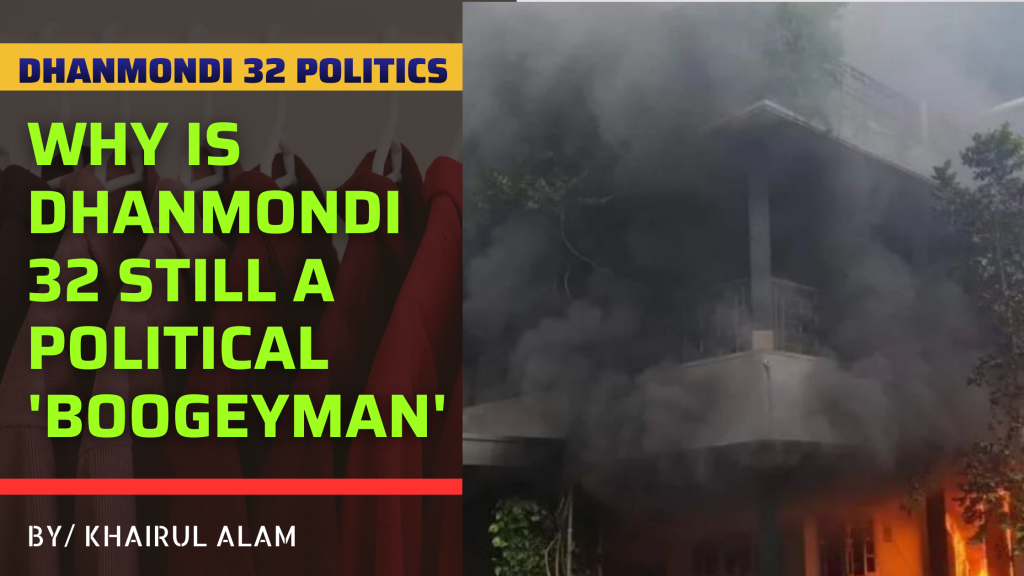
Khairul Alam : Despite being reduced to rubble, the historic residence of Sheikh Mujibur Rahman continues to haunt the political landscape. Here is why Dhanmondi 32 remains the center of attention.
The Unerasable Address
Last March, on a public bus from Shyamoli, a helper shouted, “Get down for Dhanmondi 32,” shortly after passing Shukrabad. A passenger asked, “Why do you still call it that?” The helper replied simply, “We have to say this forever. What does it matter if the house is there or not?”
He was right. Once the residence of Bangabandhu Sheikh Mujibur Rahman, Dhanmondi 32 was never just a house. Yet, treating it merely as a structure, some groups are determined to destroy it again and again.
A Timeline of Destruction
This house, holding the memories of Bangladesh’s greatest historical achievements, has faced unprecedented hostility recently—far worse than even during the Pakistani regime.
-
August 5 (Last Year): Following the fall of the Sheikh Hasina government and her departure from the country, the house was attacked, looted, and set on fire.
-
February 5: In a “Bulldozer Procession,” more than half of the structure was crushed. While police and army initially blocked the path, they eventually stood by as silent observers, signaling the government’s “silent approval.”
-
November 17: Most recently, following a verdict by the International Crimes Tribunal-1 sentencing ousted Prime Minister Sheikh Hasina to death, a group called “Red July” attempted to bulldoze the remains to build a playground. However, this time, police and army personnel engaged in a chase with the vandals to protect the site.
The “Crimes” of Remembrance
The fear of this location is so intense that ordinary citizens face arrest simply for visiting it.
-
Rickshaw Puller Azizur: On August 15, Azizur was beaten and arrested for trying to place flowers at the site. He was detained under a murder attempt case related to the July movement but was later granted bail after a social media outcry.
-
Salma Islam: On November 13, a housewife named Salma was arrested for chanting “Joy Bangla” at the site. She remains in jail without bail.
-
Nijon Amin Khan: A teenager was harassed and detained for collecting a burnt brick from the rubble as a keepsake.
Why the Fear?
The question arises: Why target a ruin? The house has been burned and bulldozed, yet the “political panic” surrounding it persists.
The structure itself is gone, but the location remains powerful. Authorities seem to realize that the bricks, soil, and ashes are not just construction materials—they are symbols of the Liberation War. Even when the walls are knocked down, people like Azizur, Salma, and Nijon still return.
The Political Paradox
Interestingly, on the same day as the latest attack (November 17), a major concession agreement was signed with Danish and Swiss companies regarding the Chittagong Port and Pangaon Terminal. Some speculate the chaos at Dhanmondi 32 was a distraction.
However, the core issue is psychological. Although the government has banned the Awami League by executive order, the obsession with destroying Dhanmondi 32 suggests a lingering fear of what it represents. By constantly attacking it, the opposing forces are ironically keeping the memory of 32 alive and potentially generating public sympathy for it.
As long as Dhanmondi 32 remains etched in the minds of the people as a symbol of Bangladesh’s birth, no amount of bulldozing can truly erase it.