


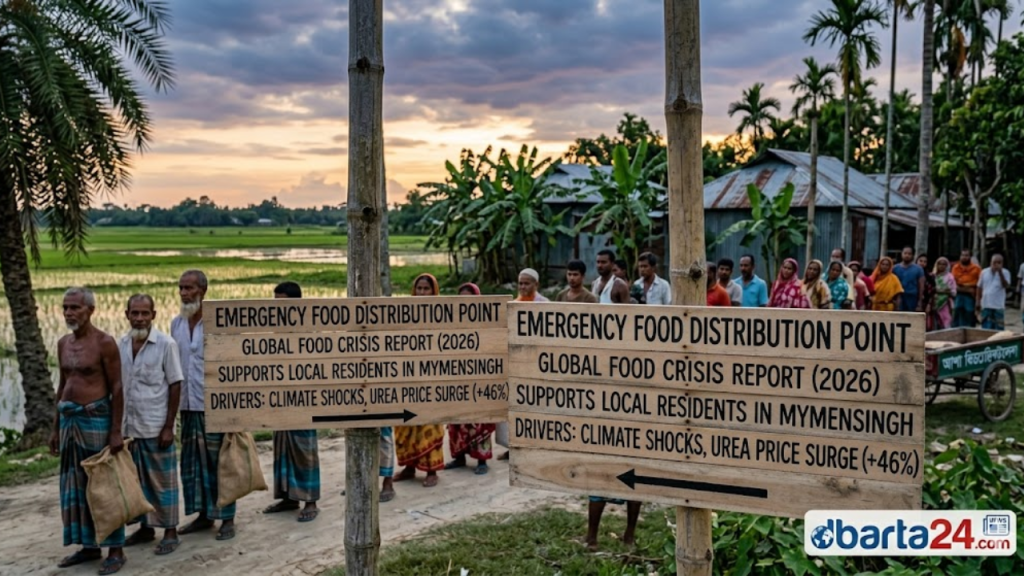
The report, a collaborative effort by the United Nations, the European Union, and various humanitarian agencies, identifies conflict as the primary driver of acute food insecurity.
Additionally, extreme climate events are worsening situations or making them permanent in many nations, leading to a “bleak” outlook for 2026.
The 10 countries where acute food crises are most concentrated are: Afghanistan, Bangladesh, the Democratic Republic of the Congo, Myanmar, Nigeria, Pakistan, South Sudan, Sudan, Syria, and Yemen. (Listed in alphabetical order).
For the first time in the report’s ten-year history, famine was confirmed in two separate contexts within the same year—parts of Gaza and Sudan.
Globally, approximately 266 million people across 47 countries faced acute food insecurity last year, nearly double the figures from 2016.
Rising Costs and Resource Risks
The report also warns of a sharp decline in international aid. Ongoing conflicts in the Middle East are further exacerbating the crisis by disrupting key oil supply routes like the Strait of Hormuz.
This has led to a surge in the cost of oil-based fertilizers and fuel, directly impacting agricultural production.
Alvaro Lario, President of the International Fund for Agricultural Development (IFAD), told AFP that the price hikes in fuel and fertilizer coincide with the current planting season, which will significantly hit global food yields.
He urged increased investment in small-scale farmers and the development of climate-resilient crops to ensure long-term stability.