


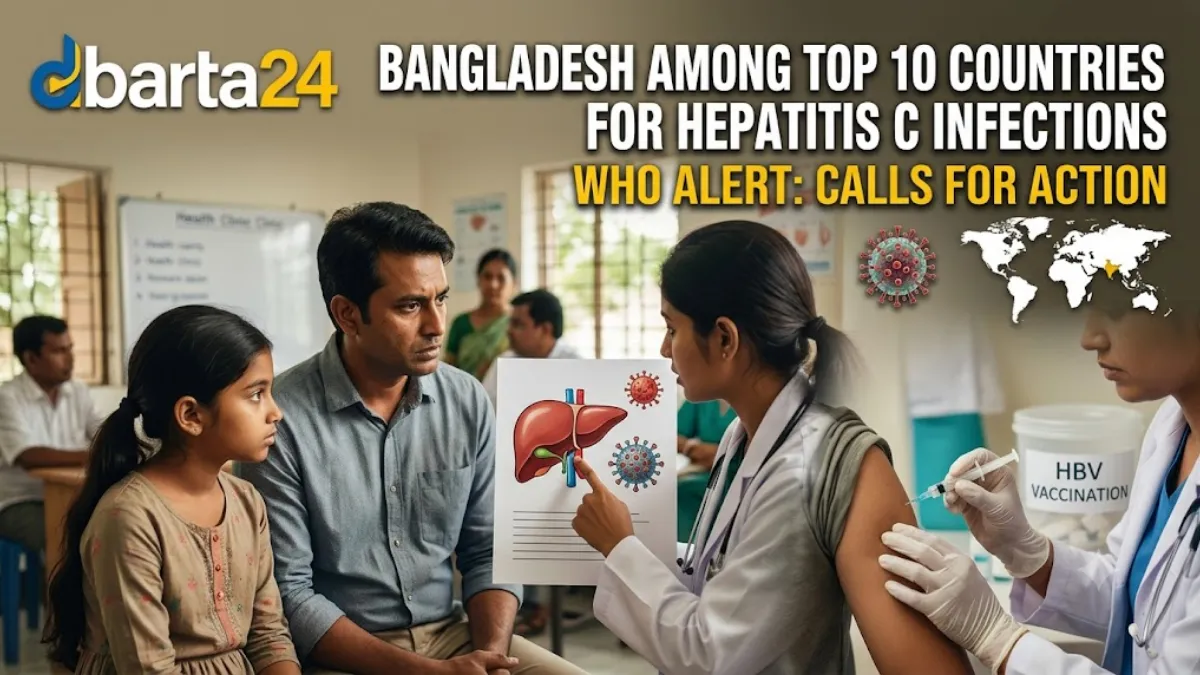
Khairul Alam ; Dbarta24— Bangladesh ranks among the top 10 countries globally with the highest burden of Hepatitis C infections, the World Health Organization (WHO) revealed in a message issued on Tuesday on the occasion of World Hepatitis Day (July 28).
Viral hepatitis has escalated into one of the world’s most fatal infectious diseases, claiming approximately 1.3 million lives annually—primarily due to complications such as liver cirrhosis and liver cancer.
According to the WHO, Hepatitis B and C account for nearly 95 percent of all viral hepatitis-related deaths globally.
Across the globe, roughly 6,000 people contract Hepatitis B or C every day, while nearly 3,500 individuals succumb to these two infections daily.
High-Risk Groups Drive Rising Burden in Bangladesh
In Bangladesh, while the prevalence of active Hepatitis C infection among the general population stands at approximately 0.6 percent, transmission rates are significantly higher among vulnerable groups.
These include people who inject drugs, patients reliant on regular blood transfusions, and the Rohingya refugee population.
Hepatitis B also poses a grave public health concern for the country.
The WHO highlighted that Bangladesh is among the 10 nations that collectively accounted for 69 percent of global Hepatitis B-related deaths in 2024.
Across the South-East Asia region, an estimated 43 million people are currently living with viral hepatitis.
In 2024 alone, the region recorded nearly 266,000 new Hepatitis B and C infections and approximately 200,000 hepatitis-related deaths.
Barrier to Global 2030 Elimination Goals
Despite the availability of a safe, effective vaccine for Hepatitis B and complete cures for Hepatitis C through modern direct-acting antivirals, millions of patients miss out on lifesaving care.
Because early-stage hepatitis often displays no visible symptoms, most patients remain unaware of their infection until severe liver damage has already occurred, making subsequent treatment far more complex and costly.
Major barriers hindering hepatitis control include:
-
A widespread lack of public awareness and delayed diagnosis.
-
Limited access to affordable testing and medication.
-
Social stigma associated with the disease.
-
Healthcare disparities affecting poor, marginalized populations and refugees.
“Viral hepatitis is preventable, treatable, and in the case of Hepatitis C, completely curable. However, due to the lack of timely testing and treatment access, many people are deprived of lifesaving services,” said Dr. Ahmed Jamsheed Mohamed, WHO Representative to Bangladesh. He urged stakeholders to rapidly eliminate all structural barriers to hepatitis testing and care.
Economic Strain on Families
Beyond the physical toll, the medical expenses associated with viral hepatitis present a devastating financial burden on families, particularly given high out-of-pocket healthcare spending in the country.
“Hepatitis is not just a health risk; it places a massive financial strain on a family,” explained Dr. Md. Shahed Ashraf Setu, Assistant Professor of the Hepatology Department at Shaheed Suhrawardy Medical College. “In Bangladesh, patients bear the majority of medical expenses. Long-term treatment and complications from Hepatitis B can cost anywhere from hundreds of thousands to tens of millions of Taka. Yet, through timely vaccination and regular screening, this immense financial loss and premature death can largely be prevented.”
Action Plan to Curb Viral Hepatitis
The WHO acknowledged Bangladesh’s strategic progress in recent years, citing the National Strategic Plan (2020–2030), nationwide birth-dose Hepatitis B vaccination initiatives, and expanded diagnostic capacity.
To bridge remaining gaps and stay on track for the global 2030 elimination targets, the WHO recommended four priority actions:
-
Ensure Early Vaccination & Safe Blood: Guarantee the Hepatitis B vaccine within 24 hours of birth, enforce safe blood transfusion and injection protocols, and boost public awareness.
-
Integrate Healthcare Services: Merge hepatitis screening and treatment into primary healthcare, maternal health, HIV, TB, and blood transfusion programs.
-
Expand District-Level Care: Scale up Hepatitis C treatment to district and sub-district (upazila) levels while ensuring affordable diagnostics and medicines.
-
Strengthen National Surveillance: Enhance data collection systems regarding incidence, treatment outcomes, liver cirrhosis, and liver cancer to better allocate resources and track elimination progress.
Public health experts emphasize that government action alone will not suffice.
Aligning grassroots awareness, timely screening, safe transfusion, and prompt infant vaccination with primary healthcare infrastructure remains essential to eliminating viral hepatitis as a public health threat in Bangladesh by 2030.