


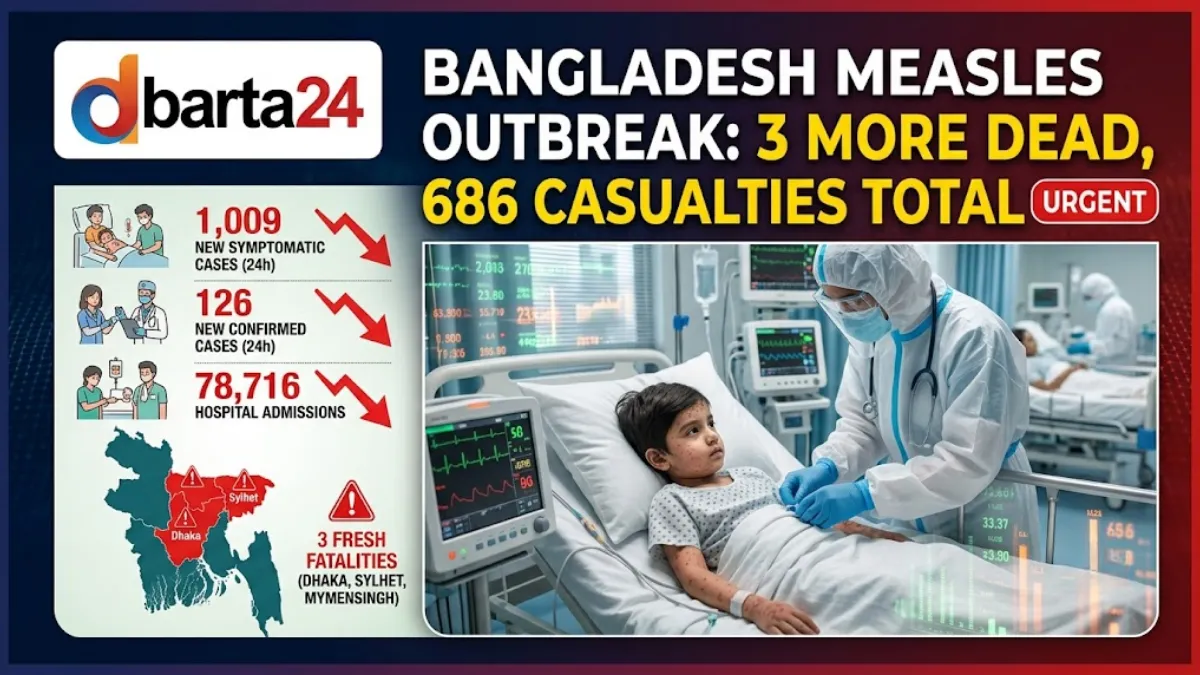
Health Desk – Bangladesh’s ongoing measles outbreak has claimed three more lives over the last 24 hours, pushing the cumulative death toll to 686 since mid-March.
According to the daily bulletin released by the Directorate General of Health Services (DGHS) on Tuesday, the fresh casualties exhibited distinct symptoms of the viral infection, underscoring the persistent challenges authorities face in curbing the contagion across multiple divisions.
The health crisis, tracked extensively since March 15, has heavily strained local healthcare facilities.
Out of the 686 recorded fatalities, the DGHS clarified that 593 individuals died while showing severe symptoms linked to the disease, whereas 93 deaths have been officially confirmed as measles through laboratory diagnostics.
Over this multi-month period, a staggering 94,764 people have exhibited symptoms nationwide, signaling a widespread public health emergency.
The latest 24-hour monitoring window—spanning from Monday morning to Tuesday morning—revealed a sharp influx of new cases:
-
New Sympathizers and Infections: A total of 1,009 individuals newly manifested measles symptoms, while 126 patients were definitively confirmed to have contracted the virus, bringing the nationwide total of laboratory-confirmed cases to 11,297.
-
Hospitalization Burden: Hospital registries indicate that 78,716 patients have required inpatient care for measles symptoms since March 15. On a positive note, recovery rates remain high, with 74,971 individuals successfully discharged after treatment.
-
Geographic Spread: The three newest fatalities were reported across geographically distinct regions, with Dhaka, Sylhet, and Mymensingh divisions recording one death each. This cross-regional mortality points to a generalized spread rather than a localized cluster.
With over 3,000 patients currently undergoing active treatment or isolation in hospitals, the DGHS continues to monitor the epidemiological data closely.
Public health experts emphasize that intensifying immunization drives, early detection of symptomatic cases, and ensuring robust supportive care in affected divisions remain critical to halting further casualties.