


Labonnya Liza ; Dbarta24 — A severe surge in dengue fever has claimed three more lives in the last 24 hours, taking the nationwide death toll from the mosquito-borne viral disease to 50 this year.
Worryingly, the vast majority of these fatalities have occurred in July alone, reflecting a rapid intensification of the seasonal outbreak across the country.
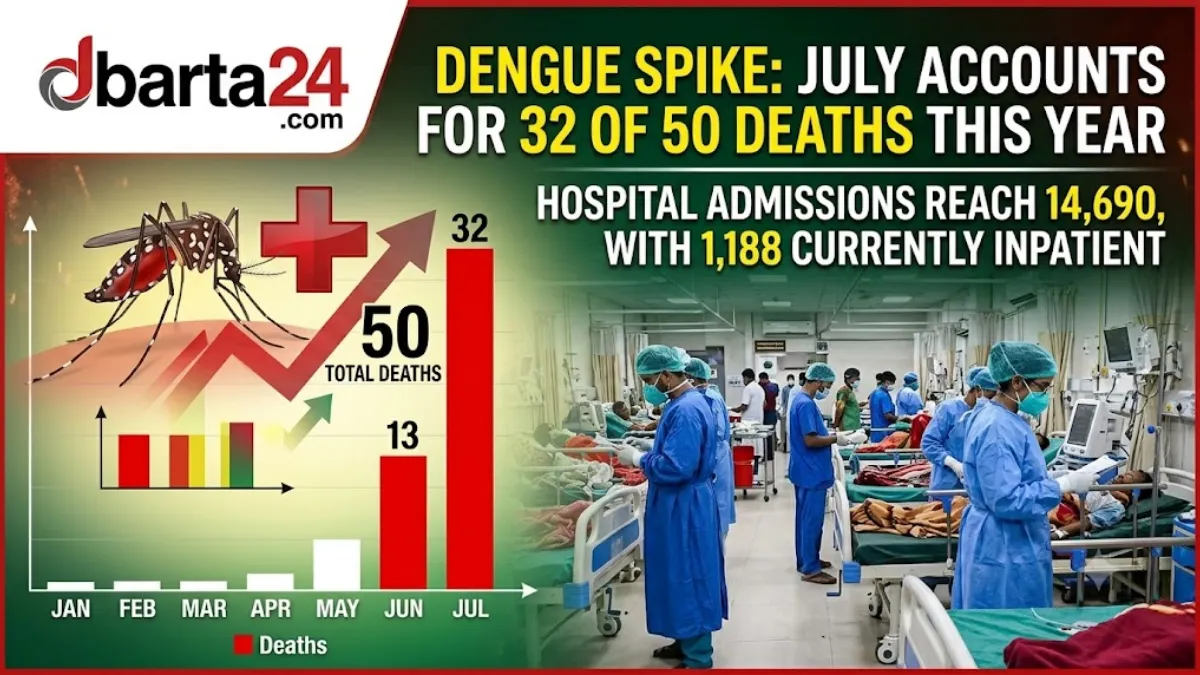
According to the latest daily bulletin released by the Directorate General of Health Services (DGHS) on Wednesday (July 29), 32 out of the total 50 dengue-related deaths—more than 60 percent—were recorded during the first 28 days of July.
Rising Hospitalization Rates
In addition to the latest fatalities, 534 new patients were admitted to hospitals across Bangladesh over the past 24 hours. This brings the cumulative total of hospitalized dengue cases to 14,690 between January 1 and July 29.
Currently, 1,188 patients are undergoing treatment at various public and private hospitals nationwide, while 13,009 individuals have successfully recovered and been discharged so far.
Regional Breakdown and Demographic Impact
The DGHS data reveals that of the three latest victims, one each died in the Dhaka, Mymensingh, and Barishal divisions.
A geographic analysis of the cumulative fatalities highlights urban centers as the most severely impacted areas:
-
Dhaka South City Corporation (DSCC): Highest fatality count with 16 deaths.
-
Other Major Regions: Dhaka North City Corporation (6), Barishal (6), Khulna (6), Mymensingh (6), Chattogram (5), Rajshahi (1), Rangpur (1), and Dhaka Division outside city corporation areas (1).
Demographic trends from the health authorities further indicate a notable disparity in mortality, with females accounting for 60% of total dengue deaths this year, while males comprise the remaining 40%.
Monthly Escalation
The trajectory of the virus shows a steep climb entering the mid-year monsoon season. Following single deaths recorded in January, February, and May, fatalities rose to 13 in June before escalating dramatically to 32 in July.
With monsoon rains creating favorable breeding conditions for Aedes mosquitoes, health officials stress the urgent need for intensified vector-control measures and early medical intervention to curb further transmission as the peak season progresses.