


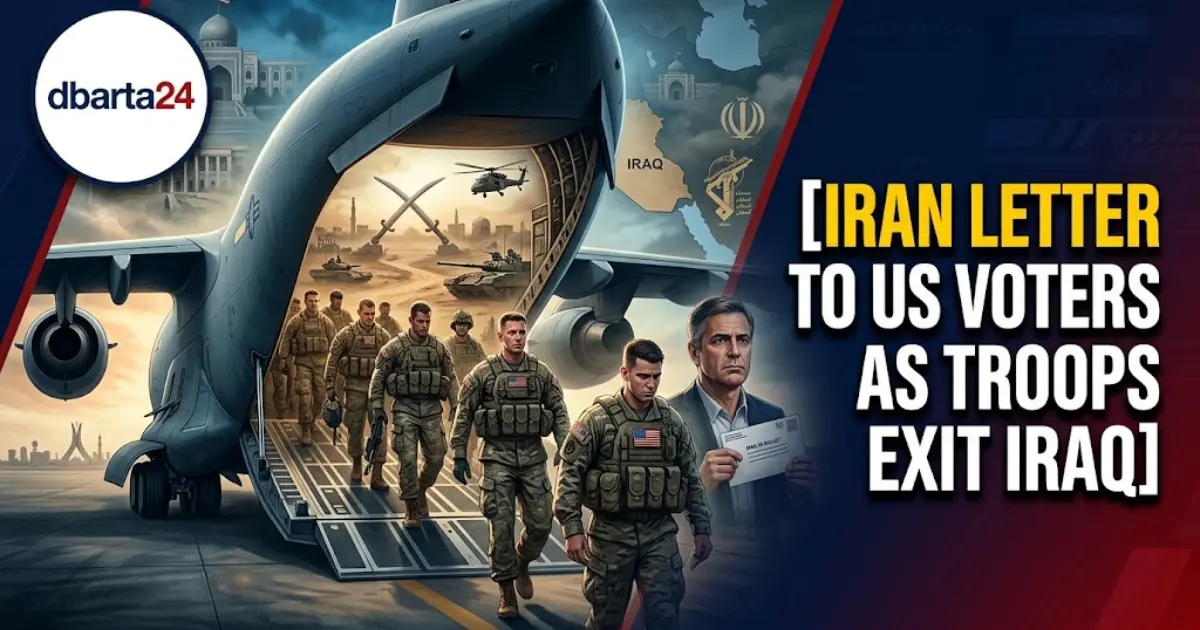
Dbarta24 Desk — Iran’s Islamic Revolutionary Guard Corps (IRGC) has issued a direct appeal to American voters, calling on them to reject pro-Trump candidates in the upcoming U.S. midterm elections.
The move coincides with the official, final drawdown of U.S. military forces from airbases in neighboring Iraq.
The 26-page open letter published by the IRGC urges the American public to turn away from candidates aligned with Donald Trump, oppose foreign military interventions, and reconsider Washington’s unconditional support for Israel.
The public release highlights Tehran’s attempt to leverage domestic debate in the United States at a moment of significant military shift in the Middle East.
Geopolitical Maneuvering Amid US Troop Withdrawal
The timing of the letter intersects with the complete departure of U.S. combat forces from Iraqi bases, fulfilling a phased withdrawal deadline set under prior agreements between Washington and Baghdad.
Parades in Baghdad saw security personnel marking the withdrawal, while both Iraqi and Iranian officials framed the occasion as a major strategic milestone. U.S. military transport aircraft were seen departing Camp Victory near Baghdad as the remaining personnel wrapped up their footprint.
In the manifesto released across Iranian state media, the IRGC criticized current U.S. foreign policy, directly blaming political leaders in Washington for domestic and international volatility.
“Deceitful and violent politicians are responsible for the current state of America. Remove them from power,” the IRGC letter stated. “Let your politicians know that the world has changed.”
While political analysts doubt the publication will directly shift voting patterns inside the United States due to its limited domestic reach, the document taps into existing political vulnerabilities currently facing the Republican leadership.
Inflation and Foreign Policy Weigh Heavy on US Midterms
As the U.S. heads toward the congressional midterm elections on November 3, control of both the House of Representatives and the Senate hangs in the balance. Losing key majorities in either chamber would pose significant legislative obstacles for President Donald Trump’s political agenda.
Despite campaign promises centered on avoiding overseas entanglements, stabilizing global conflicts, and curbing inflation, foreign policy actions—including military strikes on Iranian targets earlier this year in coordination with Israel—have reignited economic instability and driven up global energy prices.
Recent polling reflects widespread domestic anxiety over these developments:
-
Cost of Living: A Reuters/Ipsos poll indicates that a vast majority of Americans view the rising cost of living as their primary issue entering the voting booth.
-
Economic Support: Only 17% of respondents expressed approval of the administration’s handling of living costs.
-
Foreign Intervention: Support for military strikes against Iran stands at just 34%, signaling public resistance to prolonged foreign engagements.
A Legacy of Engagement Reaches an End
The completion of the troop exit brings an end to nearly 23 years of U.S. military presence in Iraq, which began with the 2003 invasion to ousted Saddam Hussein.
The decades following were marked by intense regional instability, power vacuums, and the subsequent rise and campaign against the Islamic State (ISIS).
As U.S. forces close out their operational footprint, Tehran’s public messaging highlights its intention to maintain regional influence while pushing its geopolitical narrative directly to the American public.